Santa Monica
Every Ride Is Its Own Box Office
What theme parks can learn from the Prater, Tivoli and Bakken
In Europe’s oldest amusement areas, nobody pays to get in – every ride has to win its guests one ticket at a time. That pressure produces lessons that gated parks rarely learn.
In a theme park, a roller coaster is part of a promise. The guest has already paid at the gate, and the ride’s job is to make that ticket feel worth it. In the Prater, the promise does not exist. The guest walks in for free, with money in their pocket and dozens of rides competing for it. A ride that does not convince within seconds earns nothing.
I have spent several years working in this environment, most recently as lead designer of the Wiener Looping. It has shaped how I look at every attraction, including those inside the gate of a classic theme park.
01
Three ways to sell a ride
Europe’s historic amusement areas run on business models that most of the industry has forgotten.
| Model | Example | Entry | Rides |
|---|---|---|---|
| Pay-one-price | Most gated theme parks | Paid | Included |
| Free entry, pay per ride | Wiener Prater (Vienna), Bakken (Copenhagen) | Free | Individual tickets or wristbands |
| Hybrid | Tivoli Gardens (Copenhagen), Blackpool Pleasure Beach (UK) | Paid | Ride tickets or ride pass on top |
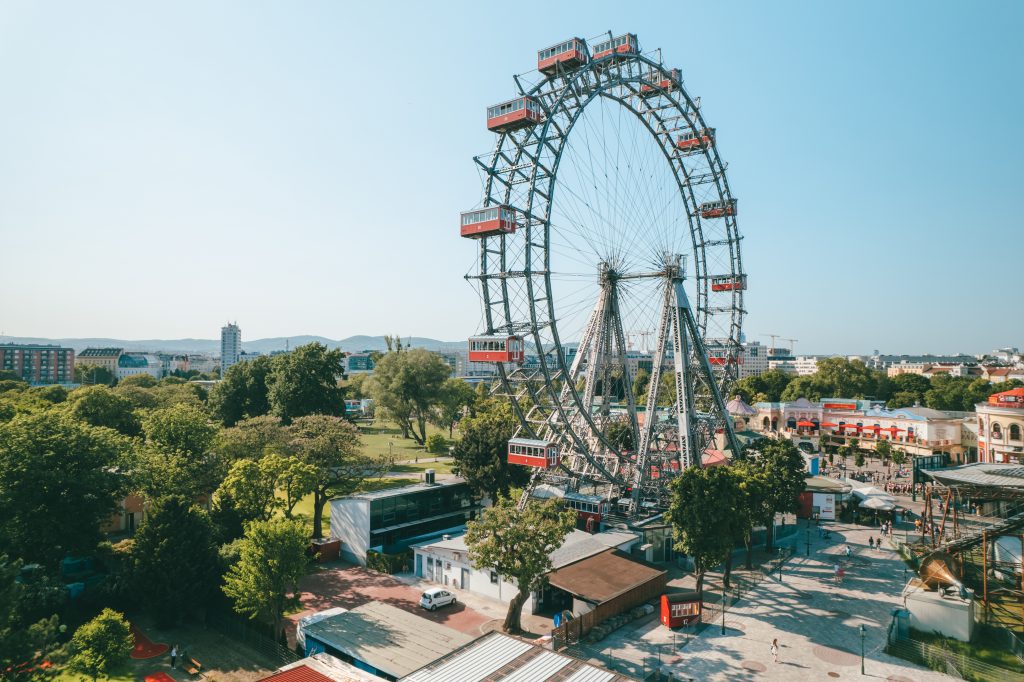
The Prater is open all year, with rides priced individually at roughly €3.50 to €15. In 2025 it drew close to seven million visitors – more than most gated parks in Europe – spread across around 80 independent businesses.
Bakken, founded in 1583 and considered the world’s oldest operating amusement park, draws an estimated 2.5 to 2.9 million visitors a year without charging admission.
Tivoli, opened in 1843 in the centre of Copenhagen, charges for entry and then sells rides separately. In 2025 this hybrid model welcomed 4.3 million guests.
In both pay-per-ride venues, most attractions are run by independent operators.
Each ride is effectively its own small business, with its own revenue, its own costs and a direct competitor fifty metres away.
Lesson 1
Motion is marketing
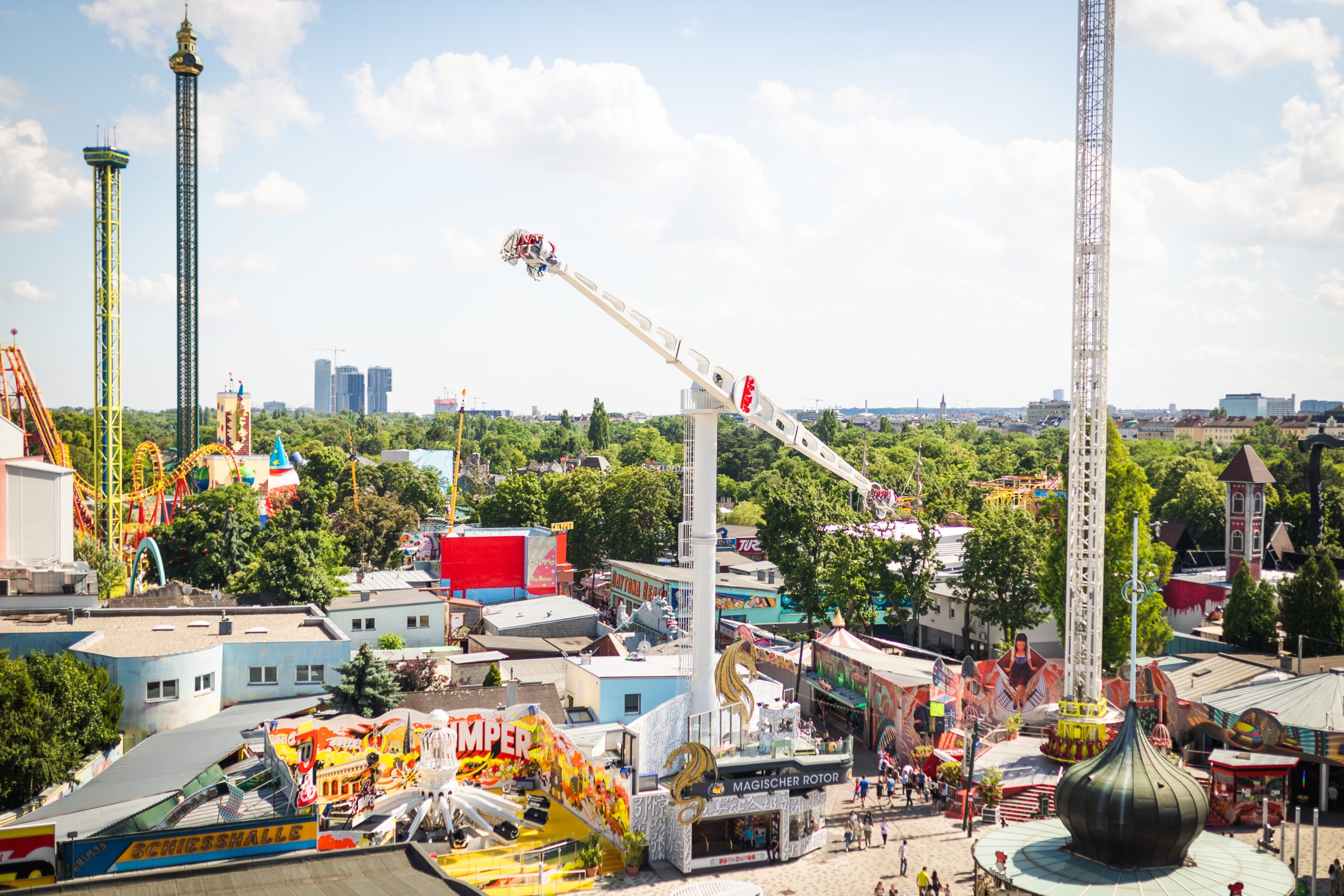
The most valuable advertising space in a pay-per-ride park is the ride itself, in motion.
A train parked in the station while it loads is an advertisement that has switched itself off.
That is why we designed the Wiener Looping around short single cars instead of one long train. More dispatches mean more movement, more screams and more reasons for a passer-by to look up. For a theme park, this sounds like a detail. For a ride that has to sell its own tickets, it is the business model.
Theme parks can apply the same thinking to their skyline. Which rides are visible from the paths where guests decide what to do next – and are they visibly running?
Lesson 2
The guest judges value ride by ride
In a gated pay-one-price park, a weak ride is absorbed by the overall ticket. Guests do not complain, because there are plenty of other rides to discover. In a pay-per-ride park, the guest decides after every ride whether it was worth the money – and whether to buy another ticket.
This changes design priorities. Dead time – slow lifts, long brake runs, slow transfers – costs both capacity and visibility. The ride itself has to be balanced so that guests step off with one thought: I want to do that again.
To earn that ticket, a ride has to do at least one of three things: surprise its riders, look so extreme that its sheer appearance stops people in their tracks, or win them over with its history and tradition.
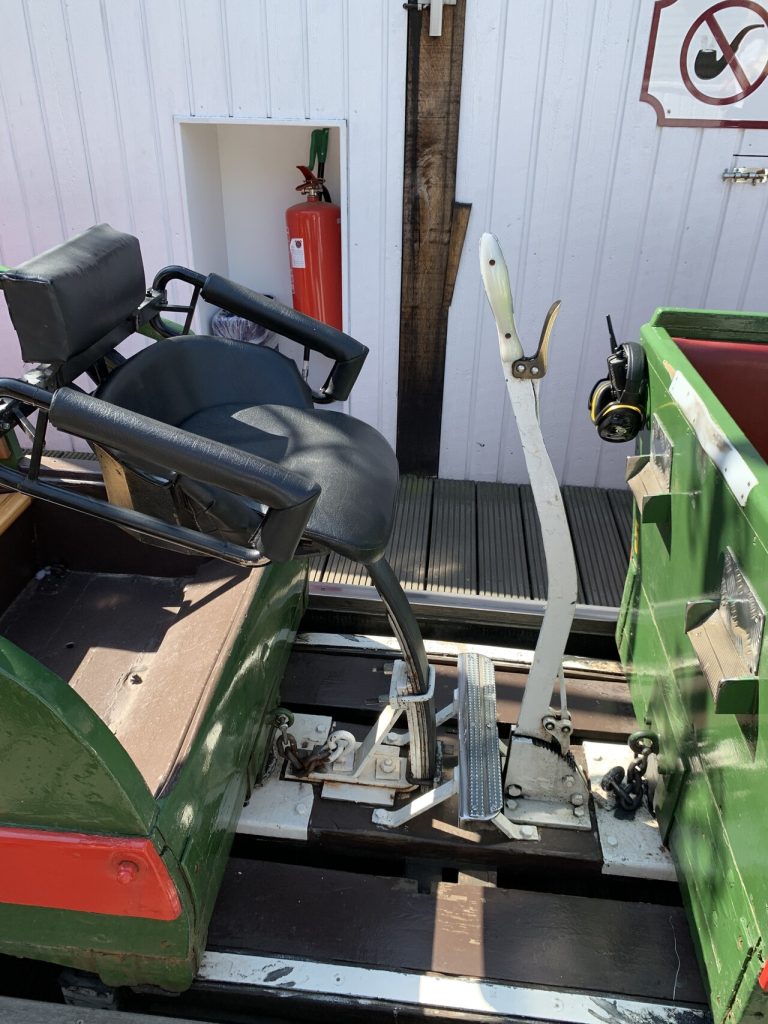
Theme parks rarely measure this, because the gate has already been paid. Yet their guests compare rides too: how good a ride feels, how long the wait was, how well the storyline was told.
Lesson 3
The exit sells the next ticket
The strongest sales argument in a pay-per-ride park is a group of riders stepping off, still laughing. Their energy spills over to the onlookers on the walkway who are still asking themselves: should I go or not?
I see it every day in the Prater: when waiting guests stand right next to riders who step off still buzzing, the excitement passes straight to them. It turns into anticipation – and often into a little extra nervousness, which only adds to the sense of adventure.
Lesson 4
Competition next door forces renewal
In a place like the Prater, the market never stands still. Every operator keeps an eye on the neighbour: what are they building, and are they about to outdo me? An operator who stops investing loses customers within a season, and the feedback is measured in cash at the ticket booth. The result is constant change and steady renewal.
Theme parks have one advantage here: a single team sees the whole park. Ride counts, queue times and, where wristbands or apps exist, repeat-ride rates show which attractions guests actively choose and which they merely tolerate. Someone can act on it across the entire line-up.
In a pay-per-ride park, each operator usually sees only their own numbers. That makes choosing the right ride for a plot even harder.
The limits
Where the model fails
Pay-per-ride is not a model to copy wholesale. Fragmented ownership makes large investments difficult: there is no master plan, no shared budget and no single investor. The Prater, despite more than 40 roller coasters in its history, never had a permanent modern flagship coaster until the Wiener Looping. Shared infrastructure and a coherent guest experience are hard to achieve when every plot is a separate business.
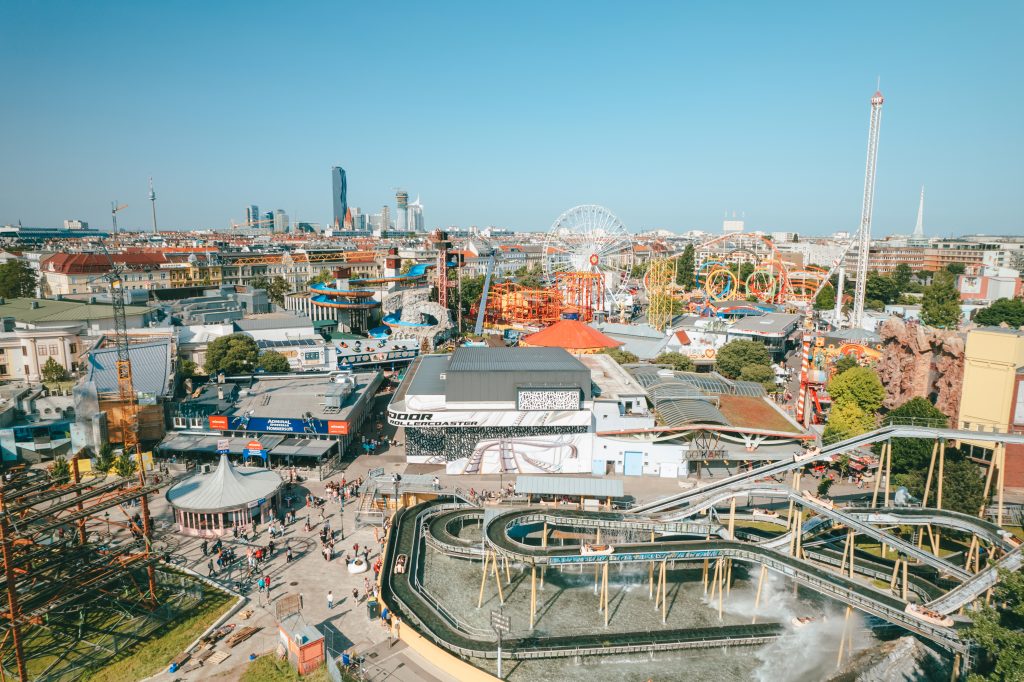
A theme park can do what no midway can: build one coherent world in which every ride is part of the same story.
The two models have opposite strengths. A theme park can build a coherent whole, where every ride, path and view is planned to work together. A pay-per-ride park, with its many operators, brings variety, surprise and a pace of renewal that no master plan would produce.
That is why the lesson is not to copy the midway. A theme park does not need its rides to compete, and it does not have to judge each one as if it sold its own tickets. What it can borrow are the tools: rides that are visible and visibly moving, as little dead time as possible, and exits that make the next guest want to ride. The rest is its own strength – a world in which every part is planned to work together.
For manufacturers
What it means for manufacturers
Many products are still designed for the gated pay-one-price world, where capacity per hour is the main argument. The result is capacity machines. Silver Star at Europa-Park runs three trains of 36 riders each. With a ride time of almost three minutes and around 50 seconds in the station, a train leaves roughly every 75 seconds – about 1,750 guests an hour in theory, and still around 1,300 in everyday operation. A pay-per-ride park rarely needs that much – and a long train waiting in the station is exactly the advertisement that has switched itself off.
Pay-per-ride venues – and the many fairs, city parks and family entertainment centres that work similarly – need something slightly different. Capacity still matters, but so does visibility: frequent dispatches, plenty of action and always something happening, so that the ride puts itself at the centre of attention.
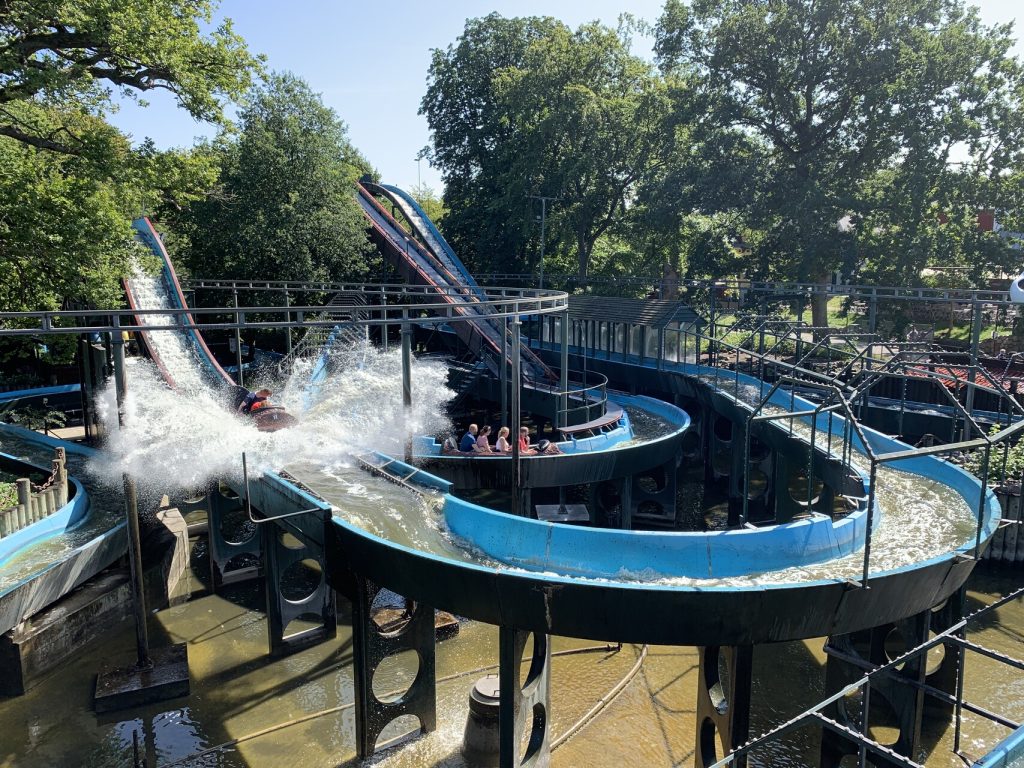
- Loading Fast, simple loading and frequent dispatches rather than maximum train length.
- Presence Strong visual presence from the walkway, including the station and unload area.
- Layout Compact, adaptable layouts for irregular, crowded plots.
- Business model Financing and service models that fit independent, often family-run operators.
In short
Takeaways for decision-makers
- Play to the strength of your model: one coherent world behind the gate, variety and constant renewal on the midway.
- Make rides visible, and keep them visibly moving.
- Remove dead time; it is felt as poor value.
- Design the ending as the sales pitch for the next ride.
- Measure every ride on its own: ride counts, queue times and repeat rides show what guests really choose.
Planning a ride that has to stand out – inside a gate or on a midway? This is the kind of question I work on every day. Get in touch
Sources
- Prater Wien – Welcome – free entry, open around the clock
- Prater Wien – FAQs – rides paid individually, approx. €3.50–€15
- ORF Wien – Sommersaison im Wiener Prater gestartet – close to seven million visitors in 2025
- ORF Wien – Wiener Wurstelprater – around 80 businesses
- Wikipedia – Dyrehavsbakken – founded 1583, 2.5–2.9 million visitors, free access
- Fever – Tivoli Gardens tickets – opened 1843, entry does not include rides
- Tivoli A/S – Annual Report 2025 – 4,304,000 visitors in 2025
The Most Underrated Investment in the Park
Why the family coaster deserves the spotlight
For decades, the industry measured itself in metres and kilometres per hour. Today the most interesting coaster projects are aimed at the whole family. Here is why that makes business sense – and what separates a great family coaster from a forgettable one.
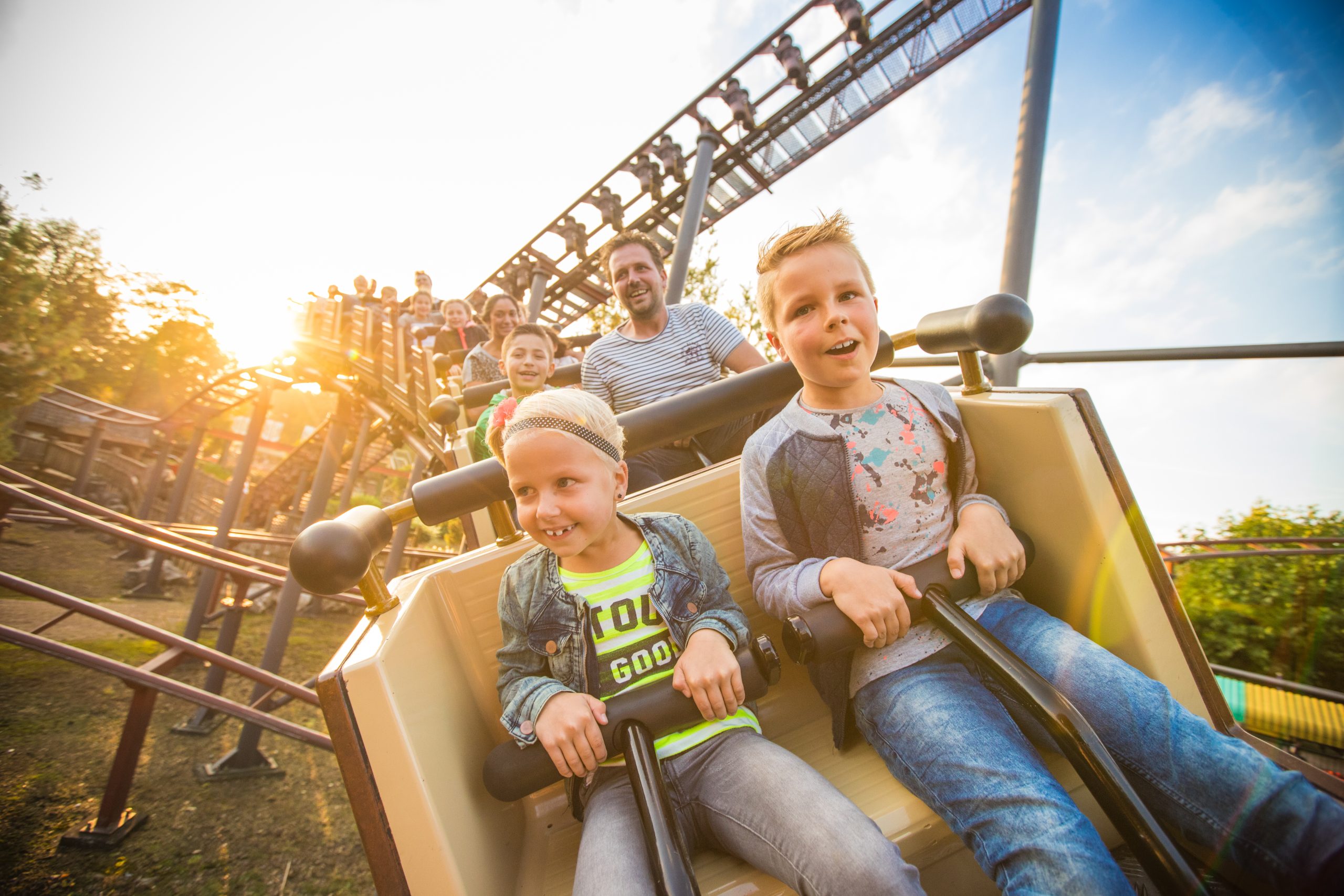
From the late 1980s onwards, the coaster industry was locked in a race for records: taller, faster, longer. Those rides still make headlines. But look at the projects major operators are actually announcing, and a different picture appears. Universal opened Epic Universe in 2025 with three family-sized coasters. United Parks has invested in a series of family inverted coasters from B&M. Dollywood presented a family coaster combined with a whitewater raft ride as its next major investment.
The family coaster is no longer the filler between the kiddie ride and the headliner. For many parks, it is the smartest investment they can make.
01
The buying decision is made by the group
A thrill coaster sells to individuals. A family coaster sells to groups – and most park visits are group visits.
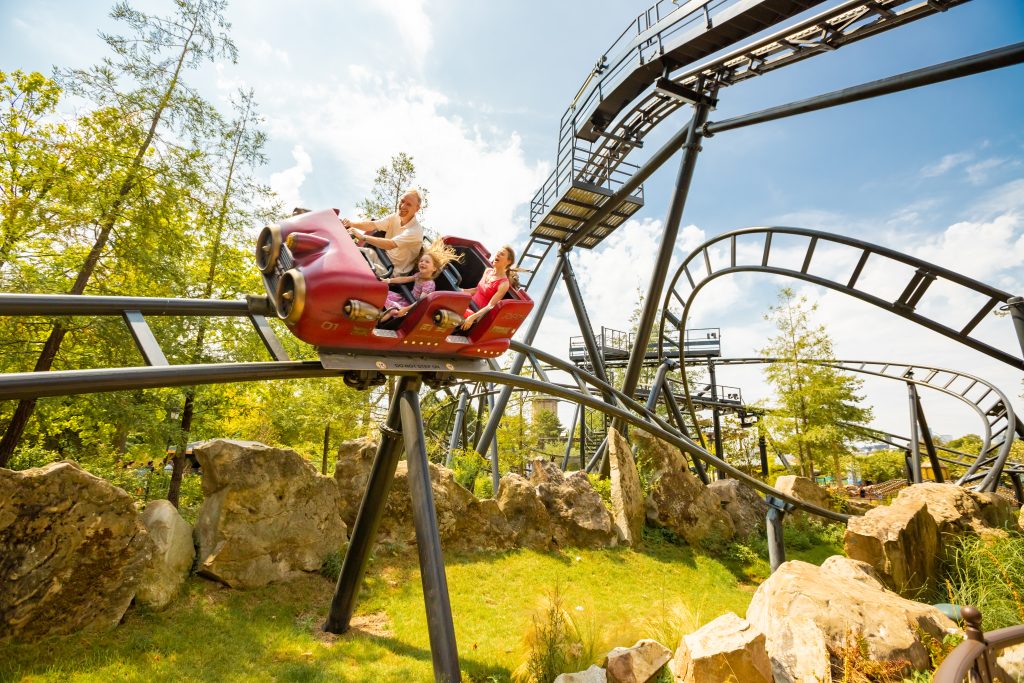
When a ride has a high minimum height or a punishing intensity, it splits the group. Some ride, others wait, and the waiting part of the family experiences the park’s biggest investment as a bench. A well-designed family coaster does the opposite: it gives the whole group a shared experience, and shared experiences are what families talk about on the way home.
Demographics reinforce this. Older generations with significant spending power now visit parks with their children and grandchildren. Many of them no longer want the most extreme rides, but they still want to ride.
02
The business case
In my experience, the family coaster wins on almost every line of the investment decision:
| Factor | Family coaster | Record thrill coaster |
|---|---|---|
| Potential rider pool | Children, parents, grandparents | Mainly teenagers and young adults |
| Repeat rides | High – children ride again and again | Lower – often “once is enough” |
| Footprint | Compact, adaptable to existing plots | Large, often needs new land |
| Investment | Moderate | High |
| Marketing reach | Families – the core audience of most parks | Enthusiasts and a younger audience |
| Shelf life | Long, if designed with enough substance | Pressure to be outdone by the next record |
None of this makes thrill coasters obsolete. Headliners build reputation and media reach. But for parks that cannot afford a record breaker – and for those that already have one – the family segment is where an investment works hardest.
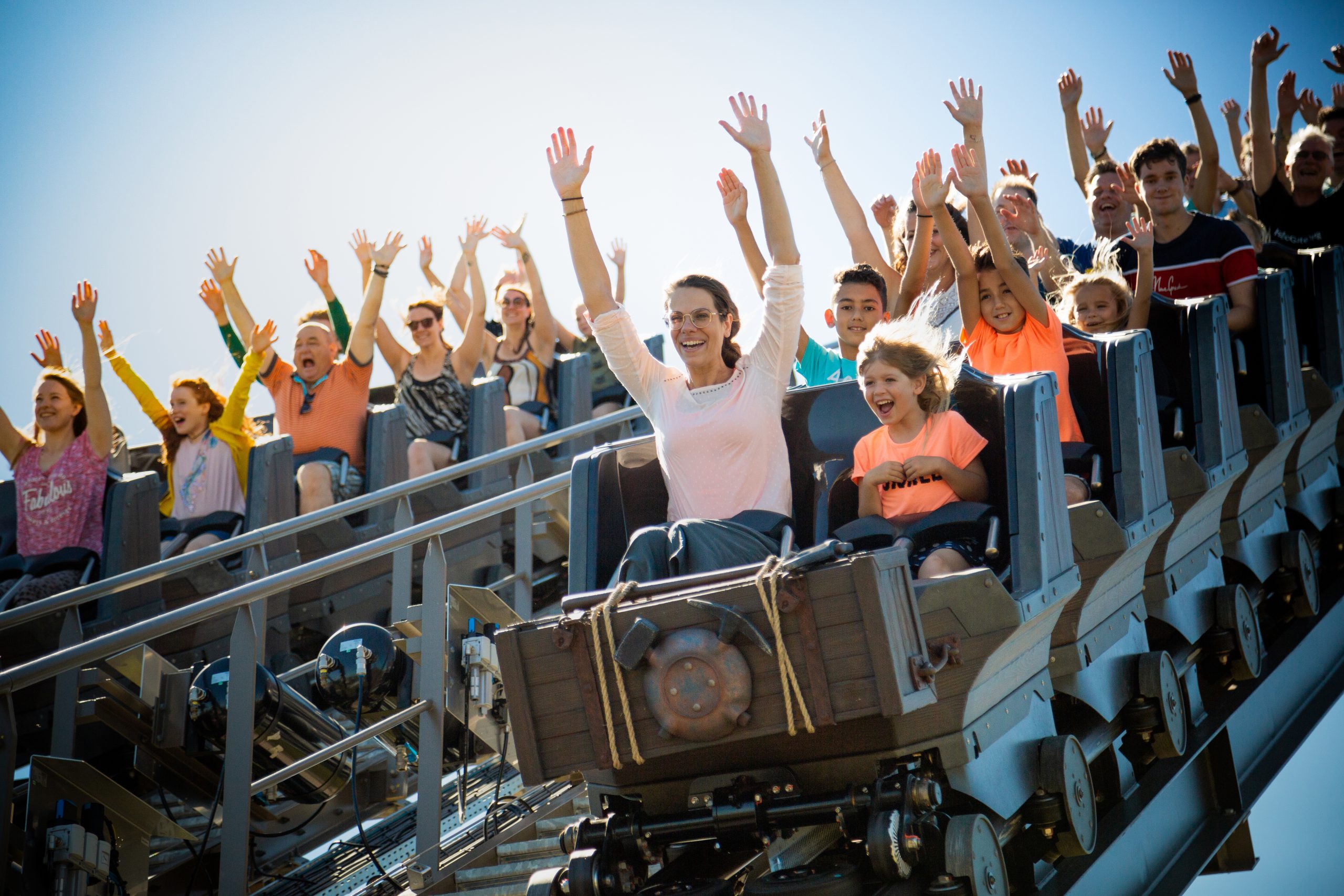
03
“Family” does not mean “tame”
The most interesting development is the rise of what is often called the family thrill coaster. Manufacturers are bringing inversions, launches and wing seating into the family segment. These rides are not kiddie coasters with a bigger budget. They are complete coasters with a lower entry threshold.
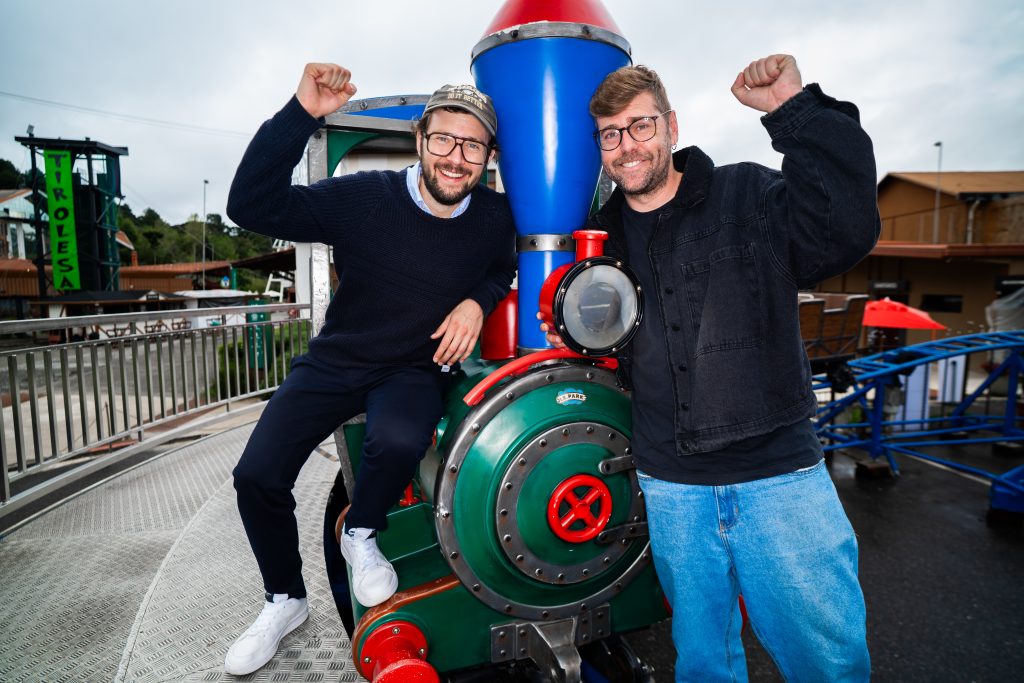
At the other end of the scale, even a small children’s coaster can become a park’s emotional centre. Hilda’s Mini Mountain at Parque Capivari in Campos do Jordão, Brazil, is the perfect example.
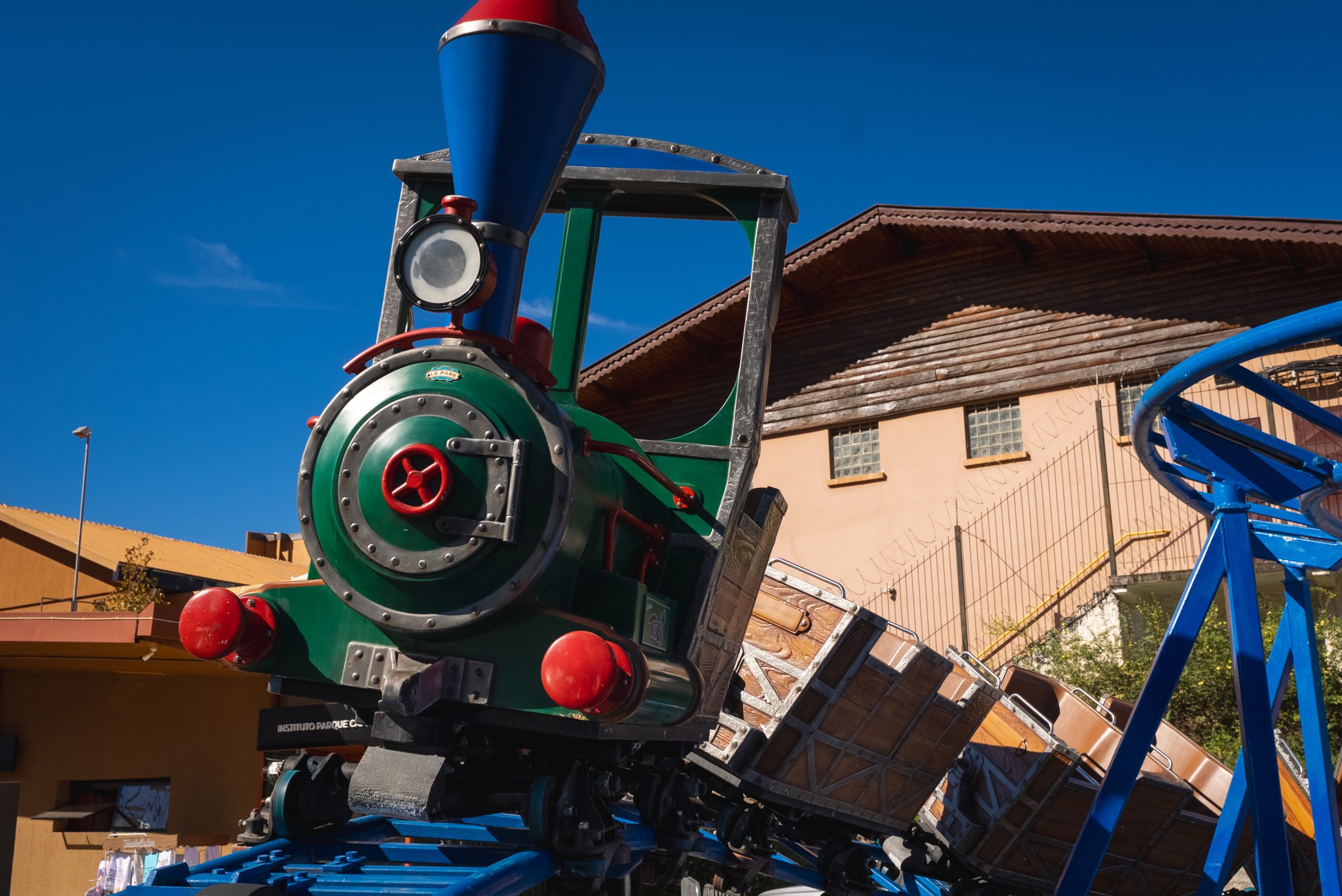
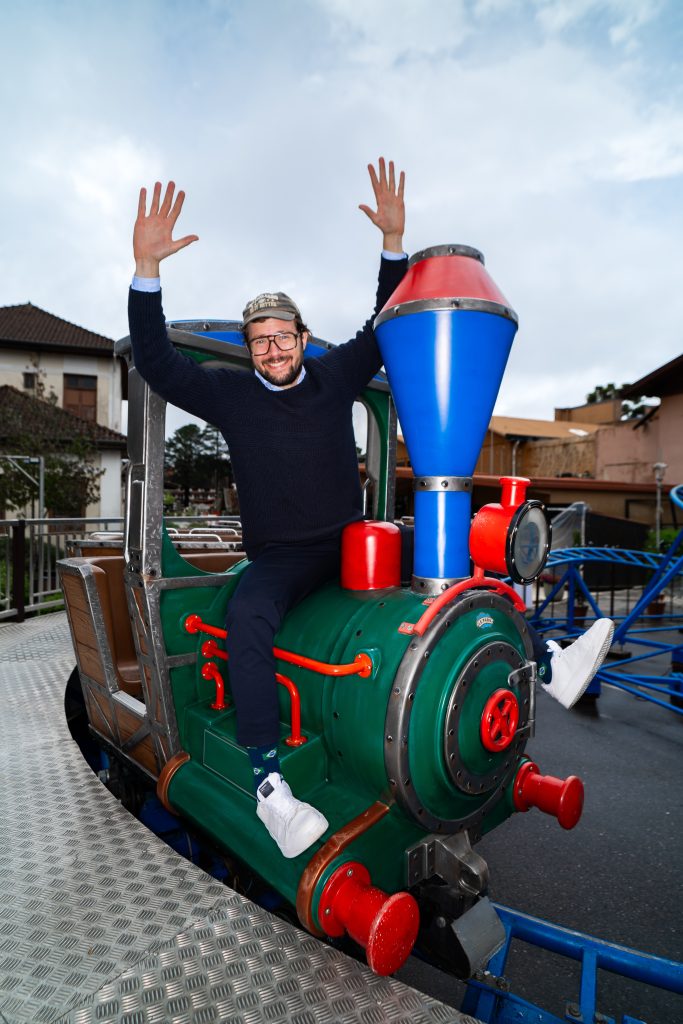
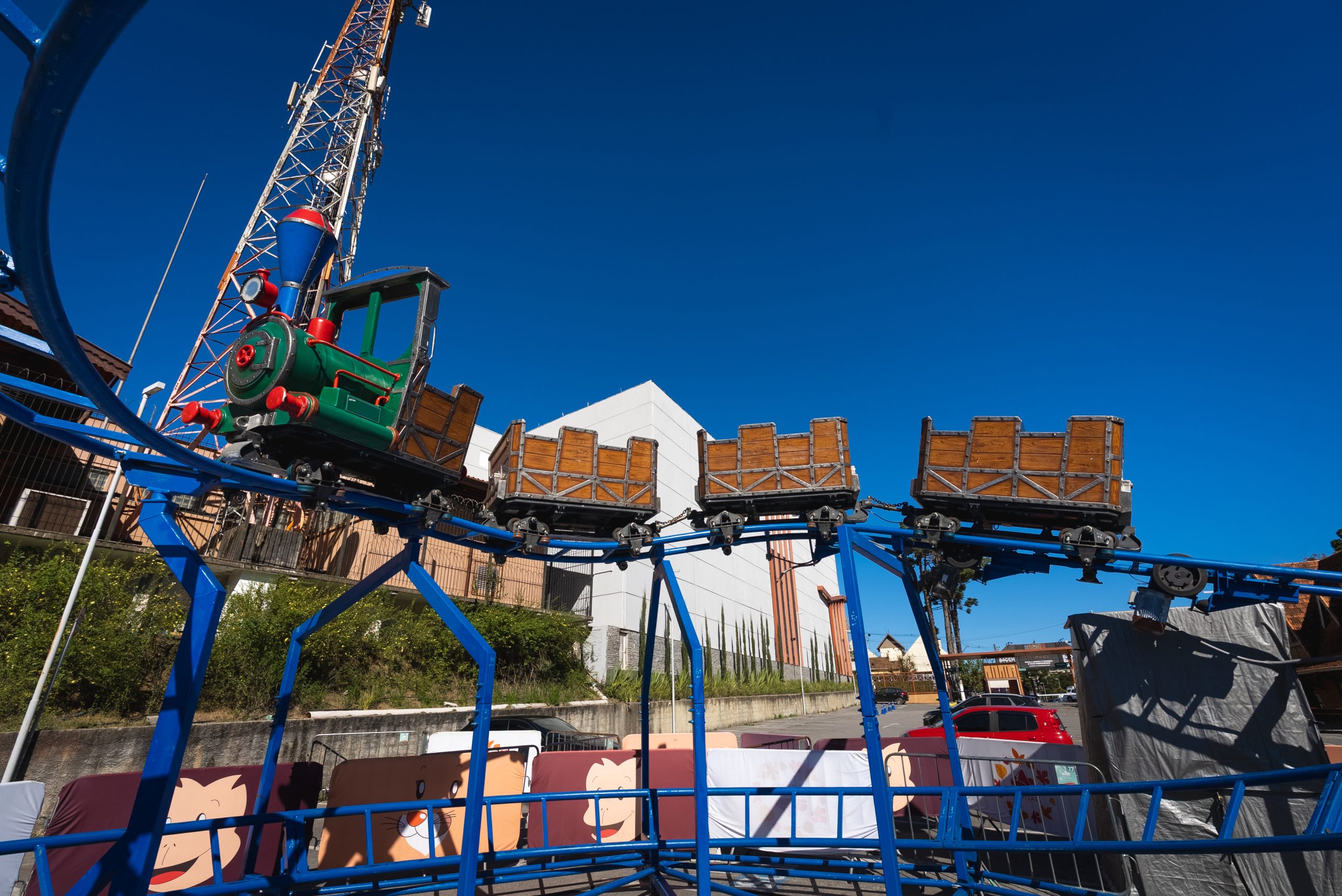
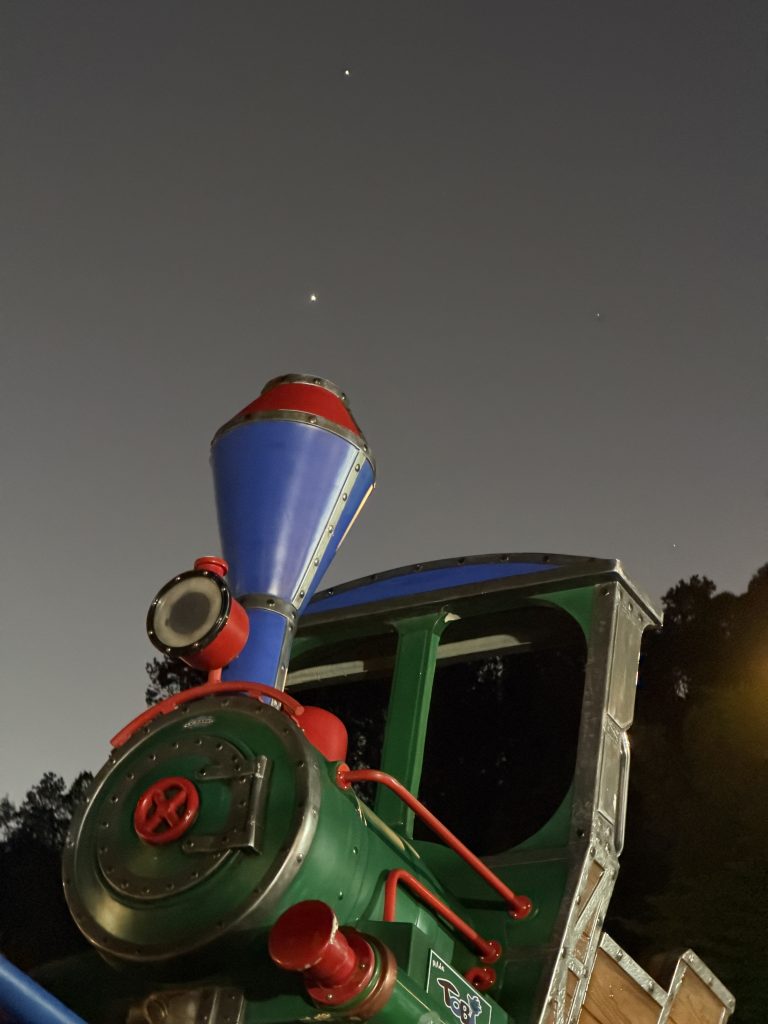
It stands just 3 metres tall with 60 metres of track, pulled by a locomotive-style train with Hilda, the park’s mascot, clinging to the smokestack. Yet for the park’s family audience it is the highlight of the visit.
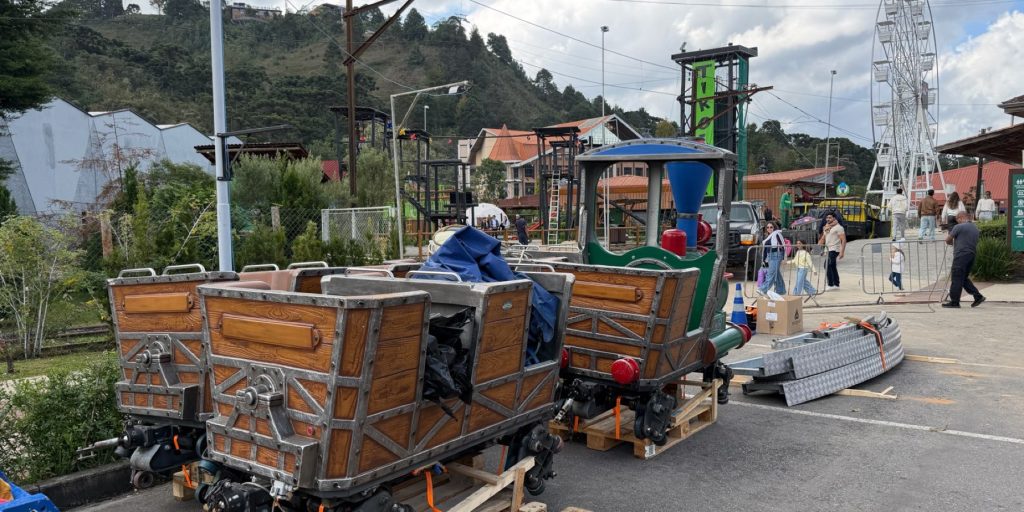
Size is not what makes a family coaster a centrepiece – fit is.
04
Six design rules for a great family coaster
A family coaster is harder to design than it looks. It has to satisfy a six-year-old, a teenager and a grandparent in the same car. These are the rules I work with:
- Design for the most cautious rider, delight the boldest Forces stay gentle, but surprise moments – a short burst of airtime, a near miss, an unexpected turn – make the ride exciting for everyone.
- Pace it like a story A family coaster lives from rhythm: build-up, release, a moment to breathe, a final surprise. One continuous rush quickly feels monotonous.
- Let parent and child sit together Seating should make it natural for an adult and a child to share a row. That moment of looking at each other mid-ride is the product.
- Plan loading for real families Families load more slowly than groups of teenagers. Station design, restraints and dispatch intervals must account for that, or capacity on paper becomes a queue in reality.
- Make it visible A family coaster that can be seen from the main paths sells itself – to children first, and through them to their parents.
- Build in substance for the second ride If a child has seen everything after one ride, the coaster is outgrown within a season. Details, theming and dynamic variation make it worth riding again.
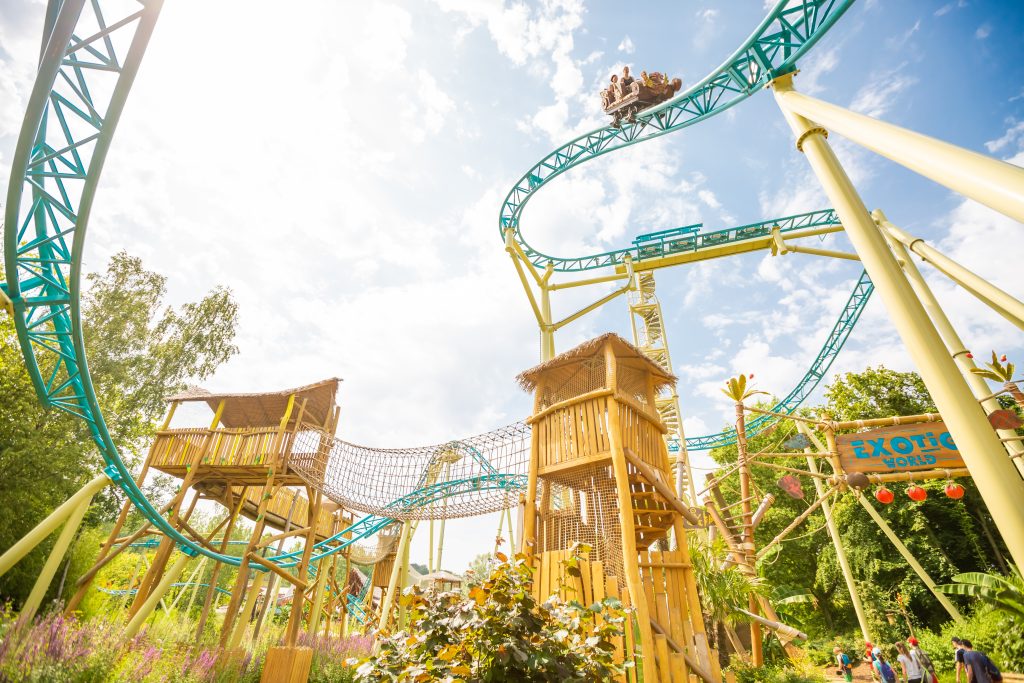
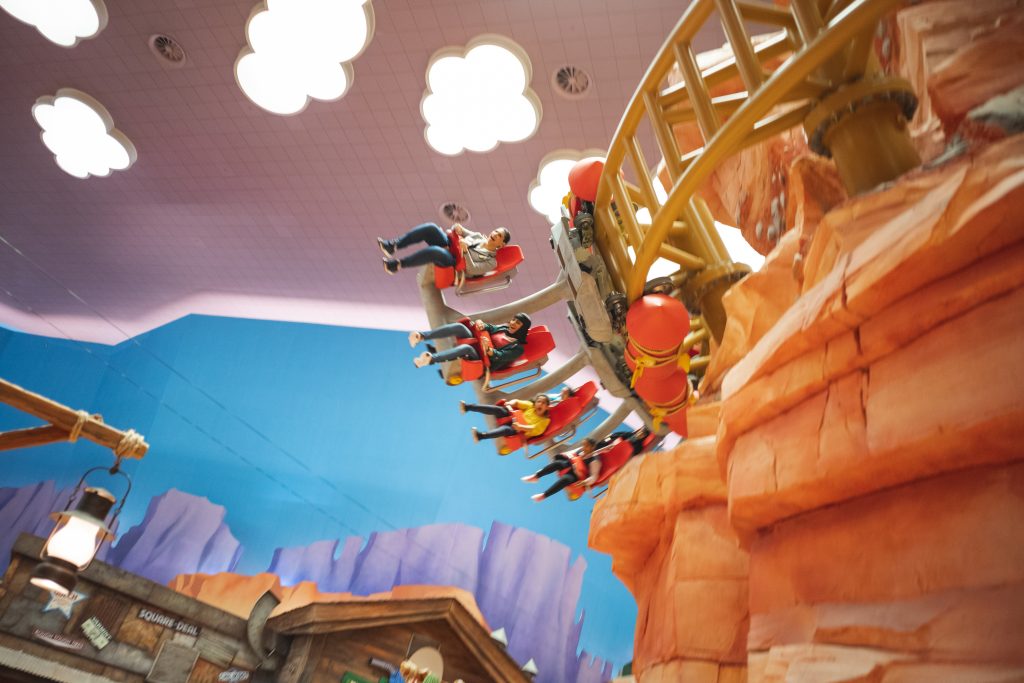
05
Where family coasters go wrong
The two classic mistakes sit at opposite ends. Some rides are so tame that children outgrow them in a single season. Others are so intense that parents lose trust after the first ride. A third mistake is quieter: the generic off-the-shelf layout dropped onto a plot without regard to sightlines, guest flow or the park’s existing line-up.
The ride itself may be standard. Placement, pacing and the overall experience should not be.
06
What it means for manufacturers
The growth in this segment is not only in large theme parks. It is in mid-sized and family-run parks that need a strong new attraction but cannot finance a record breaker. For them, adaptable layouts, compact footprints, clear service concepts and realistic financing matter as much as the ride itself. Manufacturers that design products and sales processes for these operators are addressing one of the broadest markets in the industry.
Thinking about your next family attraction? I help parks find the right ride type and turn it into an experience the whole group remembers. Get in touch
Sources
- Blooloop – The era of the family coaster is here – Epic Universe family coasters, demographic argument
- ACE – Barracuda Strike, SeaWorld San Antonio – B&M family inverted coasters for United Parks
- Fox Business – US parks focusing on family – Dollywood NightFlight Expedition
- Coaster101 – Family coaster renaissance – the end of the record race
Rides Are Mortal
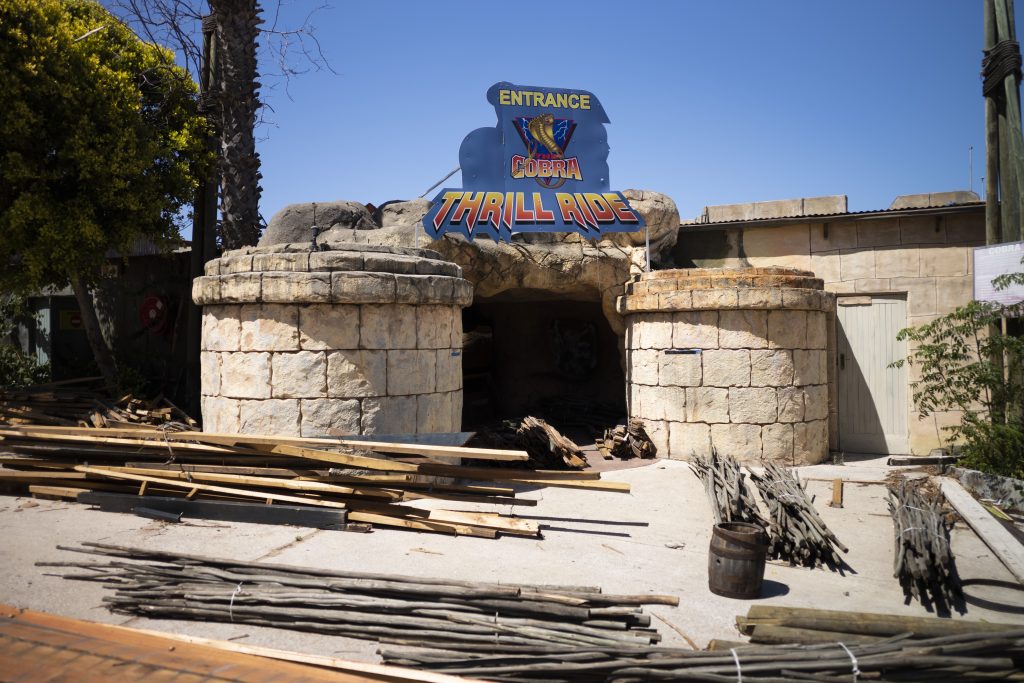
Every roller coaster has two days that enthusiasts and guests remember: the day it is announced and the day someone decides it has to go. The first one gets fireworks, ribbon cuttings and a press release. The second one usually arrives as a short statement on a Tuesday afternoon – and the fans are already mourning in the comments before the park has finished its sentence.
Nothing in a park is permanent
We like to think of steel as eternal. It is not. Track wears, wheels wear, control systems age faster than the structures they run on, and spare parts for a thirty-year-old train can become a project of their own. At some point every operator faces the same quiet calculation: how much does it cost to keep this ride alive – and how much does it still give back?
That question is rarely about technology alone. A ride can be in perfect condition and still have lost its place in the park. Queues get shorter, guests walk past, the area around it has changed. Sometimes the ride did not get worse. The park simply moved on.
Renewal is a design task
The interesting part begins after the decision. Tearing something down is easy. Replacing it with something that matters is not. The best renewals I have seen did not start with a catalogue but with a question: what is this spot in the park supposed to do? Pull people to the back of the park? Give families a ride they can share? Create the image that ends up on every postcard?
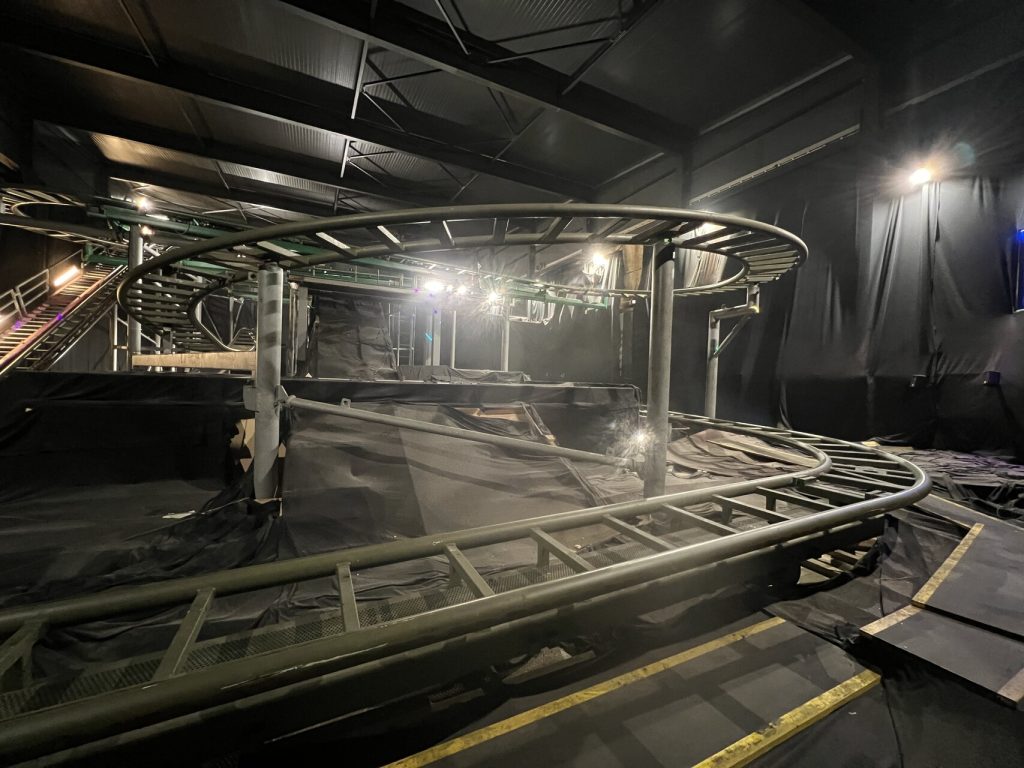
Only then does the hardware follow. Sometimes the answer is a brand-new coaster. Sometimes it is a refurbished classic from another park, which brings a second life and a lower budget. And sometimes it is an existing structure that gets new track, new trains and a new story – the same footprint, a completely different experience.
What we lose, what we keep
Still, something gets lost every time. The first ride with your father. The adventure that took all your courage – and that you went on anyway. The hours with friends in a queue that seemed endless, until you finally got on. These memories do not show up in any business plan, but they are the reason people care at all – and good parks know it. Some keep a train as a photo spot, reuse the name, or let the new ride quietly nod to the old one.
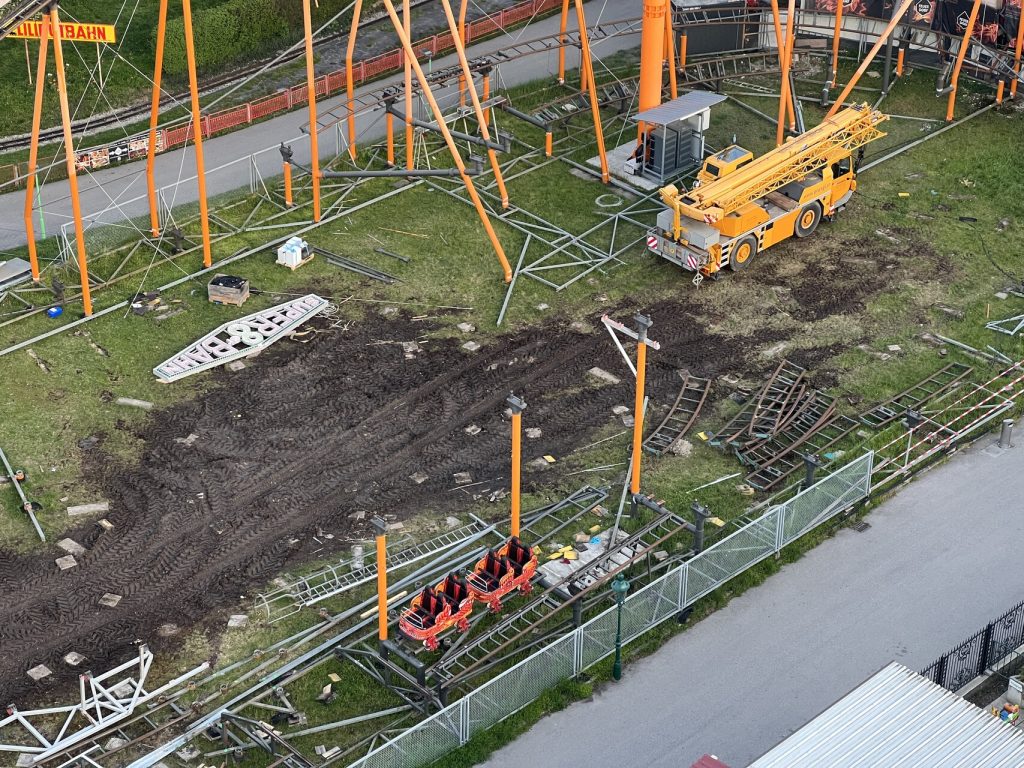
For me, this is the part of the industry I find most fascinating: watching parks age, change and reinvent themselves. Every closure is also an opening – for a new idea, for a ride that travels to a new home, for the next generation of riders who will one day miss it themselves.
So the next time a park announces the end of a classic, look closely at what comes next. That is where the new story begins.
Plattform 9

Plattform 9
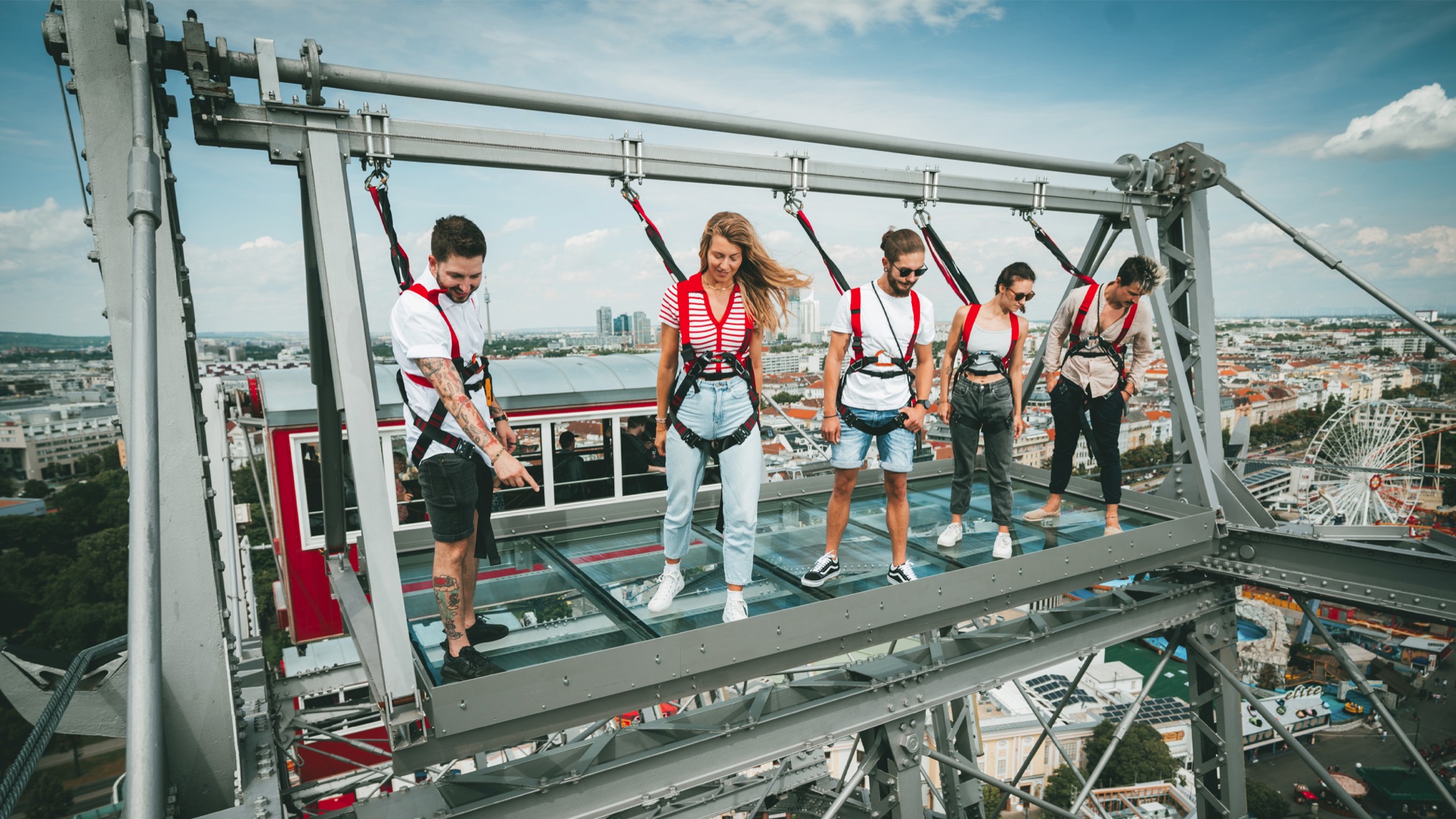
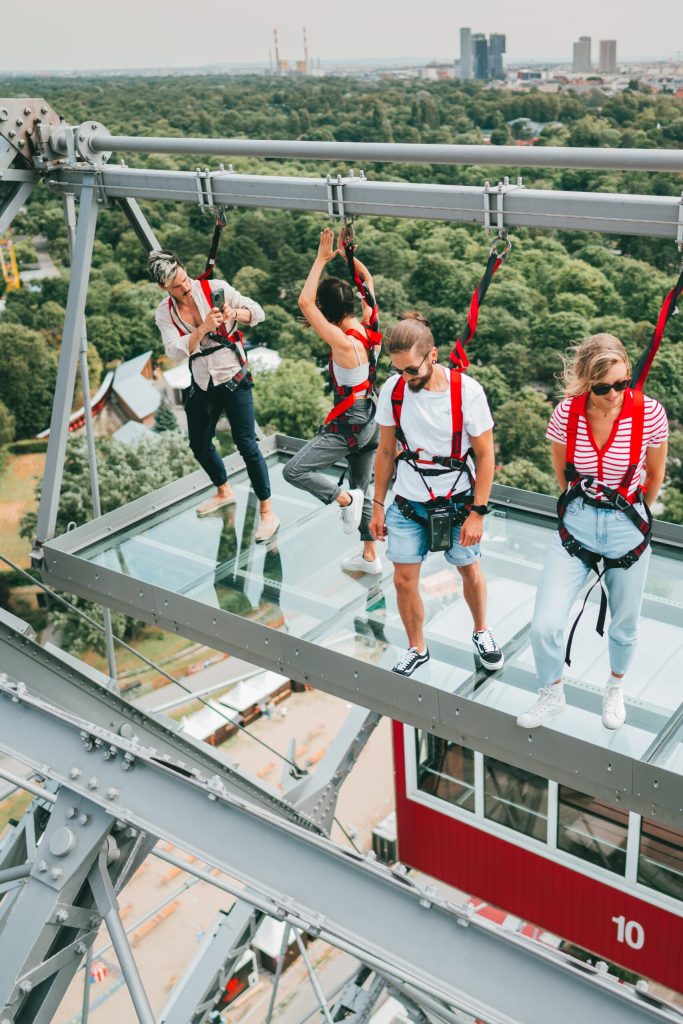
A rooftop ride on a wagon of the Giant Ferris Wheel – turned into an experience for the public.
By Julian Omonsky · Vienna, Austria
There are a few ways to experience the Vienna Giant Ferris Wheel. On a beautiful summer evening in 2020, just after the Wheel had closed for the day, I seized the opportunity to embark on one of the most spectacular Ferris Wheel rides imaginable.
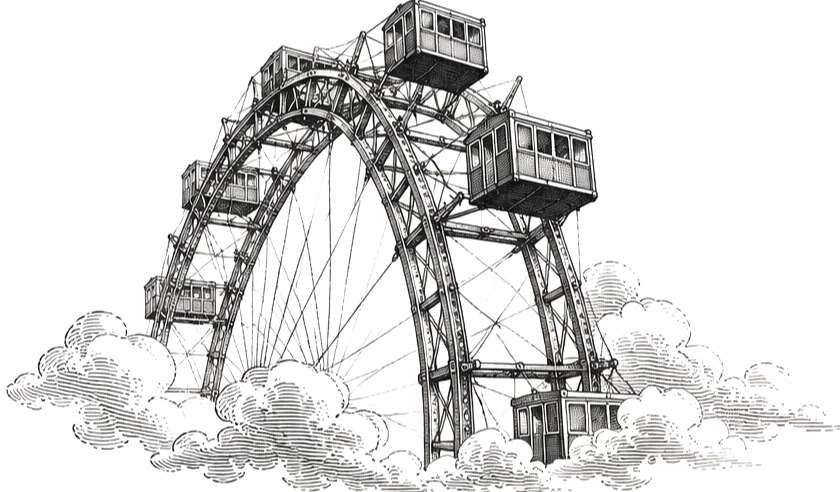
The typical way to take a ride on the Vienna Giant Ferris Wheel is in one of its 15 wagons. Each offers a great view of the city of Vienna. Since 2022, there has also been Plattform 9.
01
A ride on the roof
However, a third option is to ride atop the roof of one of the actual wagons – and that’s how new ideas evolve!
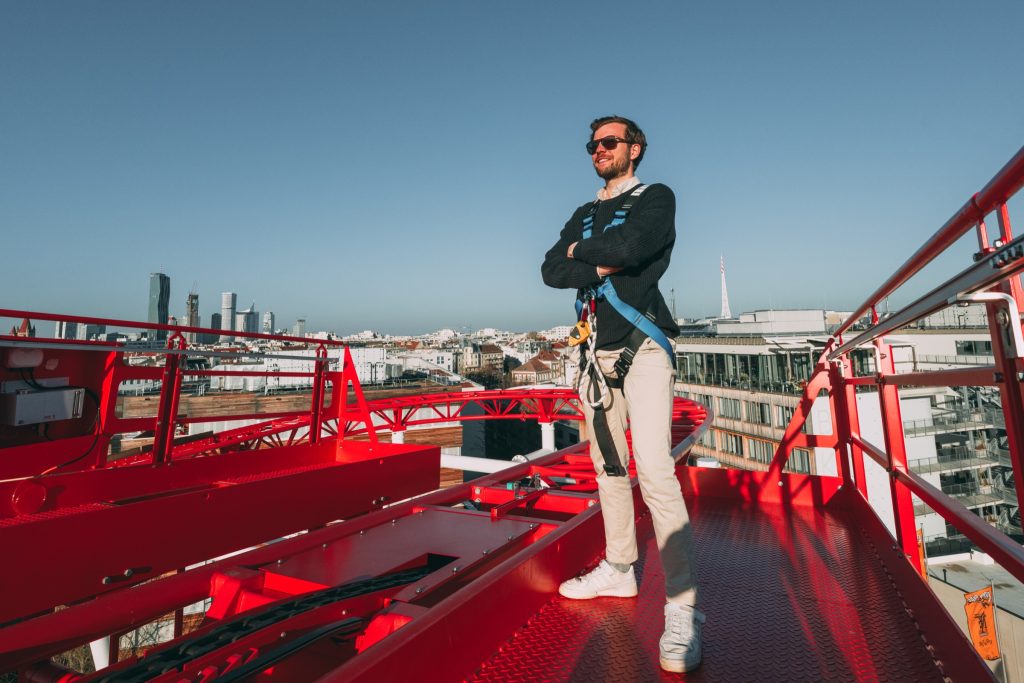
With a safety harness securely fastened, the owner and I ascended into the Vienna night sky.
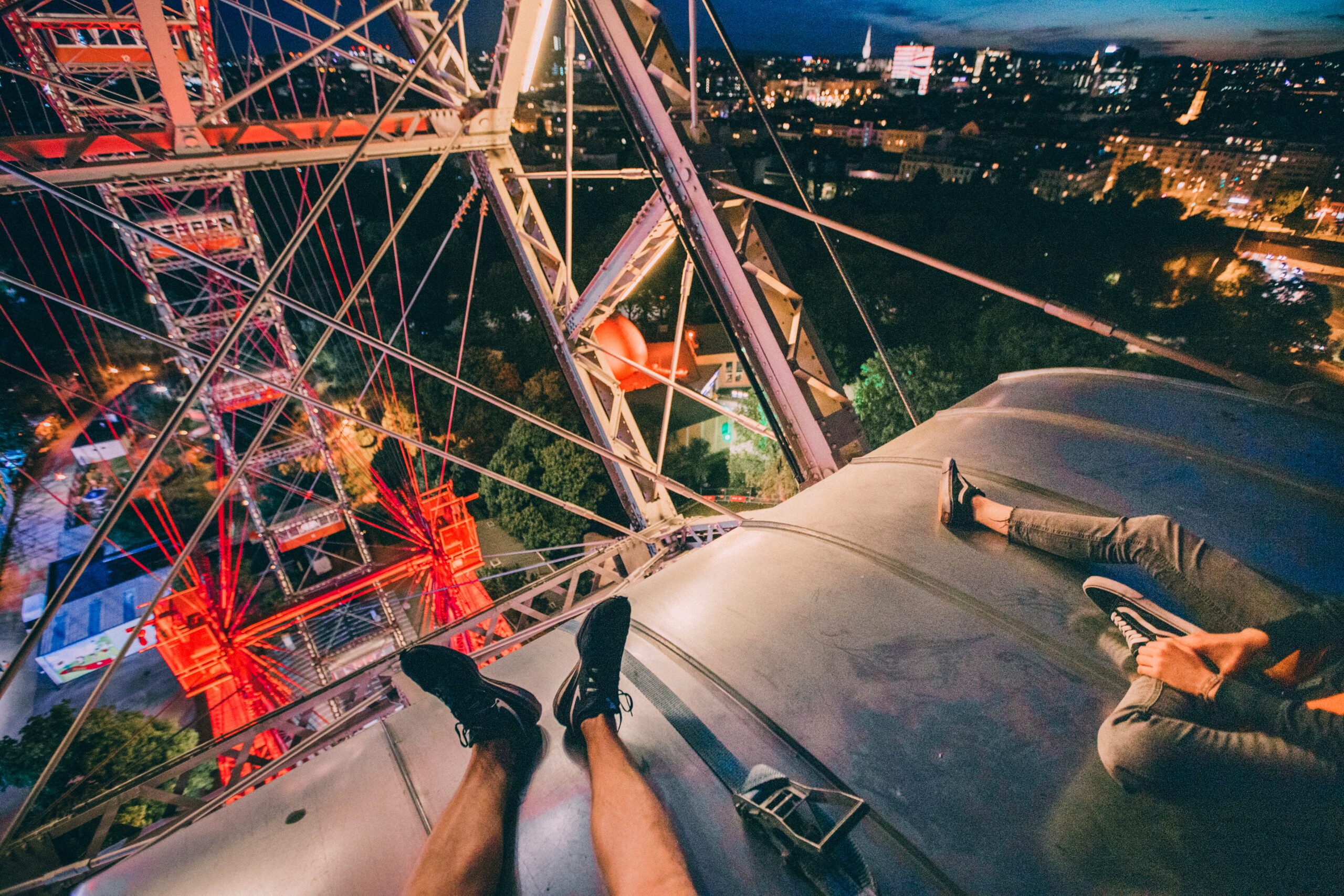
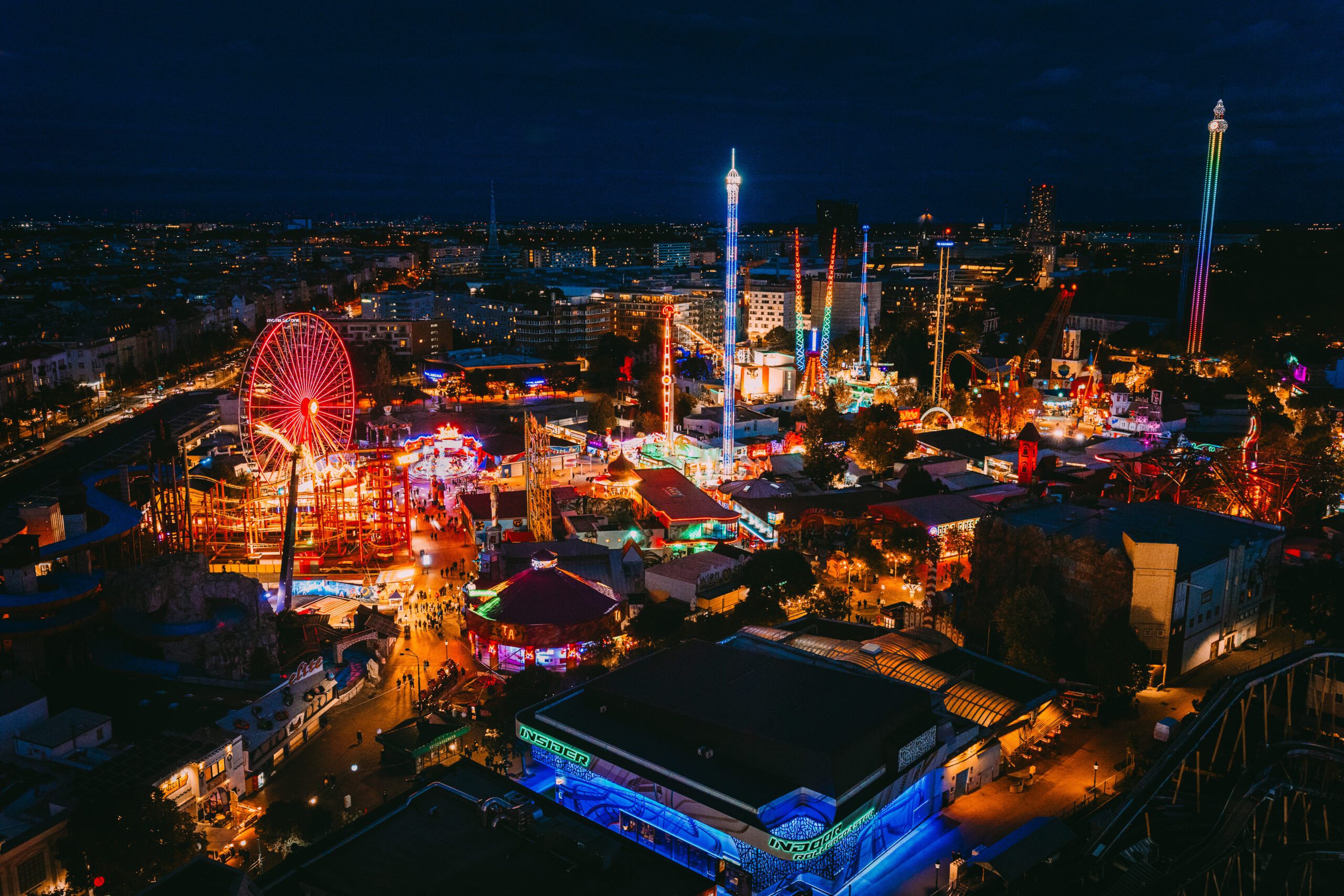
Surrounded by silence, we beheld the twinkling lights of the Vienna Prater and the magnificent skyline of the city itself.
Shortly thereafter, we both recognised the potential to offer a similar experience to the public. It eventually resulted in an experience ALMOST as good as the actual rooftop ride itself. Well, almost… because some things are just meant to be kept special and close to the heart.
02
From swings to a better idea
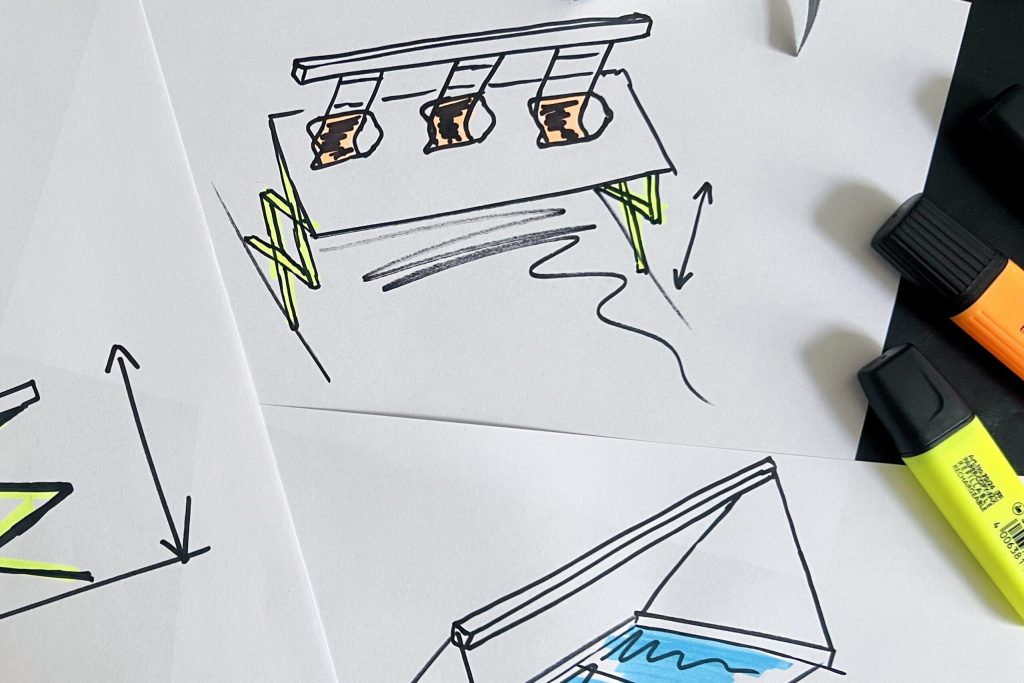
The major challenge was to minimise disruption to regular operations while ensuring that we could offer a comparable experience to the breathtaking rooftop ride.
The idea of adding swings was initially a good one, but it required an adaptable moving floor to facilitate easy boarding at ground level. Furthermore, with swings, you can only face in one direction, limiting the view.
In the end, incorporating the necessary lift table into the existing setup posed logistical and budgetary constraints. Pursuing this way would have made the project significantly more complex and considerably more expensive. So, I kept on thinking about how to implement a similar experience effectively.
03
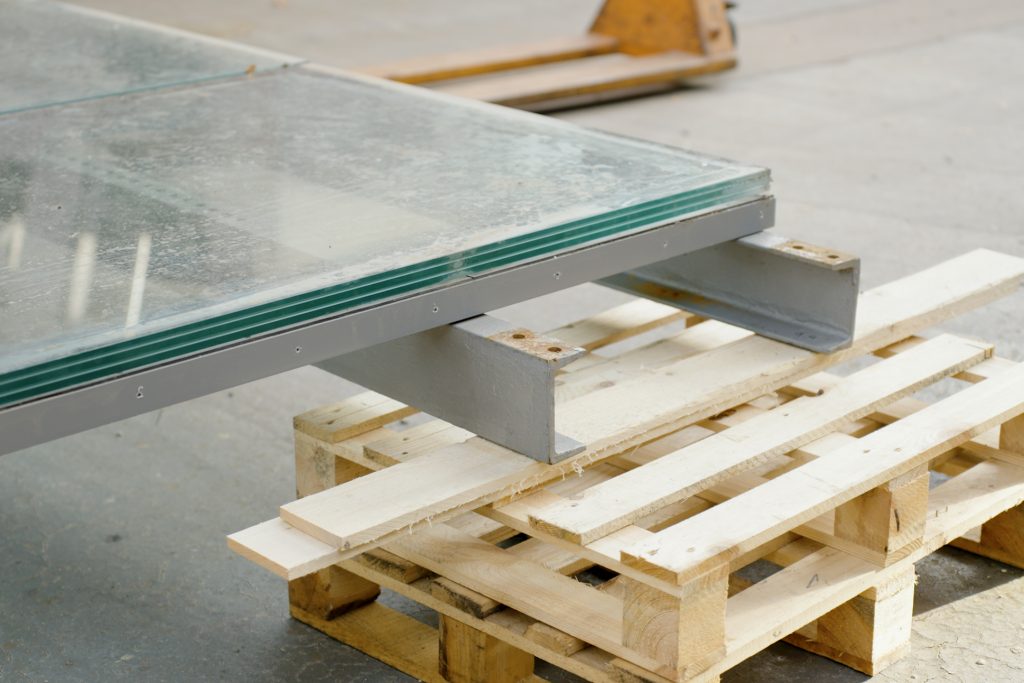
The solution is a glass platform
The glass platform solves all problems and is easy to use within regular operations.
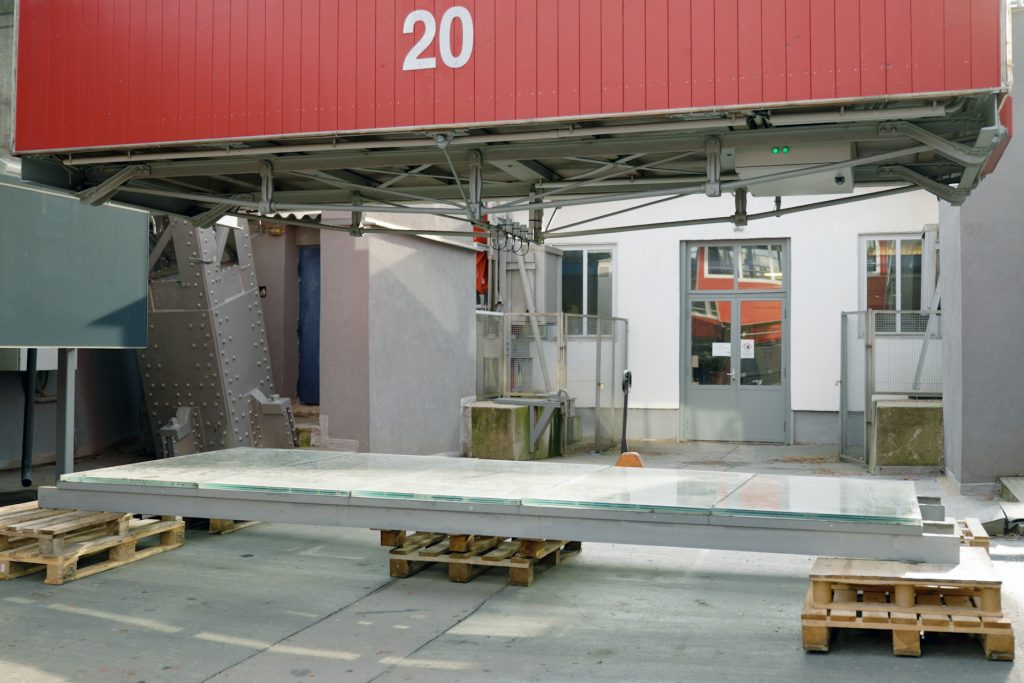
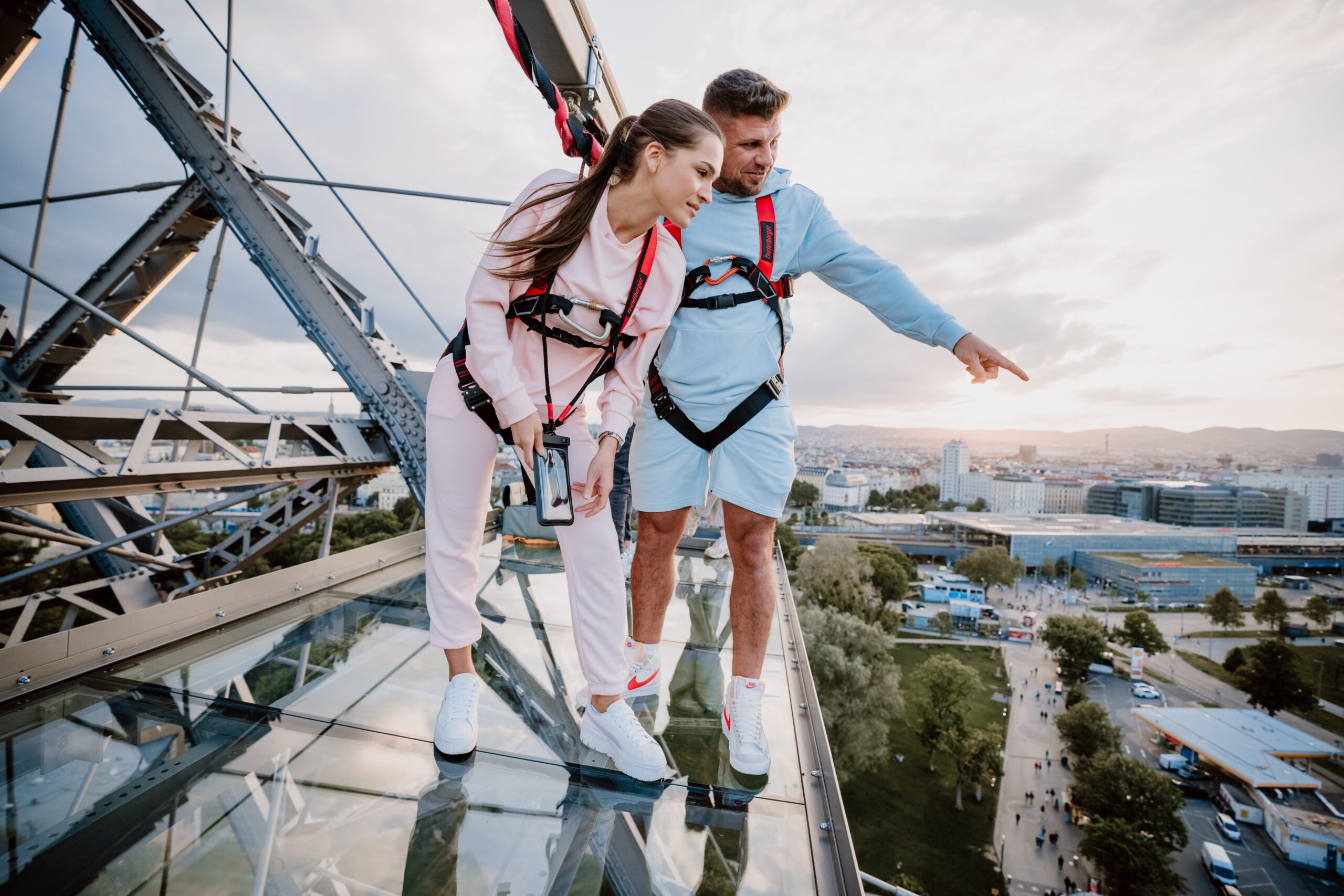
- Pick-up Guests arrive at the Vienna Giant Ferris Wheel and are picked up by a tour guide.
- Harness The guide helps guests put on their safety harnesses and stays with them during the entire journey.
- Briefing After a quick safety briefing, guests step onto the platform and attach to a safety cable to reach their spot.
- Ready The guide secures the safety harness to the final attachment point, and the journey is ready to begin.
For the next few minutes, guests encounter a truly unique experience.
04
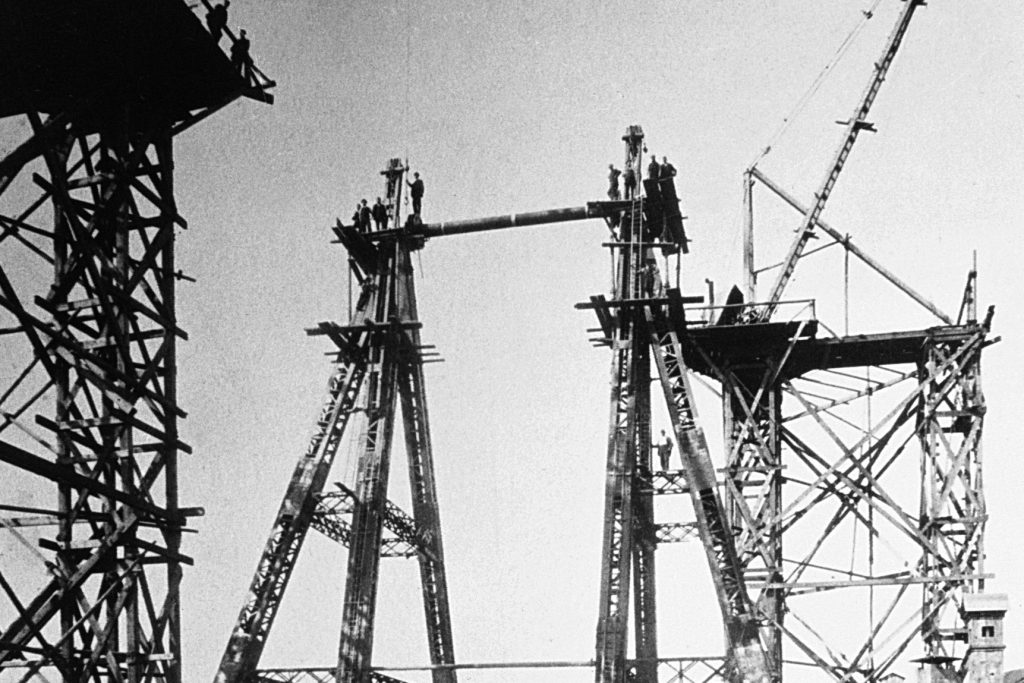
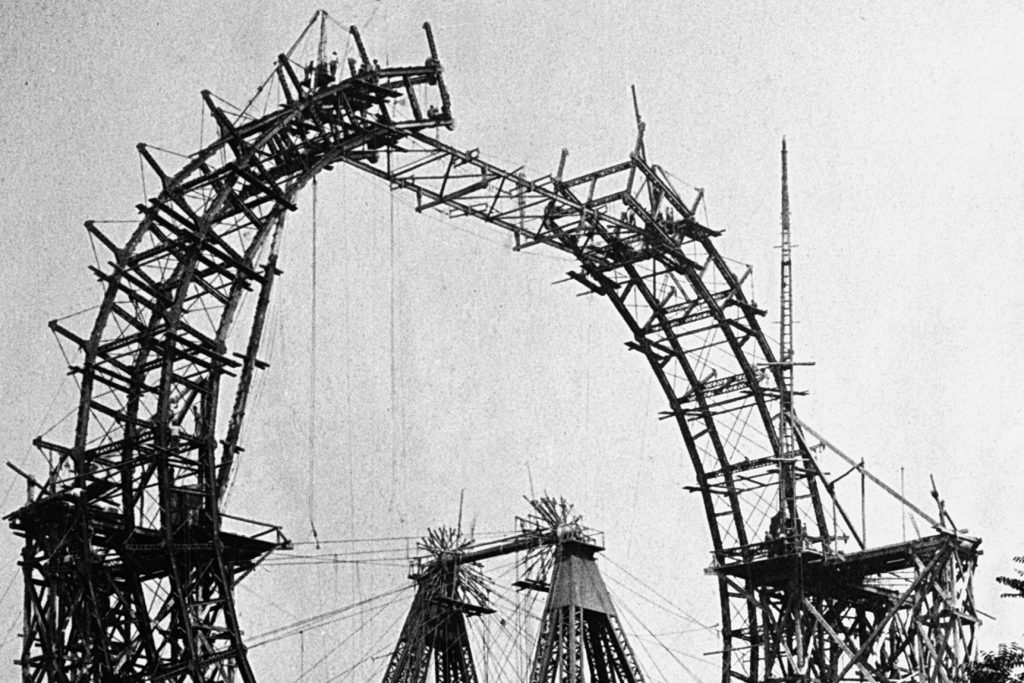
Dedicated to the construction workers of 1897
At Plattform 9, guests discover a truly unique experience, dedicated to the construction workers who erected the Wheel in 1897. The ride offers the only way for the public to truly grasp the challenges of working at heights of about 64 metres.
- 1897The Wheel is erected
- ~64 mWorking height
- 15Wagons
- 2022Plattform 9 opens
- 125Years of the Wheel
Side fact: body belts, the predecessors of safety harnesses, only gained popularity in the 1920s – more than two decades after the Wheel was built. Keep this in mind as you enjoy your ride.
05
Plattform 9 has gained significant attention
The new experience was launched just in time for the 125th anniversary of the Vienna Giant Ferris Wheel. Moreover, it served as a successful promotional tool for “The most spectacular job in Austria” campaign, as well as for various other marketing collaborations and promotional events.
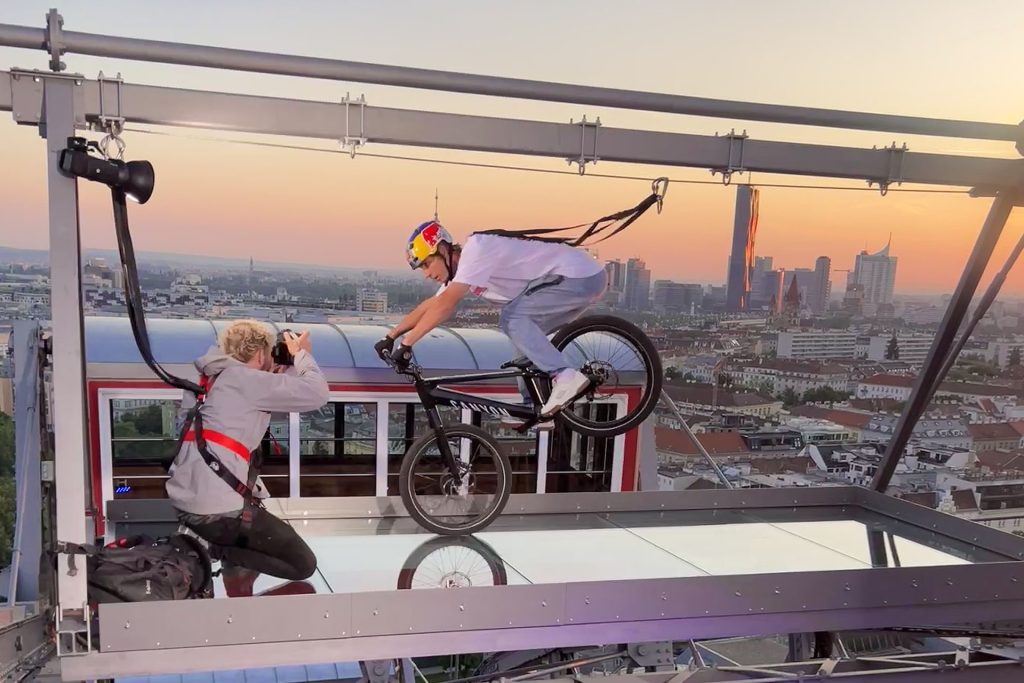
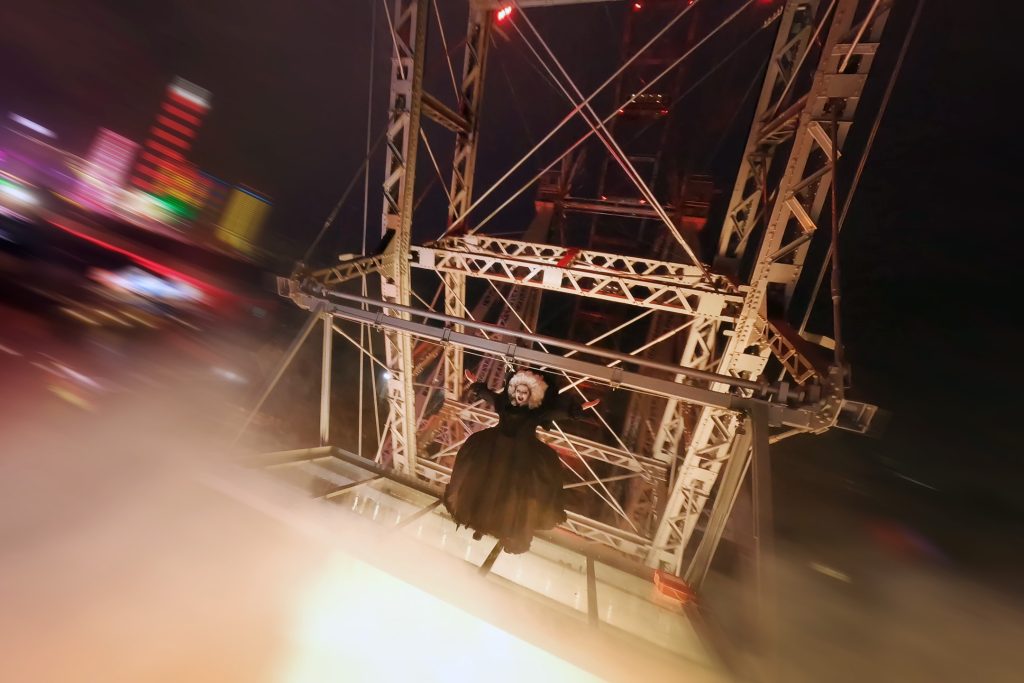
Plattform 9 expands a tradition dating back over 125 years with a breathtaking new innovation.
In summary, Plattform 9 is a major success for the Vienna Giant Ferris Wheel. It is the perfect symbiosis of tradition and modernity, seamlessly fitting into the overall portfolio of the Wiener Prater.
Looking for a new experience within an existing attraction? I help operators turn ideas like this into something guests can book. Get in touch
Mini Montanha Hilda
Racing the season
How a coaster from Bavaria reached Brazil’s highest town in under four months.
By Julian Omonsky · Campos do Jordão, Brazil
From an indoor park in Cologne via Munich and the Bavarian Alps to Parque Capivari in Campos do Jordão: the story of a small coaster that found its fourth home across the Atlantic. It cleared customs after a piece-by-piece inspection and became the favourite ride of the park’s youngest guests.
On 6 June 2026, a small locomotive-style train left its station at Parque Capivari for the first time with paying guests on board. Three and a half metres high, 60 metres of track, a few laps around a water fountain. By industry standards, it is a modest ride. For the children of Campos do Jordão, it is their first real roller coaster – and for me, one of the most intense projects I have worked on.
Less than three and a half months earlier, the same coaster was still standing in Bavaria.
01 · The gap
A family coaster for all ages
Campos do Jordão sits at 1,628 metres in the Serra da Mantiqueira and is Brazil’s highest town. Parque Capivari lies at its centre, with a cable car running up a small hill. Like the Prater, it charges no admission: guests pay for each individual attraction.
That was one reason the site appealed to me. From my work in the Prater, I know this system and its guest behaviour very well.
The park already had a strong coaster-like attraction: an alpine coaster that uses the slope of the hill. But on an alpine coaster, riders control their own speed with a lever they push forward. That works for adults and older children. For the youngest guests, it does not.
The park was missing an attraction for small children. A compact family coaster filled that gap exactly.
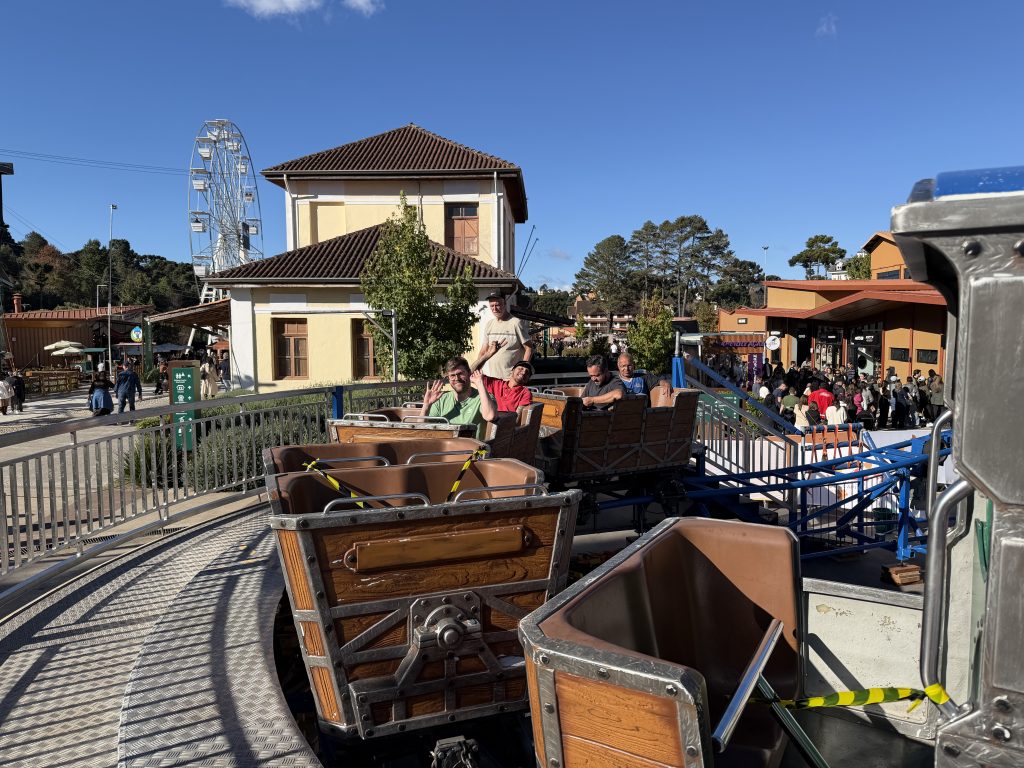
Real coaster feeling – without a minimum age that excludes half the family.
02 · The purchase
Why second-hand
A new coaster would have taken months to build before it could even be shipped.
A used coaster in good condition was available immediately, had a proven operating history and fitted the budget.
The ride is a compact kiddie coaster by the Italian manufacturer I.E. Park, a Mini OTTO with a custom layout: one train of four cars, sixteen riders. Campos do Jordão is already its fourth home.
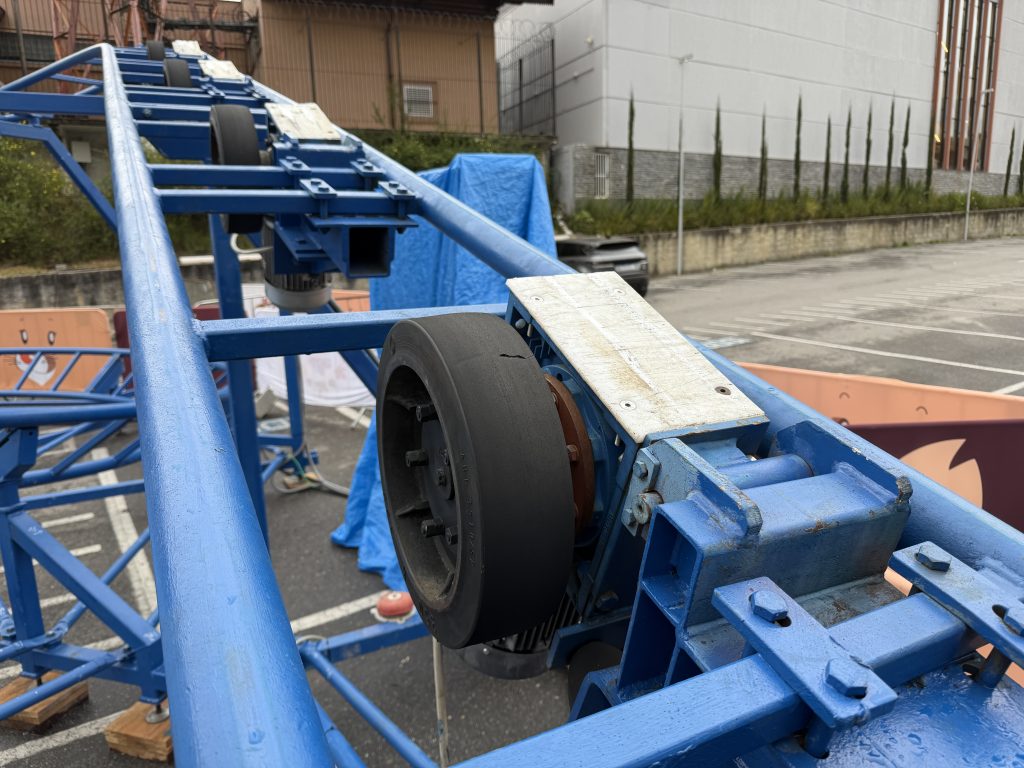
What surprised me most was how robust the ride is. It had spent many winters outdoors in Bavaria, through deep frost. Apart from one gearbox with a crack and the usual wear parts – wheels and drive tyres – it was in good shape.
- 2003 · Cologne Its story began at Tobiland, a large indoor play park, where it ran as the Tobiachterbahn.
- 2007 · Munich It then moved to the Lollihop and became the Wilde Mini Maus.
- 2014 · Bad Tölz At the Blomberg in the Bavarian Alps it operated as the Blombini-Express.
- 2026 · Campos do Jordão At Parque Capivari it now runs as Hilda’s Mini Mountain.
Four homes, two continents – and still running.
03 · The schedule
The season sets the deadline
The biggest challenge was not engineering. It was time.
Campos do Jordão’s high season is the Brazilian winter, from June to August, with July as its peak. To recover the first costs and to see how guests responded, the coaster had to be running before the season began.
That left less than three and a half months for everything: purchase, dismantling, export, ocean freight, customs, inland transport, assembly and commissioning.
The only way to make that work was to prepare everything in advance. Dismantling plan, crew, packaging, container and documents were organised before the deal was closed. Once the final details with the seller were agreed, I only had to pull the lever, and the whole chain started moving. The time saved at this stage was exactly the buffer we needed later.
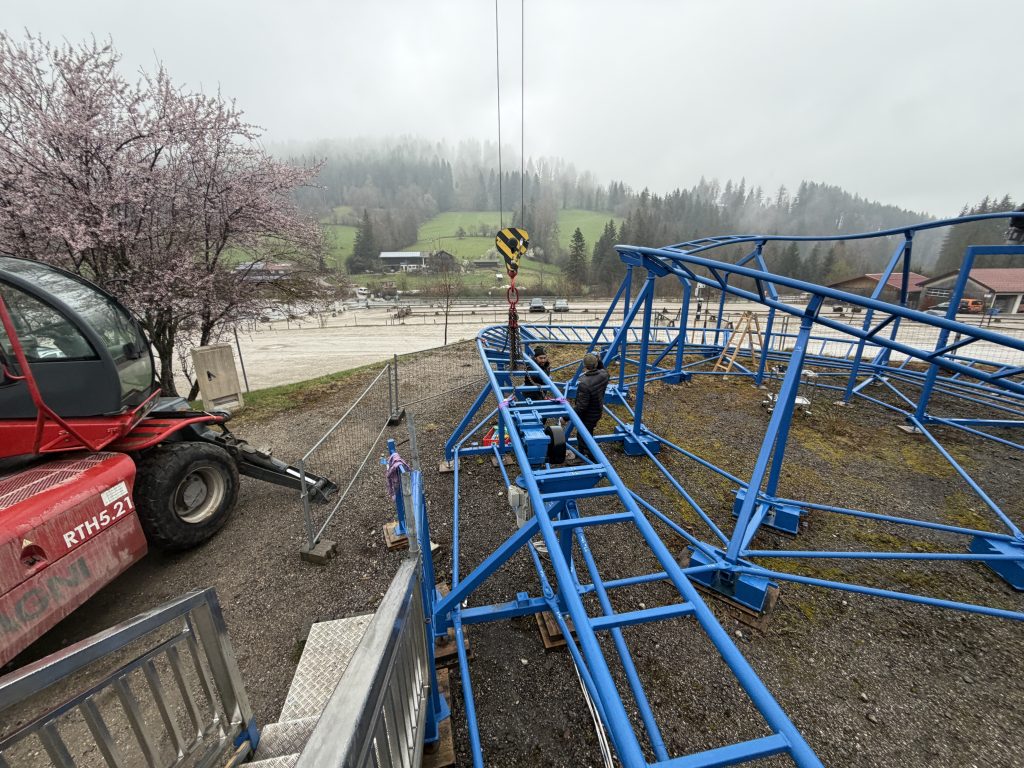
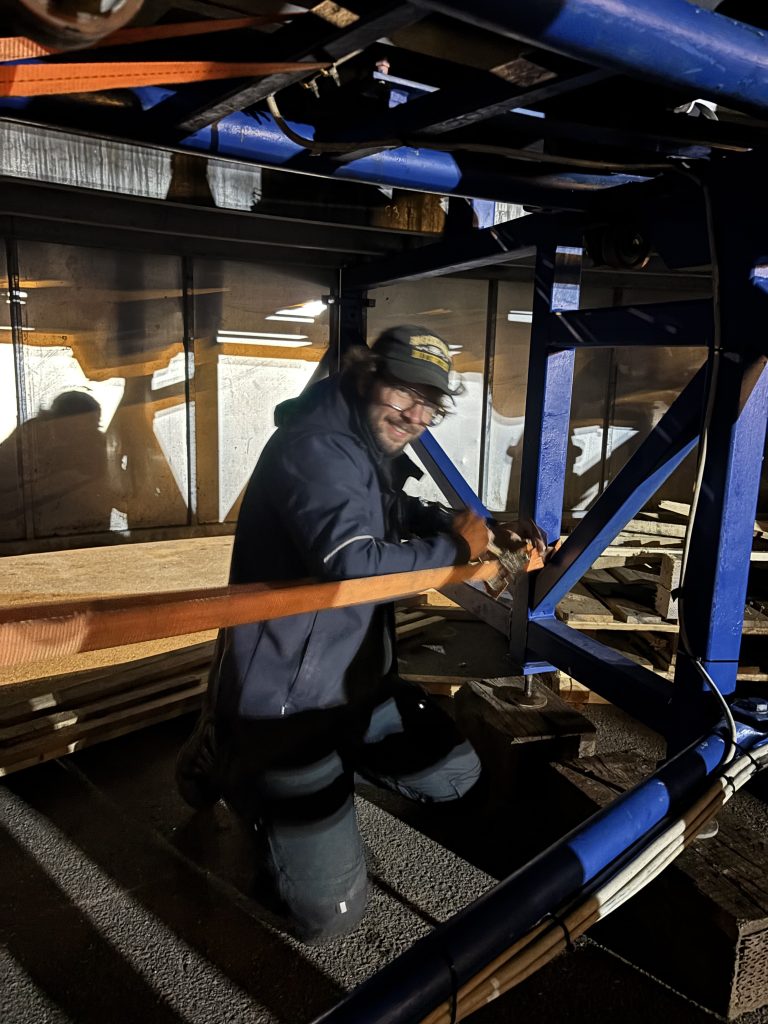
Dismantling in the Bavarian rain. The dismantling went to plan – apart from the weather. Several days of rain slowed the work, but my crew stayed on schedule. The container was loaded on time and released for the truck to the port of Hamburg.
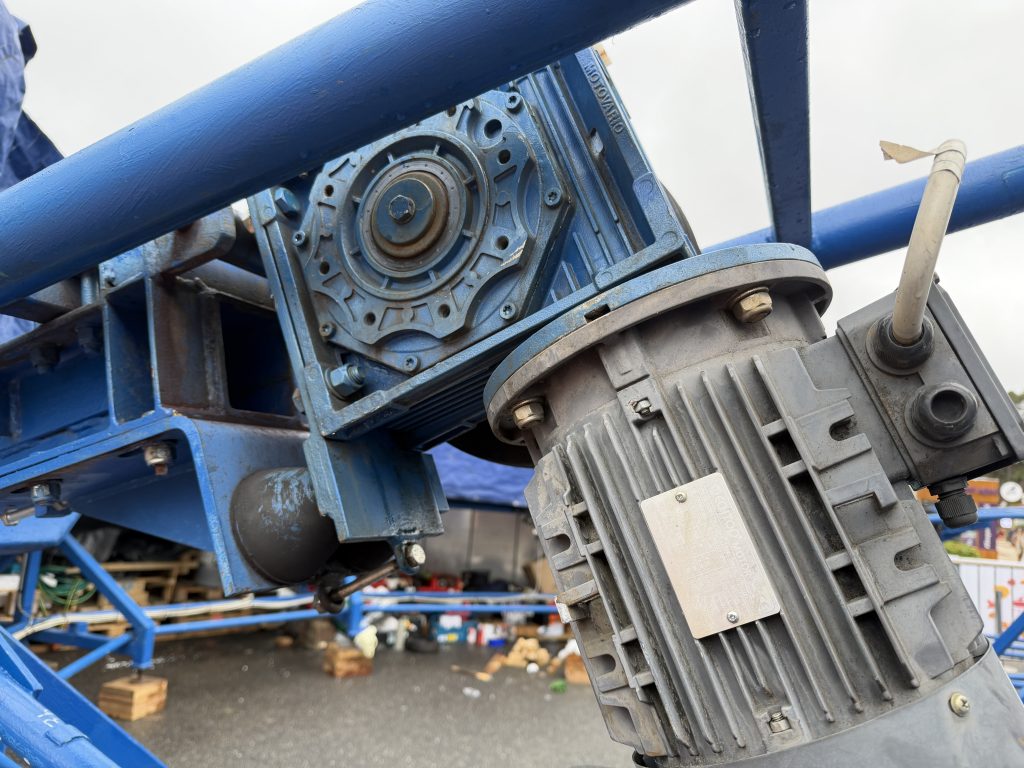
It also brought a first surprise. When we turned over one of the track sections that carry the drive tyres, gear oil began to leak: the gearbox had a crack. We drained the oil before it went into the container. The repair would have to wait for Brazil.
04 · The crossing
Four weeks of letting go
Then came the part every project manager dislikes: waiting. For about four weeks, the container was at sea between Hamburg and Santos. Once a container is sealed and on the ship, the project is out of your hands. There is nothing left to optimise, only to trust the preparation. I can confirm: it is an uneasy feeling.
The drive from São Paulo down to the port of Santos is an experience of its own. Elevated motorways carry the trucks through steep mountain terrain, one level stacked above the other. It looks like a film set – or another planet.
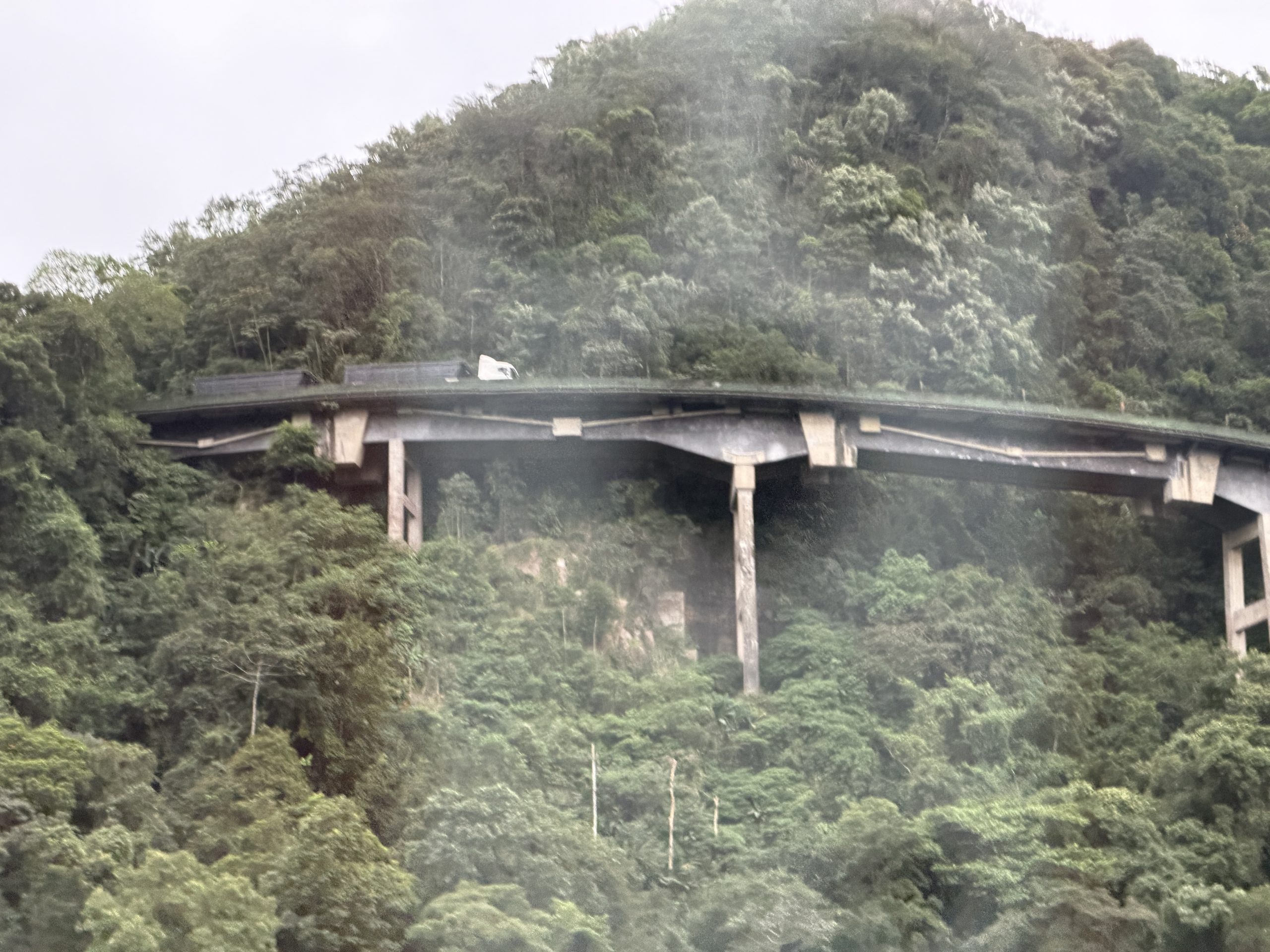
Santos
Inspected piece by piece
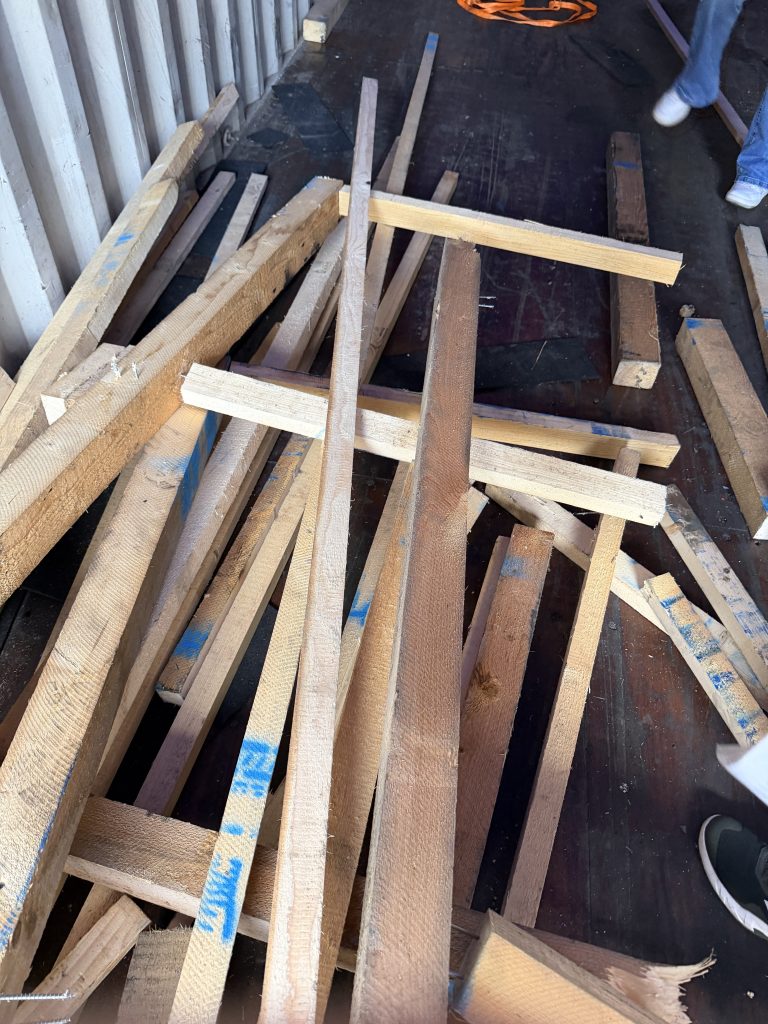
In Santos, Brazilian authorities inspected the shipment and initially questioned whether the wood used for packing met import requirements. We had paid particular attention to exactly this point before shipping, because wood packaging is a classic stumbling block in international freight.
It still triggered an additional inspection. The coaster was unloaded from the container and every single piece of wood was separated and examined. The result: everything was in order. The process cost three days.
Compliant packaging is necessary, but it does not guarantee a smooth inspection.
05 · The build
Four days from arrival to first ride
From Santos, the coaster travelled inland to Campos do Jordão. There, we assembled and commissioned it in about four days.
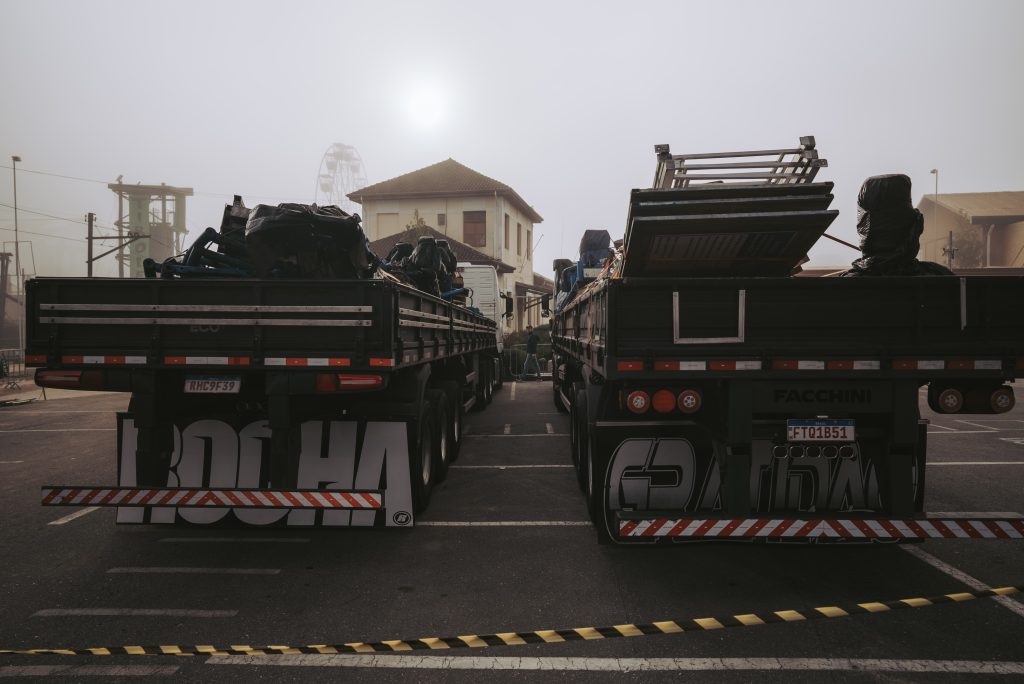
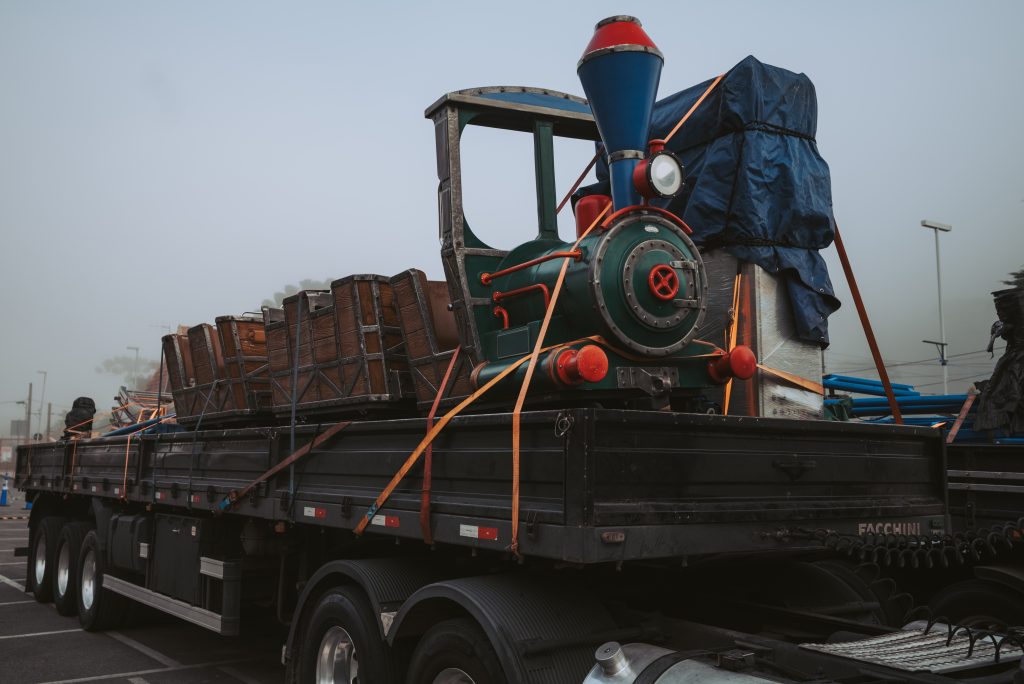
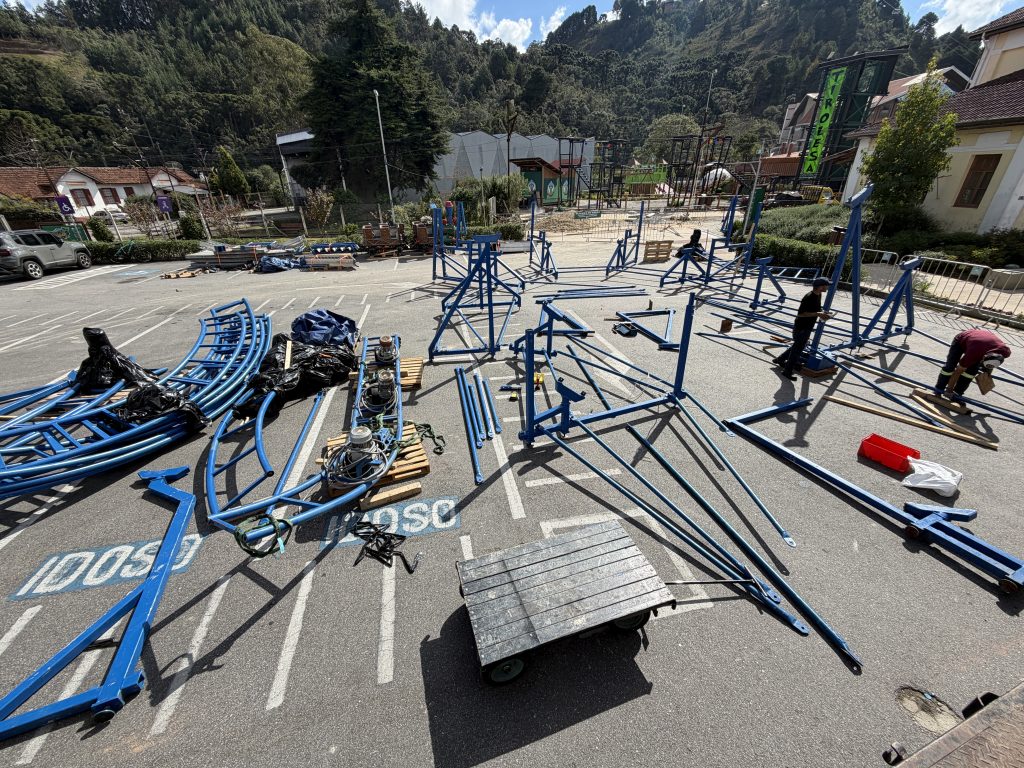
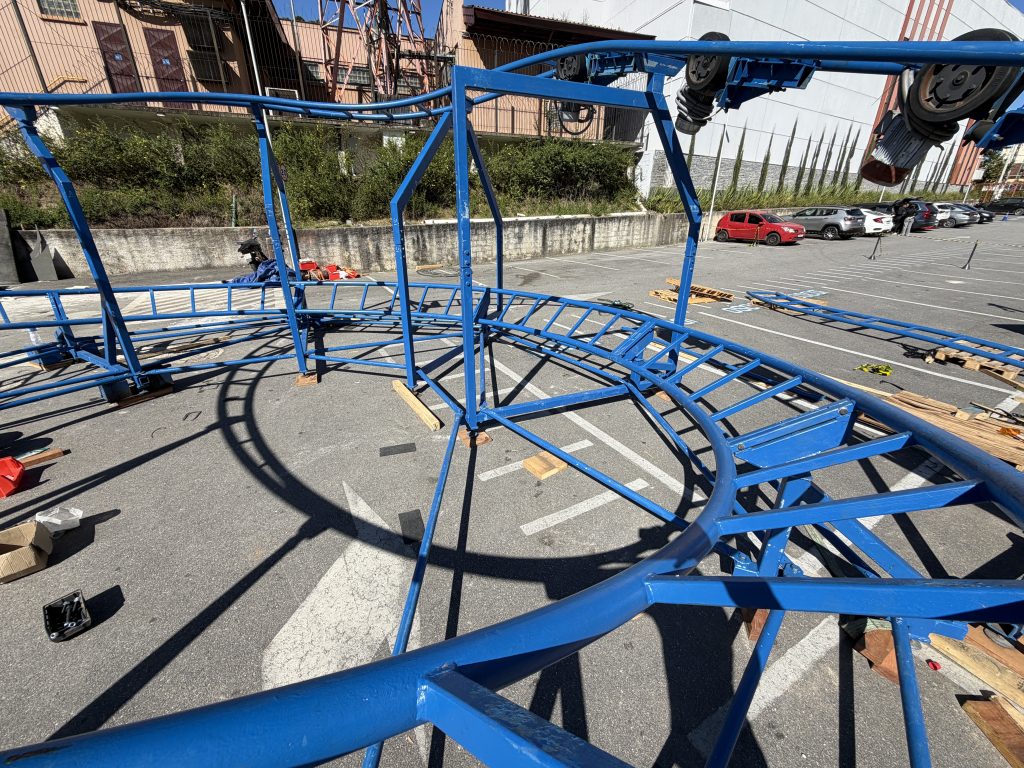
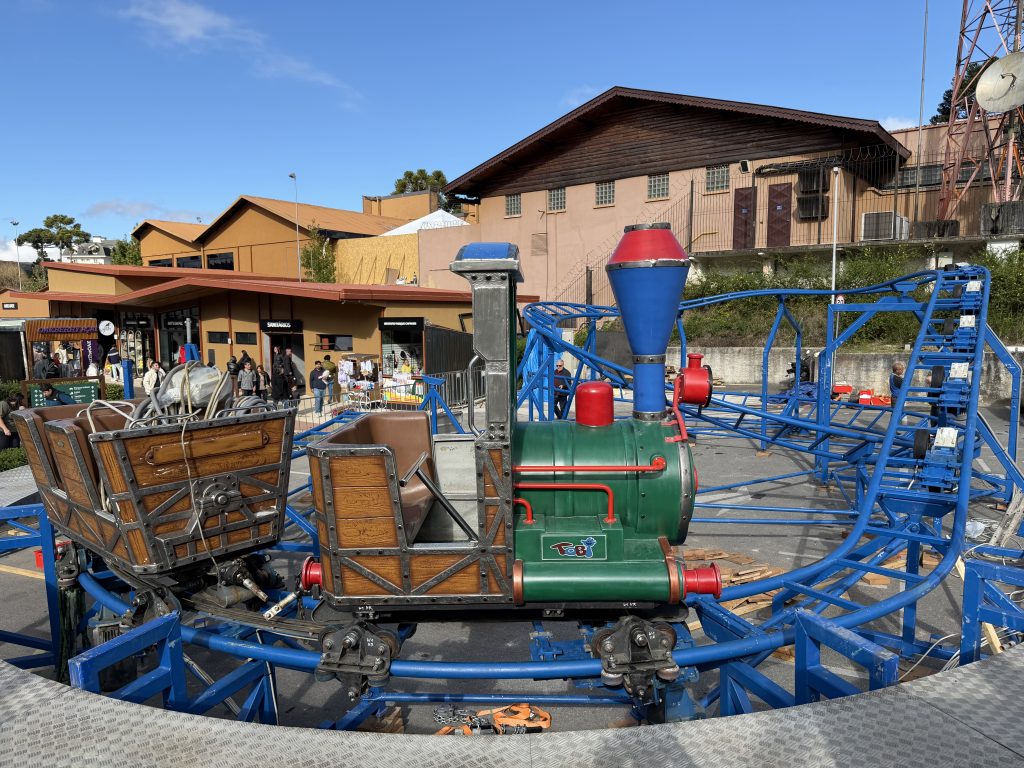
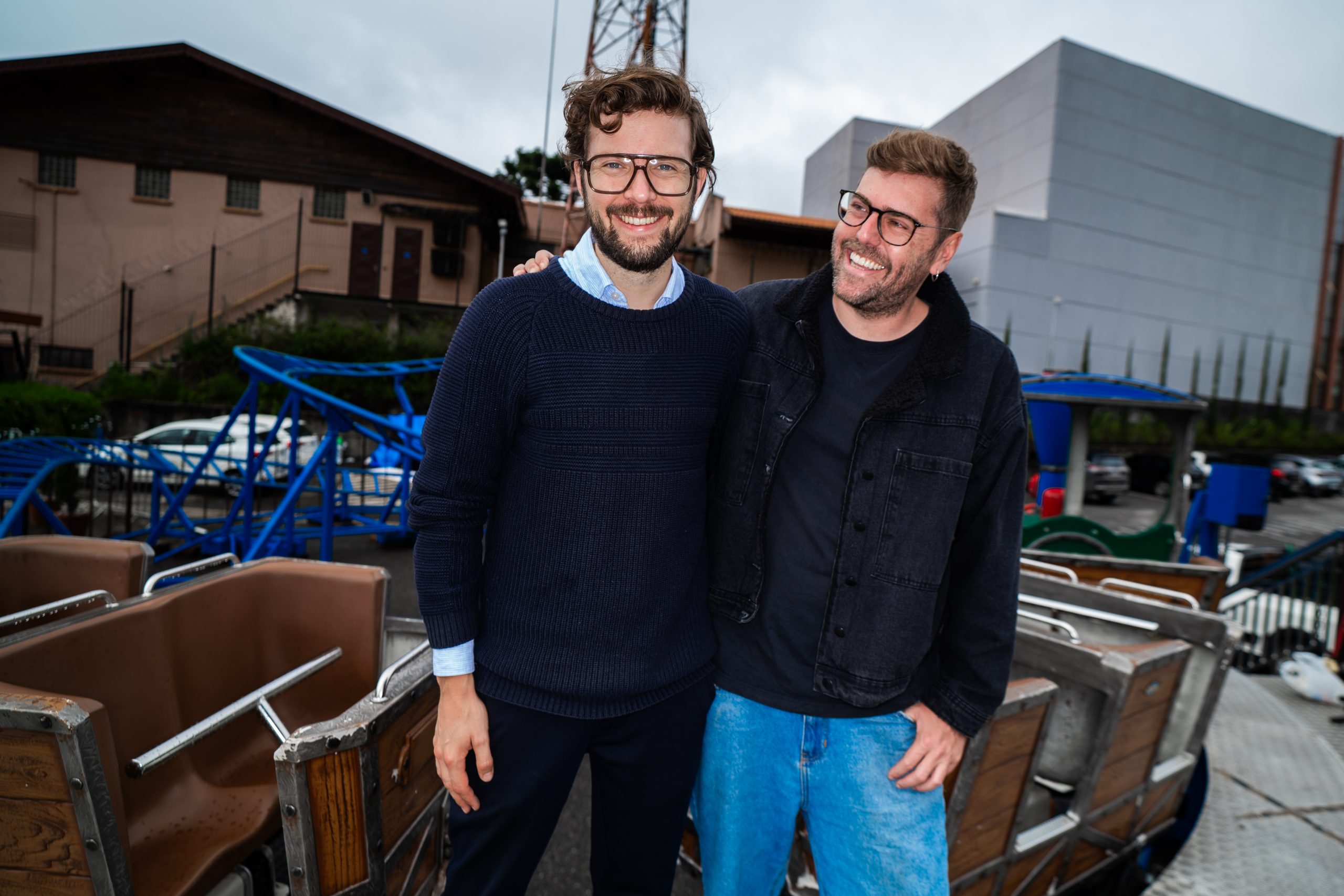
None of this would have been possible without Felix, my business partner in Brazil, whom I have known for around ten years. Together with our crew we worked late into the night.
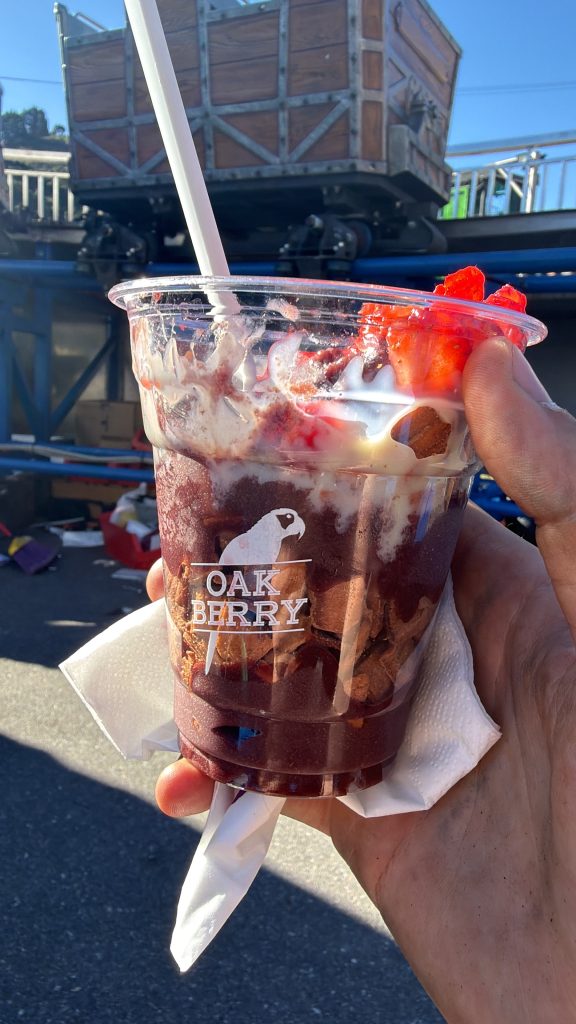
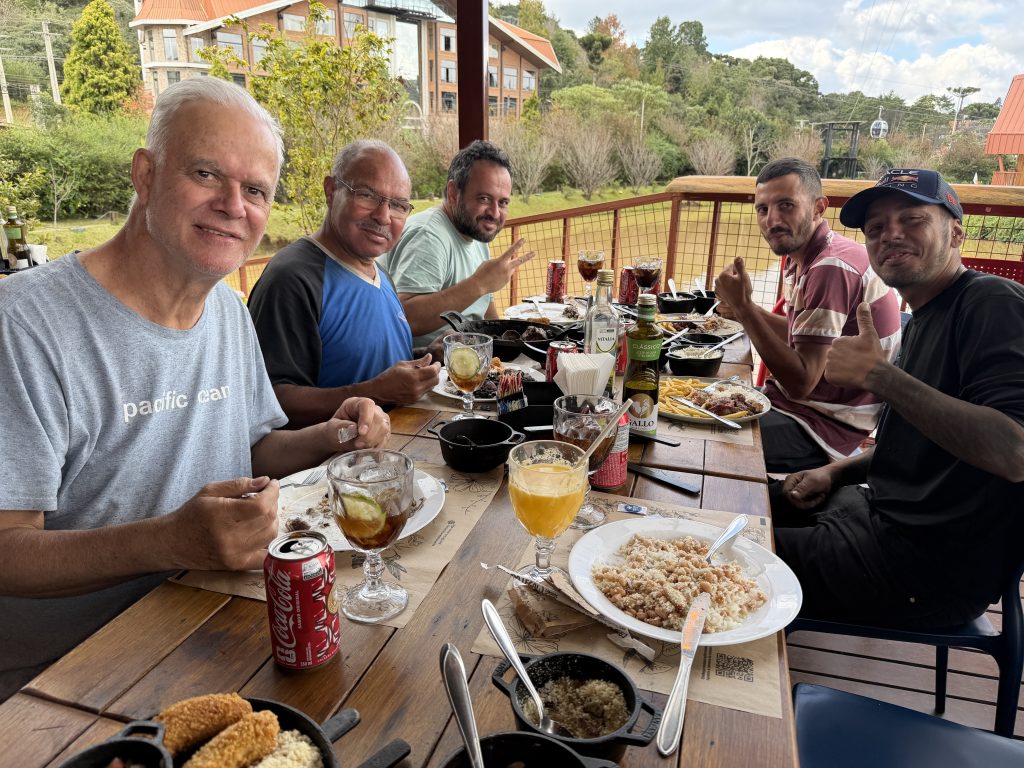
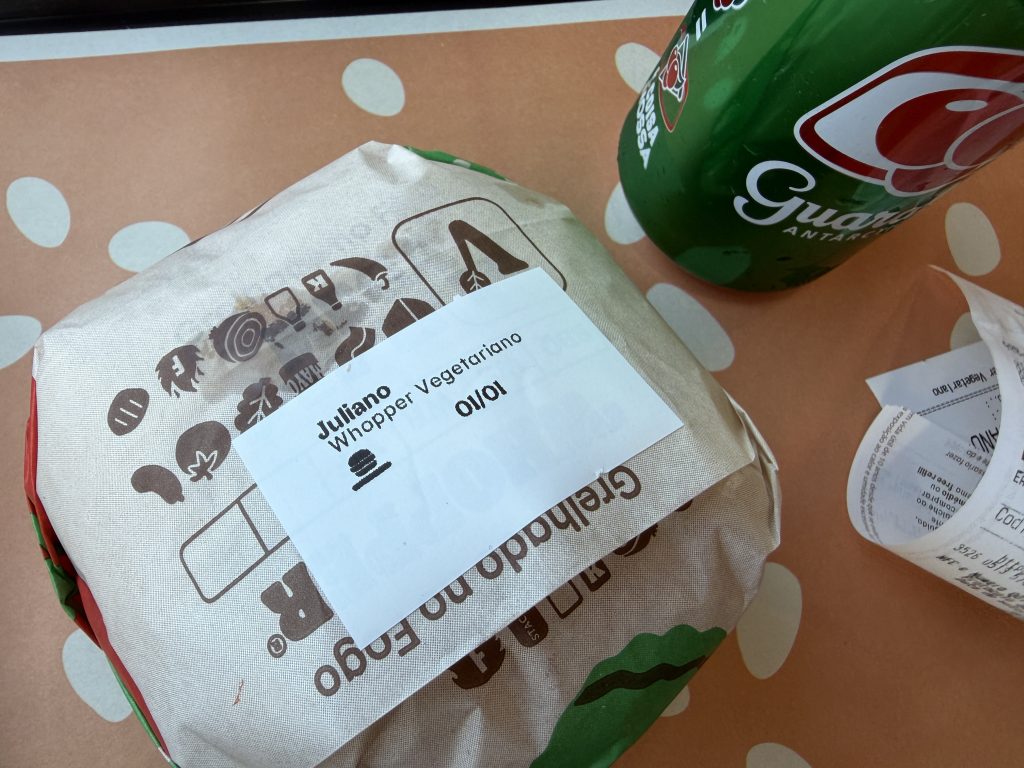
My fuel during the day was a typical açaí bowl from the stand next door – fast, filling, and I could keep working with it in my hand. I ate one practically every day.
06 · The repair
Repairs against the clock
Not everything went perfectly.
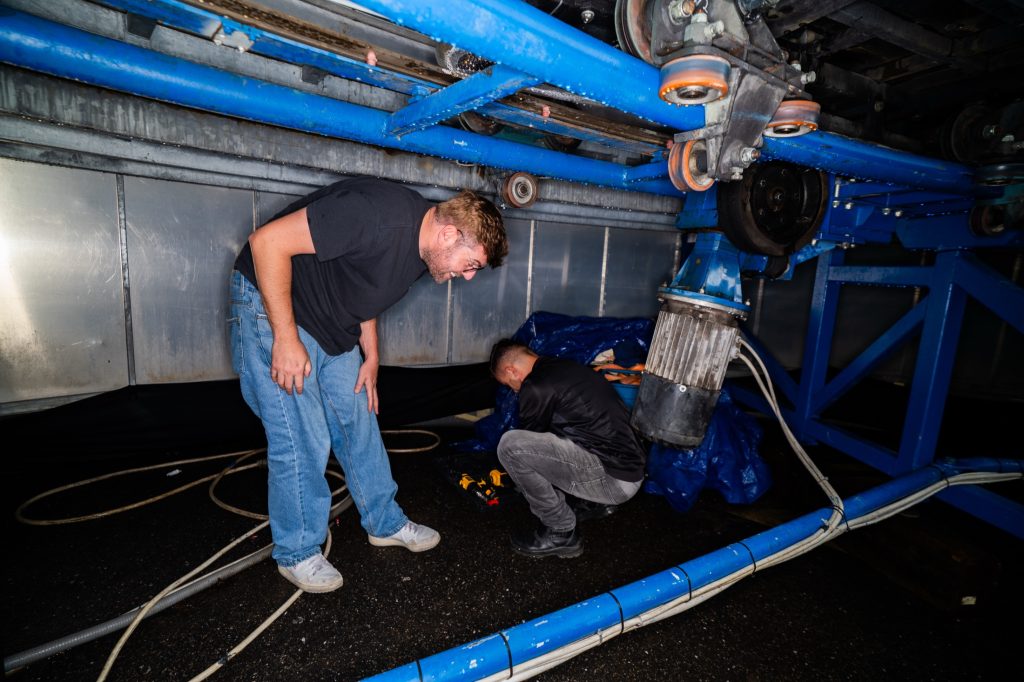
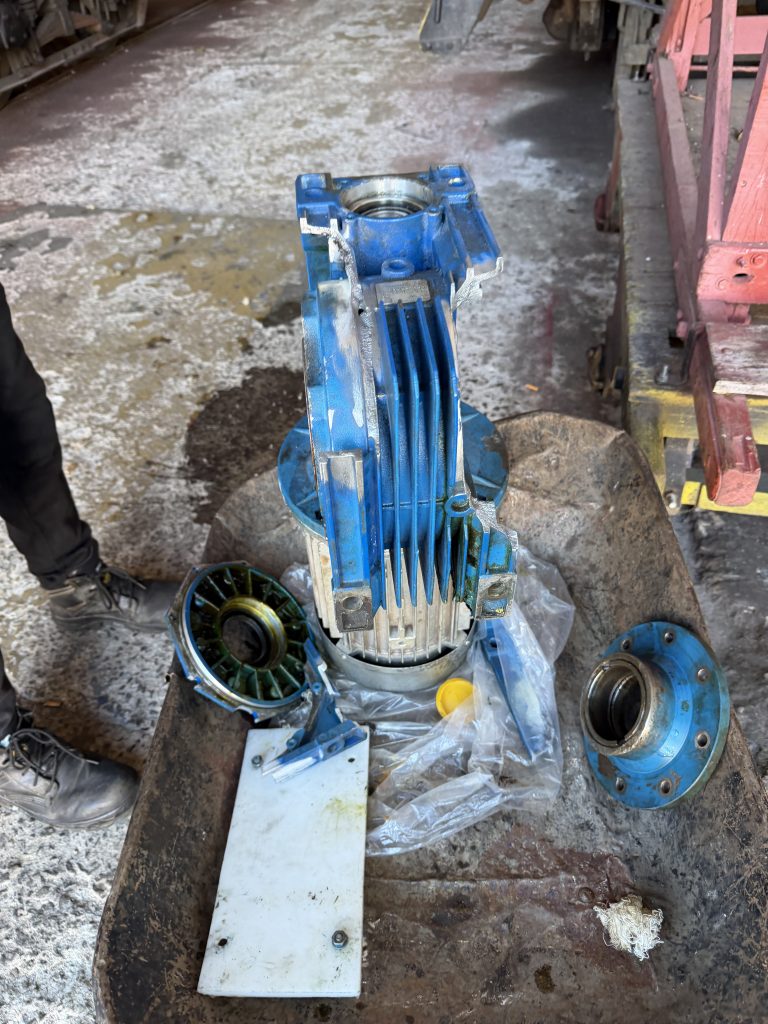
The cracked gearbox sat at the very top of the lift. It carried the greatest load from the train, which probably caused the crack we had noticed in Germany. We replaced it on site in Campos do Jordão – a lot of extra work in a schedule that had no slack.
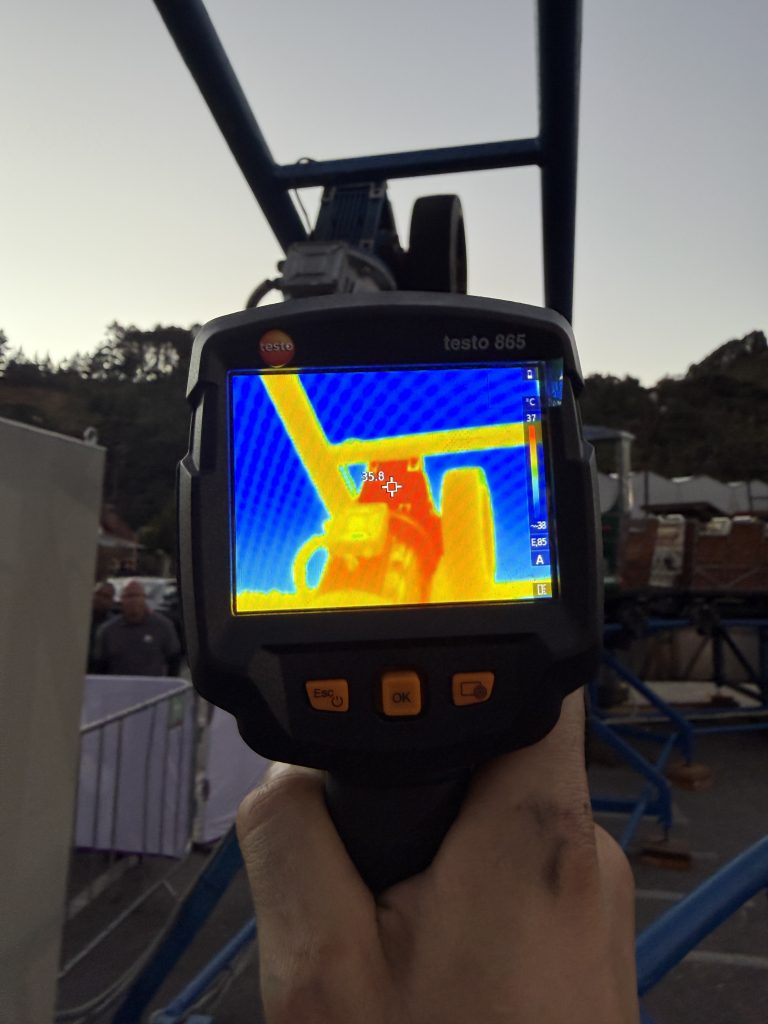
A second gearbox gave us a different worry: it might overheat. So we ran the ride and checked its temperature constantly with a thermal imaging camera. The readings told us when to add extra breaks or adjust the operating cycle for the moment.
That way we could keep the ride running under control, without risking damage to a second gearbox.
You will find things you did not expect. What matters is finding them early, handling them cleanly and having the experience to fix them on site.
07 · The result
Just in time for the season
The theming came with the ride and was adapted to its new home. We also added a water fountain to the layout. Because the train runs several laps, the fountain gives each lap a different rhythm and keeps the ride varied.
The ride opened on 6 June 2026, just in time for the season. Guests love it. It offers a gentle ride, yet the drop from three and a half metres delivers a genuine roller coaster feeling, and the curve adds a short burst of speed. It is the perfect first coaster for the park’s smallest guests – the riders who will be queuing for the big coasters a few years from now.
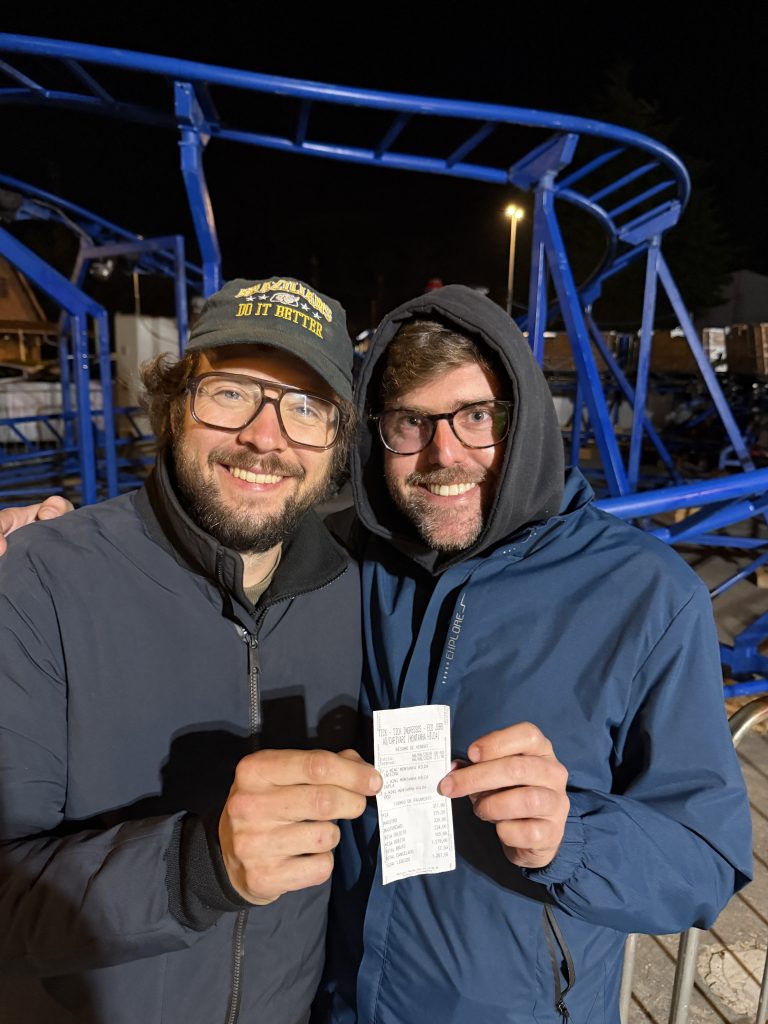
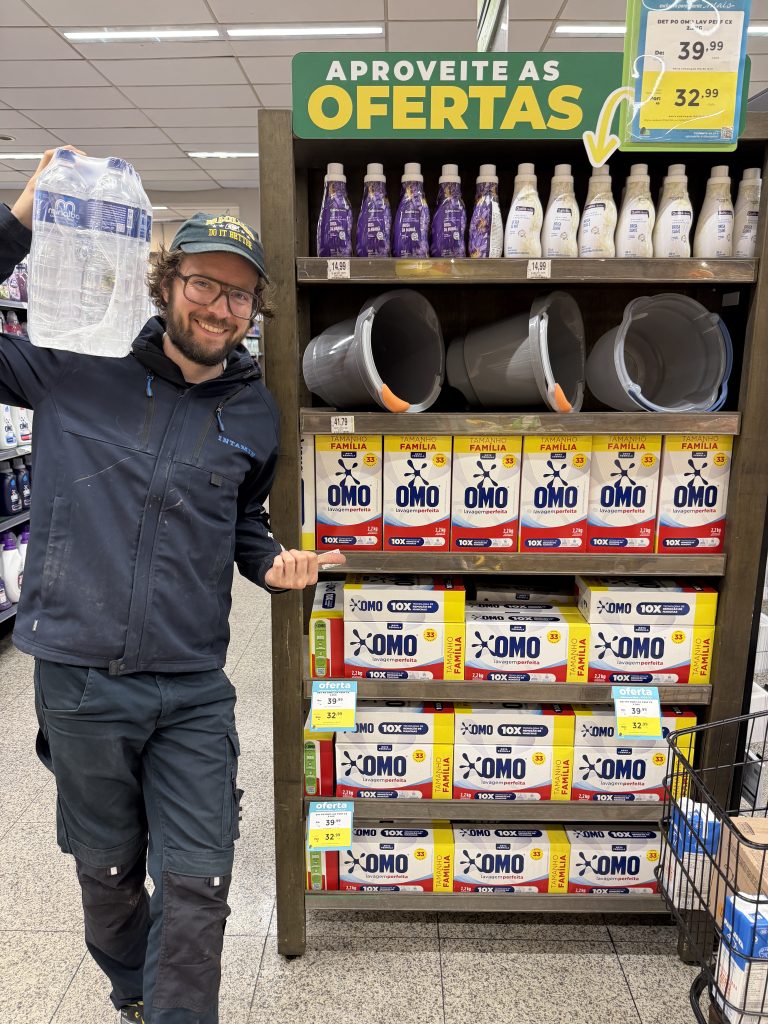
One of my favourite photos from the project shows Felix and me holding our very first takings. After weeks of costs, deadlines and worry, it was the moment the project became real.
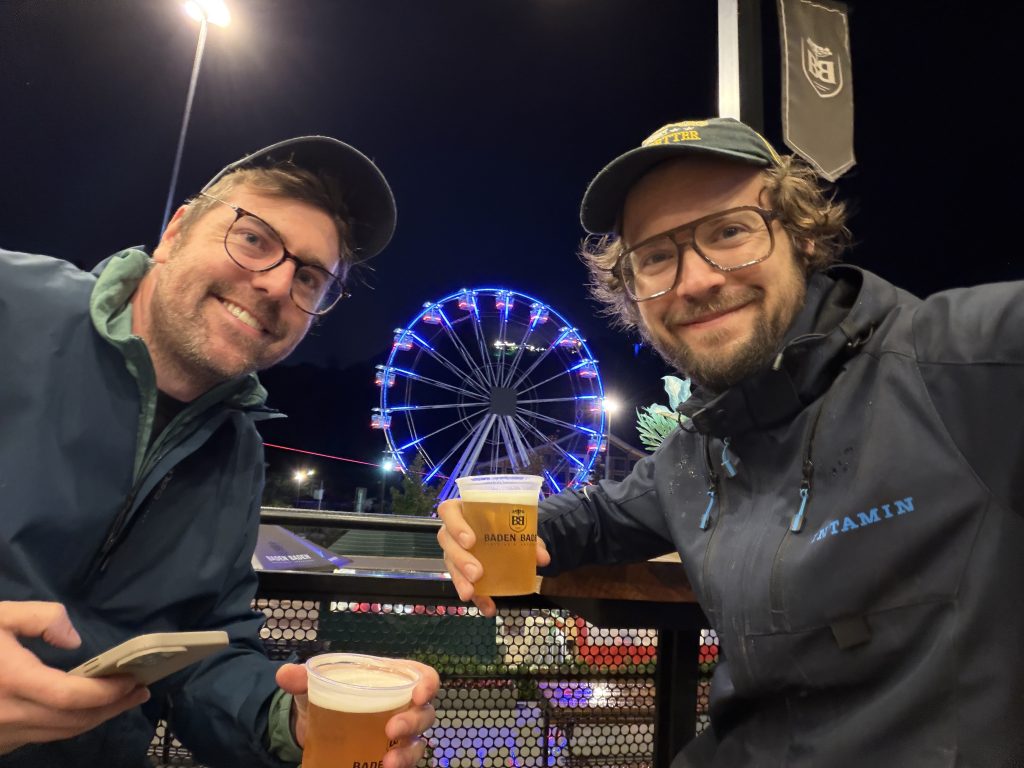
08 · The market
What buying my own coaster taught me about the used-ride market
Trading used rides has become an important part of my business. Buying a coaster for my own project changed how I see that market.
Sitting on the buyer’s side of the table, with a hard deadline and my own money at stake, I understood much more directly what buyers need:
- Clarity early Honest information about condition, documentation and history before the deal, not after.
- A seller who responds fast With a tight timeline, every day of waiting is a day lost on site.
- A realistic plan for dismantling and transport The price of a ride is only part of the cost. Logistics decide whether a project works.
- Someone who has done it before Customs, packaging and inspections are where inexperienced projects lose weeks.
Commissioning in Brazil went almost without a hitch, too. My biggest worry had been the switch from 50 Hz to Brazil’s 60 Hz grid. In the end, it caused no problems at all.
A well-built ride, properly maintained, can travel much further than many buyers expect.
09 · Hilda
More to come
The partnership with Parque Capivari continues. Next, we are adding further games. For the coming summer season, two more rides will join the park.
Buying or selling a used ride, or moving one across borders? I know both sides of the table – and how to keep a project on schedule. Get in touch
Sources
- RCDB – Blombini Express – I.E. Park Mini OTTO, relocations Tobiland, Lollihop, Blombergbahn, Parque Capivari
- coaster.cloud – Blombini-Express – opened at the Blomberg under this name in 2014
- Coasterfriends – Blombergbahn – at Blomberg since 2014, previously Lollihop Munich
- Freizeitparkweb forum – Tobiland – indoor park in Cologne-Godorf, opened 2003
- travel.com.br – Campos do Jordão – 1,628 m, Serra da Mantiqueira
- Diário do Turismo – Parque Capivari – free entry, only rides are paid
- RCDB – Trenó, Parque Capivari – the park’s alpine coaster
- Esse Mundo é Nosso – When to visit Campos do Jordão – high season June to August, July busiest
Wiener Looping
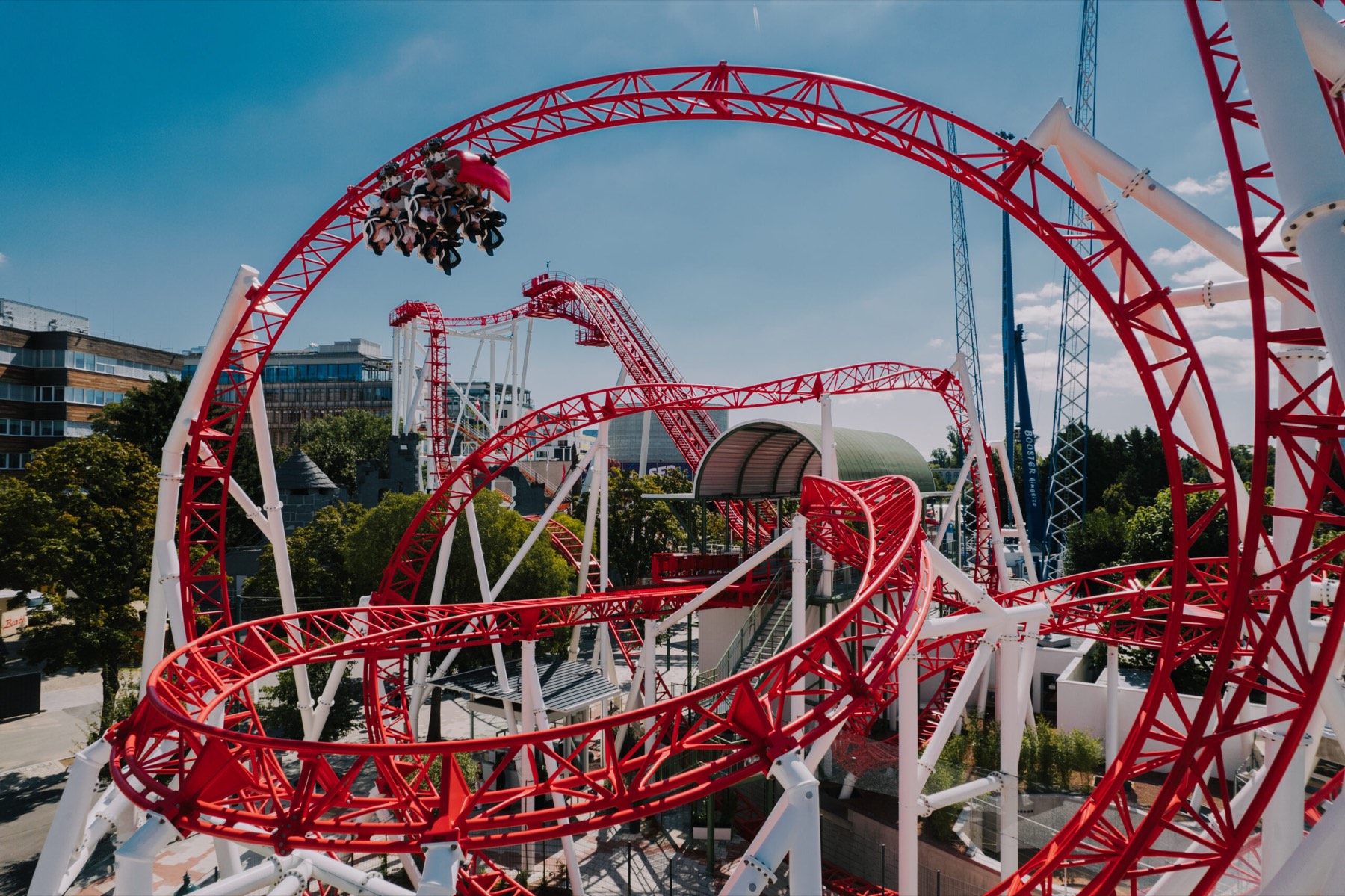
All-out on red
The Wiener Looping at Vienna’s Prater is more than a new roller coaster.
It is a strategic statement and smart investment decisions.
By Julian Omonsky · Vienna, Austria
More than 40 roller coasters have operated in Vienna’s Prater, yet none became a permanent modern flagship. The Wiener Looping changes that. It shows how a family business, a clear brief and an integrated design process can turn a difficult site into a long-term asset.
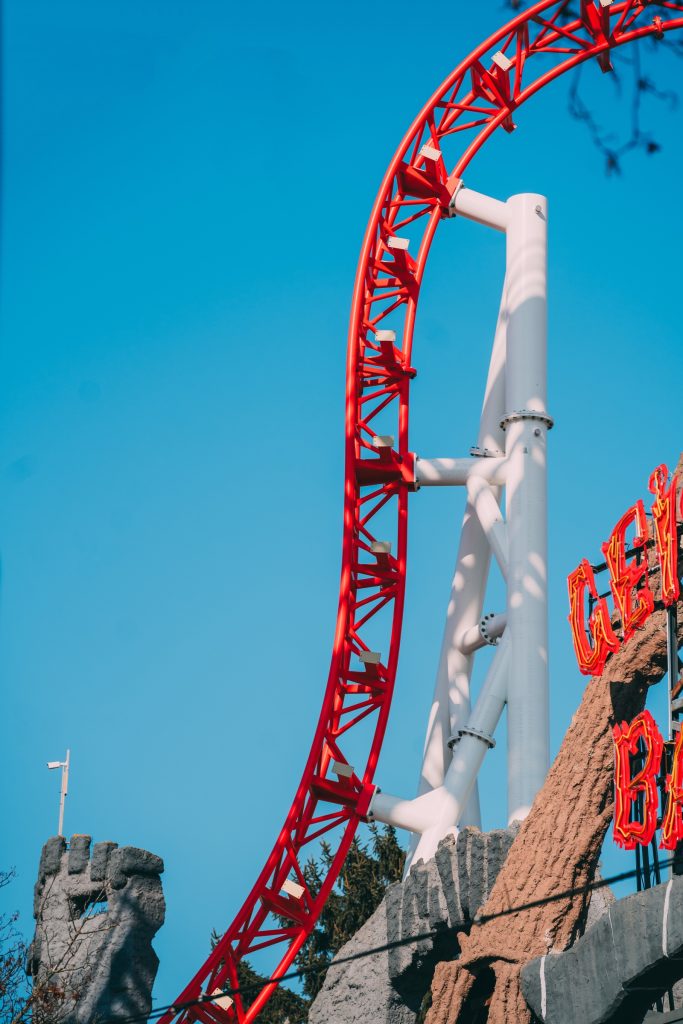
When a family-run business in the Prater commits to a looping coaster with a 92-degree drop, it is not a cautious investment. It is a bet on red: one family, one plot, one ride that has to hold its own against the flagship coasters of major theme parks. The Wiener Looping opened on 23 May 2025.
01
A heritage park with a development problem
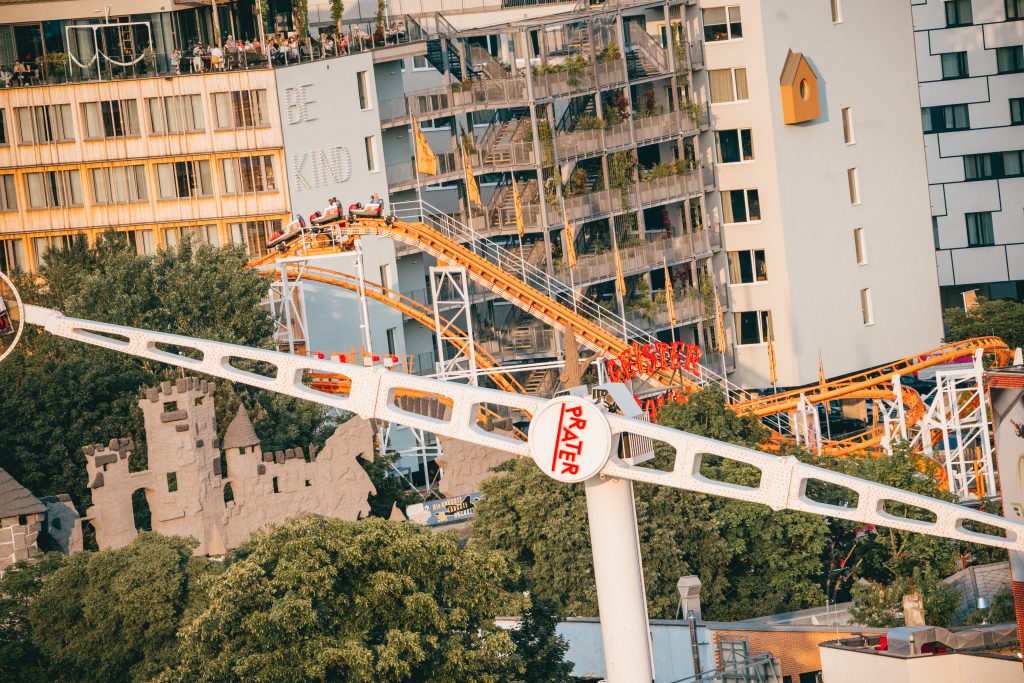
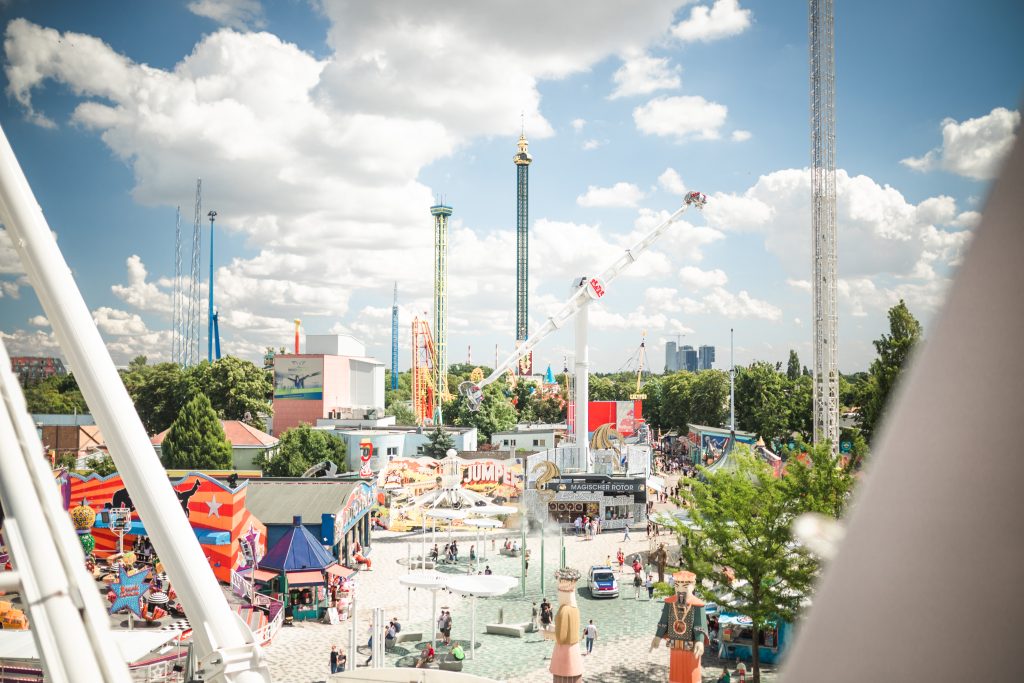
The Prater is one of Europe’s oldest amusement destinations. It dates back to the 18th century and welcomes millions of visitors every year. Unlike a master-planned theme park, it has grown organically, attraction by attraction, run by independent families over generations.
That structure gives the Prater its identity. It also makes large investments difficult. There is no central owner, no master plan and no shared budget. Every major ride is a private risk taken by one business on one plot. That is the main reason why, despite its long coaster history, the Prater never had a permanent modern flagship coaster until now.
02
The brief: bring the back of the Prater back to life
The project had two goals from the start. First, revitalise a quieter rear section of the park around the ghost train. Second, generate additional revenue for the neighbouring attractions, many of which are run by the same family.
The initiative came from Stefan Sittler-Koidl. His father-in-law had planned a coaster at the Prater back in 1982: the original Wiener Looping, which never opened to the public because of noise complaints from residents around the park. Stefan proposed developing the area and continuing that legacy, and the new ride carries its predecessor’s name.
03 · The role
My role: the link between operator, strategy and manufacturer
Independent operators rarely have an in-house design team. Manufacturers, in turn, design around their own products.
In my experience, the gap between what an operator wants and what ends up on the order form is where much of a project’s value is lost.
My job on the Wiener Looping was to close that gap, from the first analysis to opening day.
- Strategy Analysing the existing attraction portfolio and defining the right ride type for location, audience and budget.
- Design Turning the operator’s vision into a layout, ride elements and an overall character.
- Representation Making sure the operator’s priorities held in every discussion and decision with the manufacturer.
- Execution Overseeing the project through manufacturer coordination, construction, testing and opening.
04 · The client
Vision meets structure
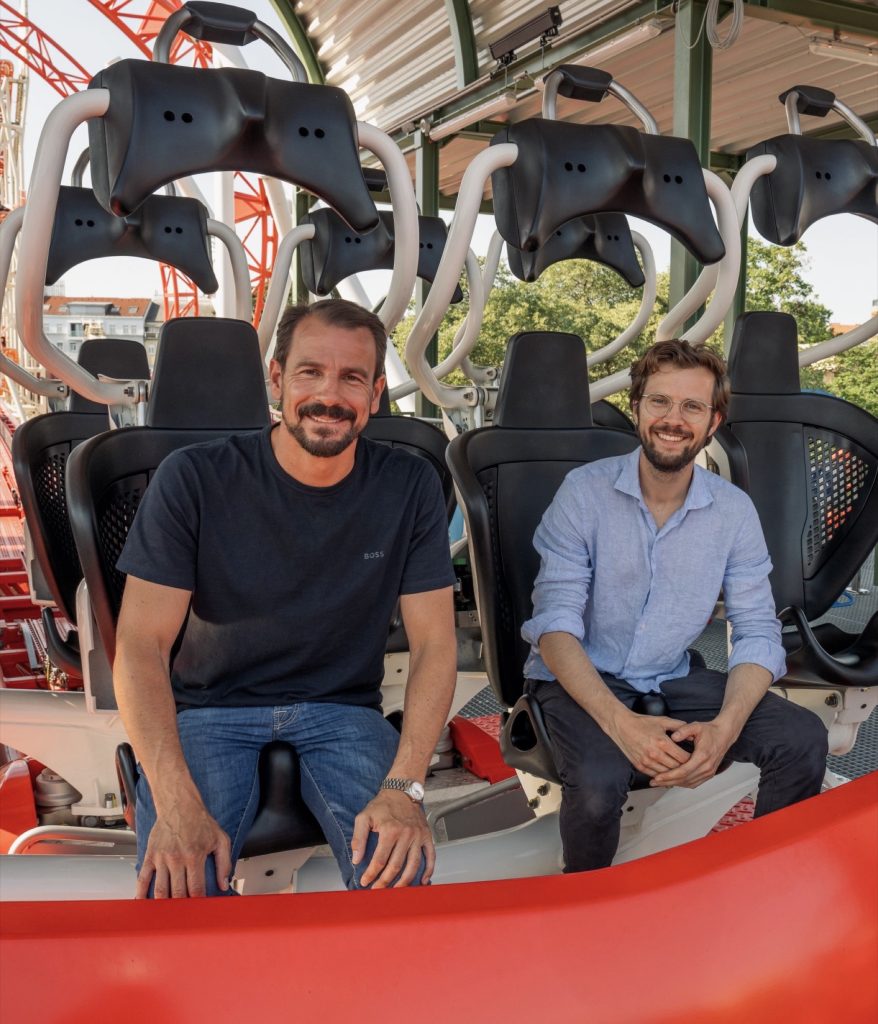
Stefan Sittler-Koidl, owner and operator of the Wiener Looping, arrived with a clear picture: what he loved about roller coasters, what he wanted to avoid, and what kind of emotional experience the ride should deliver.
My task was to structure that vision, test it against the site and the budget, and translate it into a design that could be built.
That trust made bold decisions possible. A 92-degree drop, a track that crosses a public street and a loop that sets new boundaries are not choices an operator signs off on without confidence in the process behind them.
I laid all my ideas, preferences, and also my no-gos on the table. What emerged is not a standard ride, but exactly the roller coaster I wanted for this location.
Stefan Sittler-Koidl, Owner & Operator
05
The loop as a brand
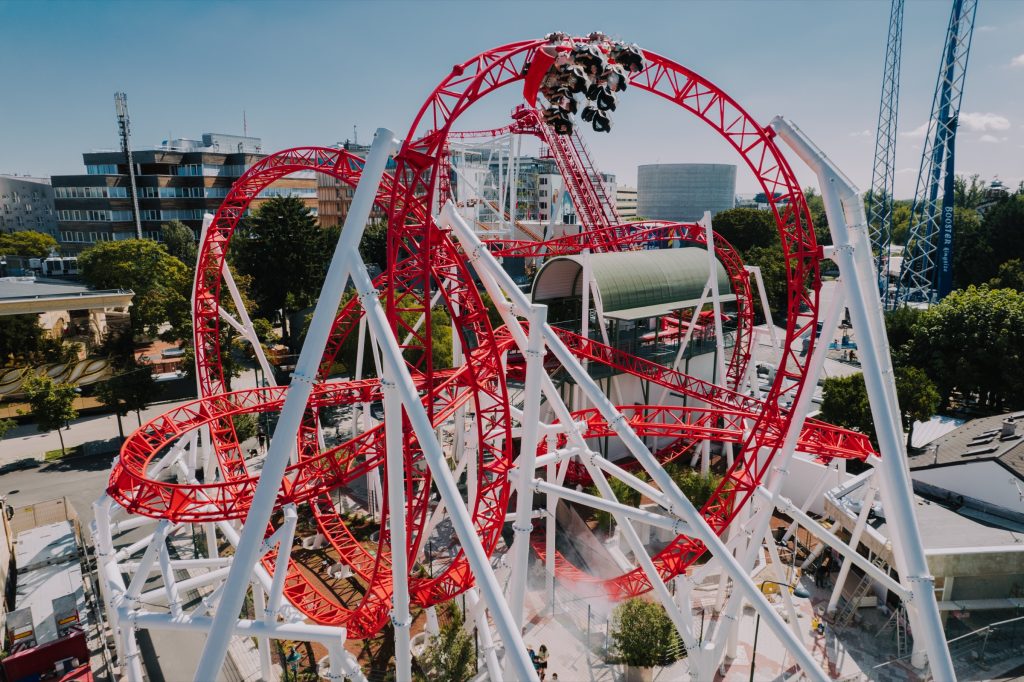
With the name settled, the centrepiece of the layout was settled too. Modern calculation methods allow manoeuvres that were impossible when the first modern vertical loop opened in 1976, on the Great American Revolution at Six Flags Magic Mountain. Our aim was a loop that looks and feels unlike any standard element: its overhead section is stretched to almost three seconds of near-weightlessness, and its wide radius gives room for the final curve to run through its centre.
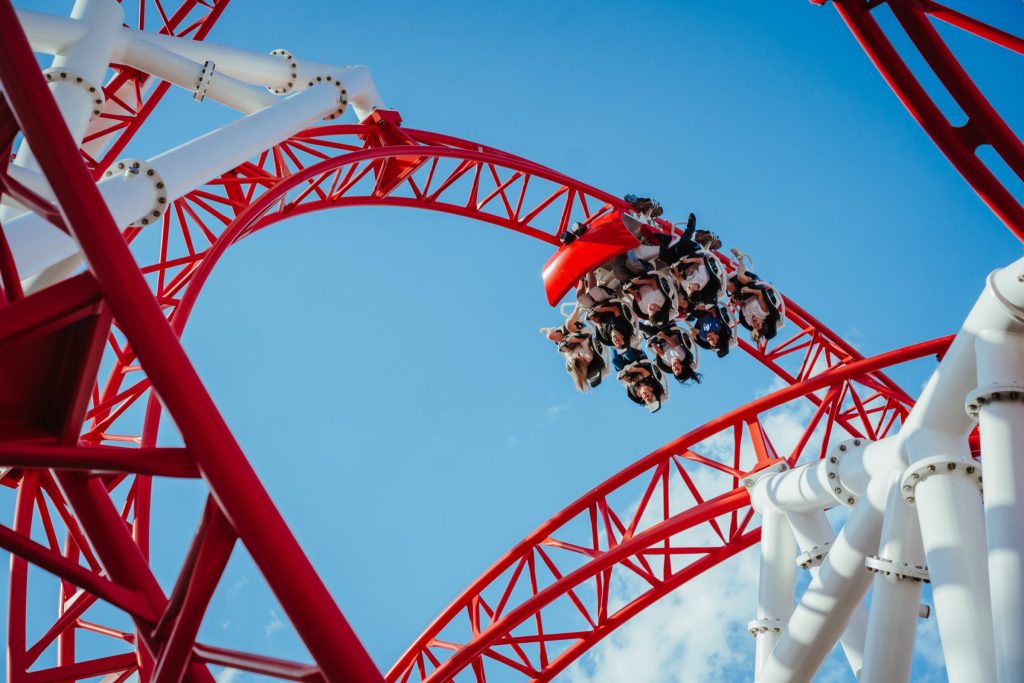
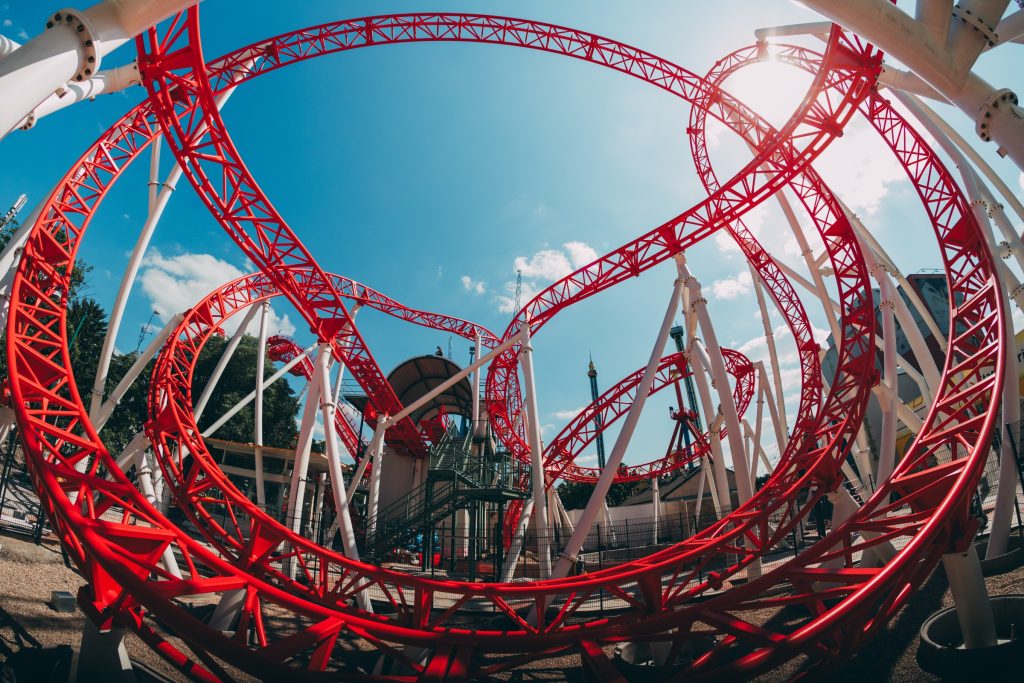
The loop does three jobs at once. It is the name-giving element of the ride, a visual landmark visible across the Prater, and a highlight that brings riders back for another go. How the site shaped this and every other element is described in Part 1, “A Bold Decision”.
- 31 mLift hill
- 92°First drop
- 82 km/hTop speed
- 3Inversions
- ~3 sUpside down in the loop
06
Designed for the long run
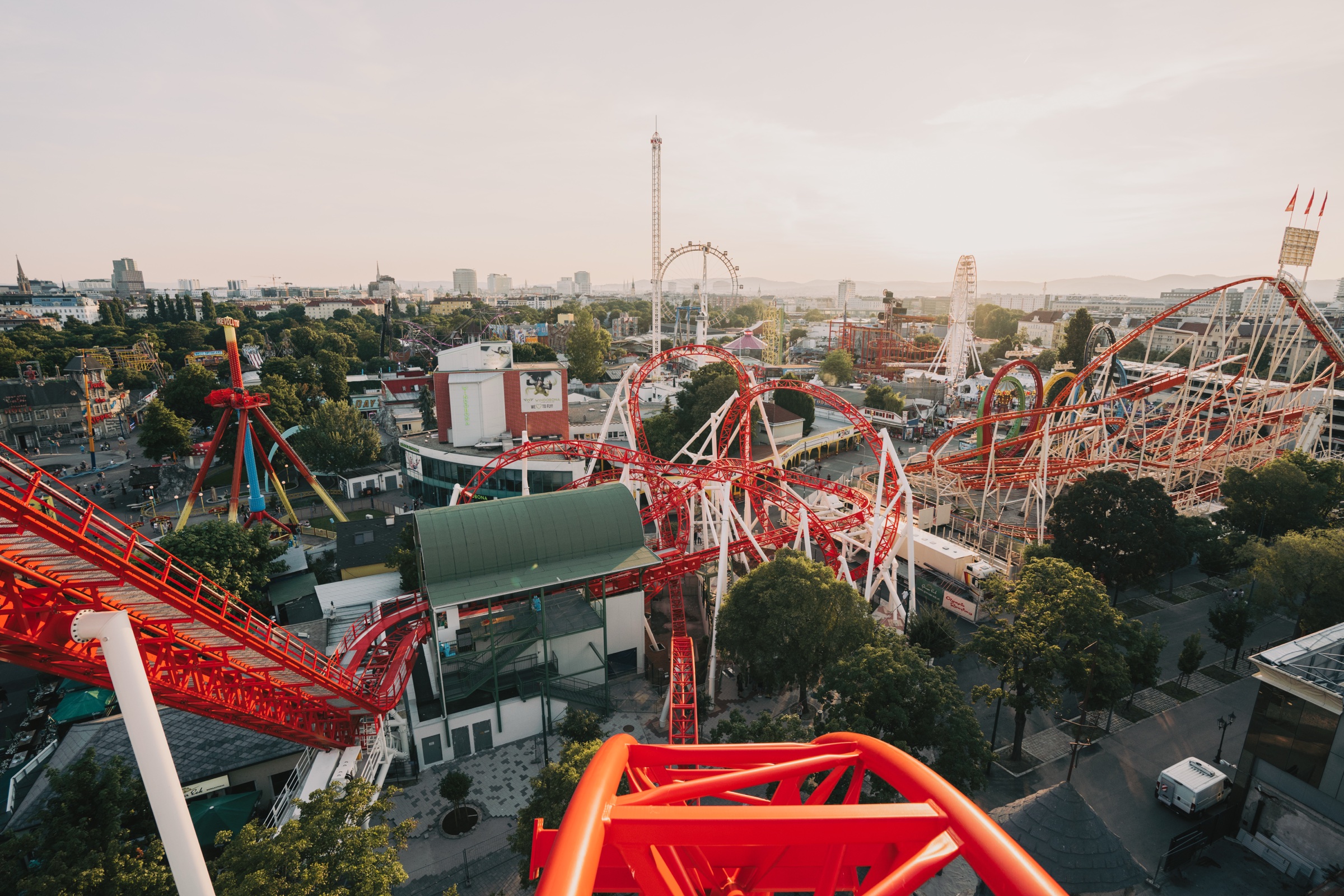
The Wiener Looping was planned as a long-term investment, not a one-season sensation.
- Visitor flow The ride pulls guests into a previously quiet part of the Prater and strengthens the businesses around it.
- Room to grow The helix was designed with a future expansion in mind, such as a planned observation tower.
- A second life built in The cars can be configured to ride backwards. That enables a relaunch later, with new marketing and minimal operational effort.
- Repeat riding Pacing and intensity are tuned to make guests want to ride again – essential in a pay-per-ride environment.
07
Five lessons for operators
The Wiener Looping is a Prater-specific project, but its logic travels.
- Let the business model pick the ride type. In pay-per-ride, constant visible motion sells tickets. Capacity alone does not.
- Treat the site’s constraints as the brief. The ghost train, the street and the irregular plot produced the ride’s best moments.
- Design the signature element first. A memorable element is ride experience and marketing in one.
- Build in a second life. Expansion space and cars that can run backwards let the ride return as something new years later, without buying a new one.
- Give the operator’s vision an advocate. Someone has to hold the operator’s priorities in every manufacturer meeting.
The Wiener Looping set the standard for how I work: guiding a vision from strategic concept through detailed planning and technical execution to operational alignment.
In upcoming articles I will look behind the scenes at construction, maintenance-friendly design and the decisions that never show up on a ride video.
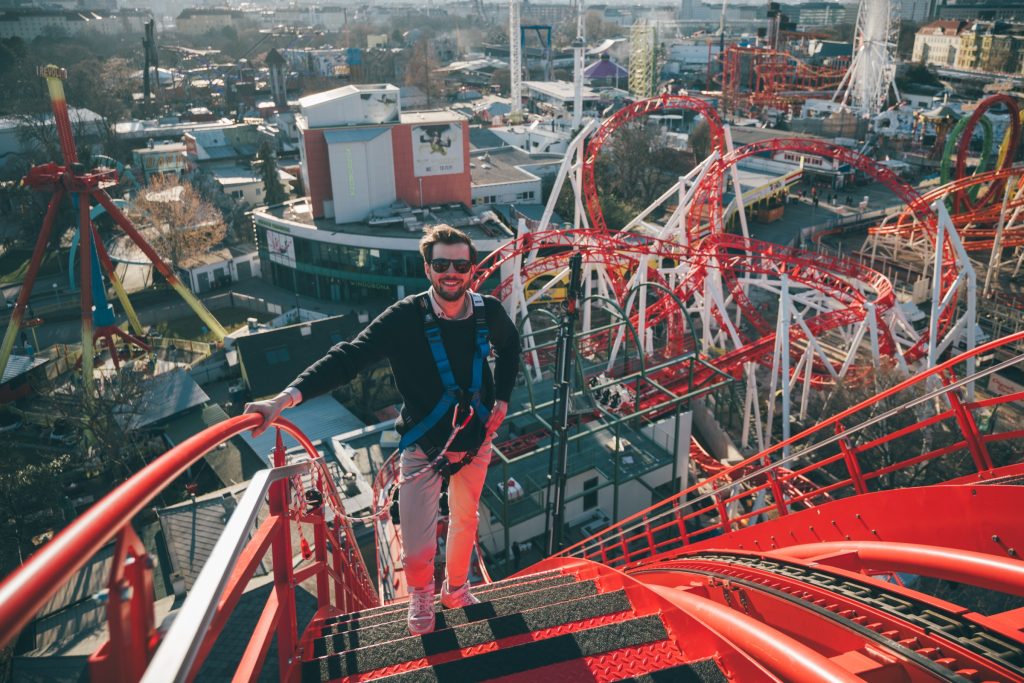
Evaluating a new attraction or repositioning an existing site? I am happy to discuss how a strategically designed ride can strengthen both guest experience and long-term business performance. Get in touch
Previously in this series A Bold Decision: how a difficult site shaped every element of the Wiener Looping
A bold decision
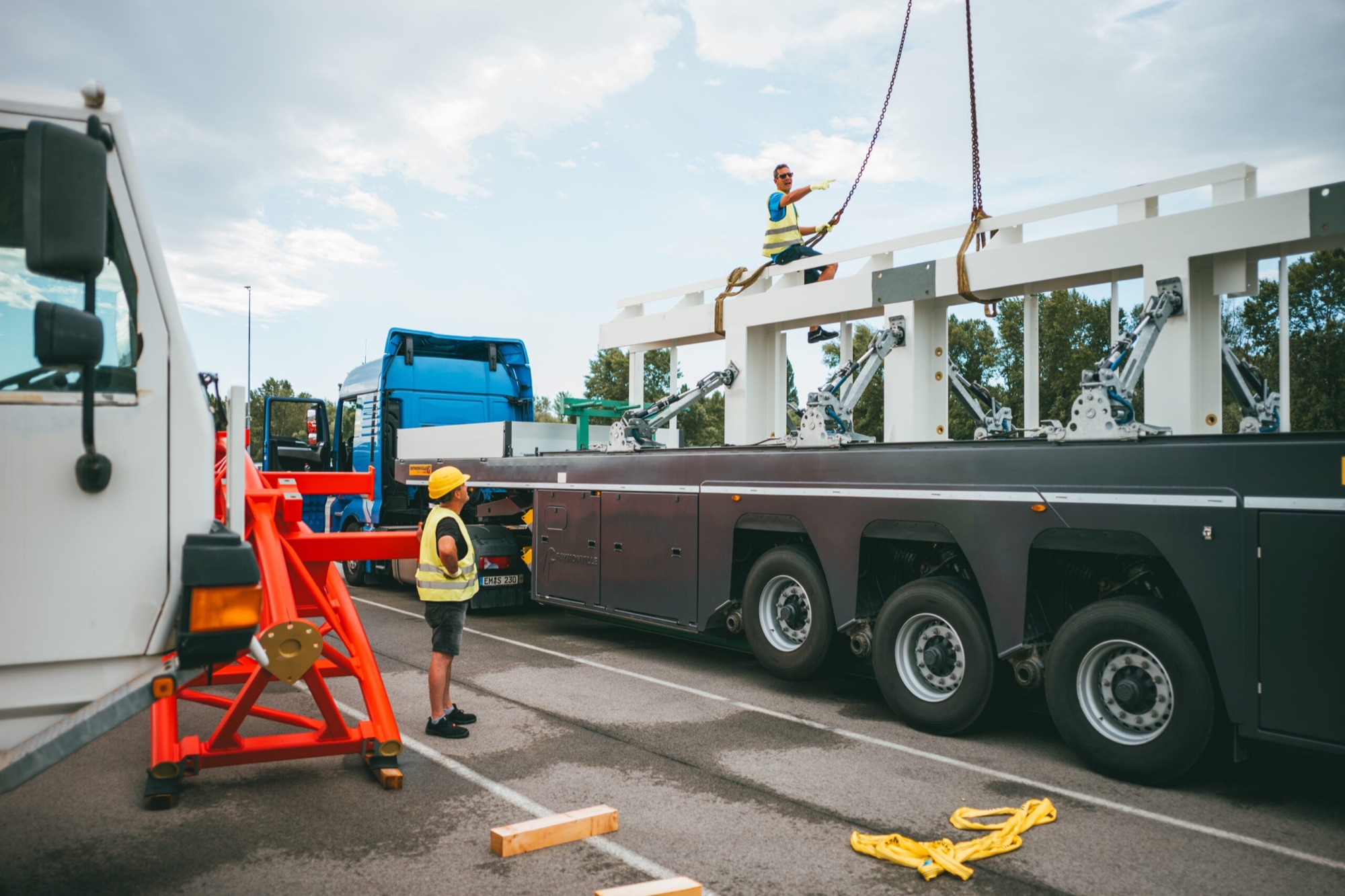
Bold.
The Wiener Looping is one of the most spectacular rides at the Wiener Prater. With three inversions, a top speed of 82 km/h, several twists and turns and a beyond-vertical first drop, this roller coaster has become a new highlight in Vienna.
By Julian Omonsky · Vienna, Austria
A 92-degree first drop, a loop that holds riders upside down for almost three seconds, and a track that crosses a public street. Looking back at the planning phase, I explain how a difficult site shaped every element of the ride.
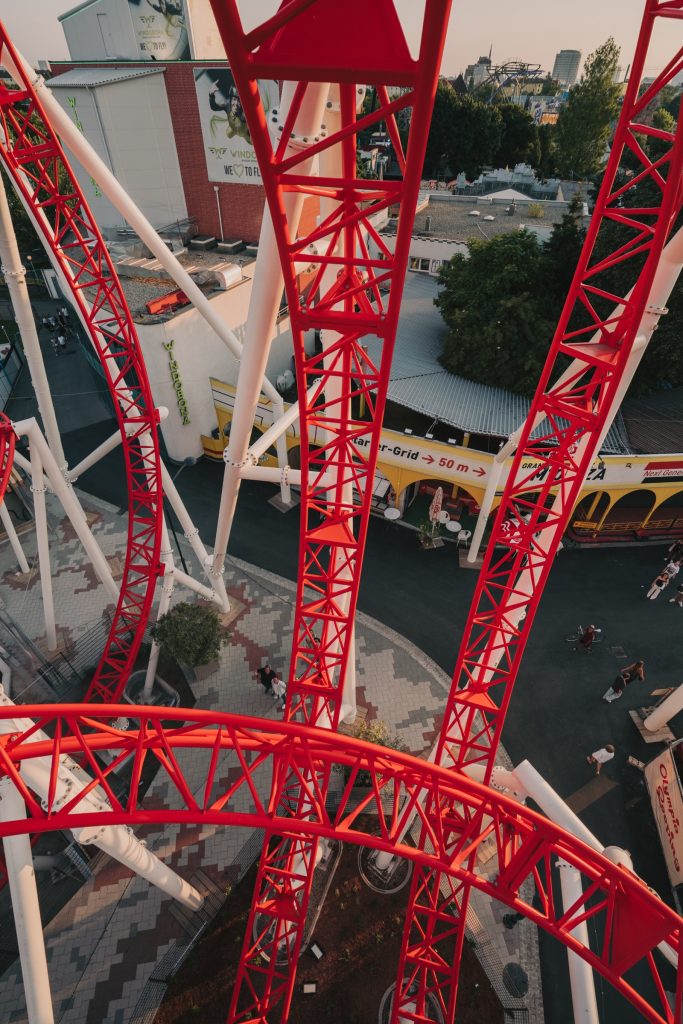
Most roller coasters begin on a blank sheet. When we started planning the Wiener Looping, we began with a ghost train that could not move, a public walkway that had to stay open, and a plot that had been divided, merged and rebuilt so often that it was barely suitable for a coaster at all.
The result is a layout that would make little sense anywhere else. And that is exactly why it works in the Prater.
01 · The business model
The business model
chooses the ride
In a gated theme park, guests pay once and ride as often as the queues allow. The Prater works differently. Every ride is paid for individually, and most attractions are run by independent, often family-owned businesses competing for the same passer-by. A ride has to sell itself from the walkway, every few seconds.
That settled the first decision before a single piece of track was drawn: no long trains. A conventional multi-car train spends a large share of each cycle parked in the station while it loads. Short single cars leave the station one after another and keep the ride in constant motion, and motion is what makes people stop, look up and reach for their wallet.
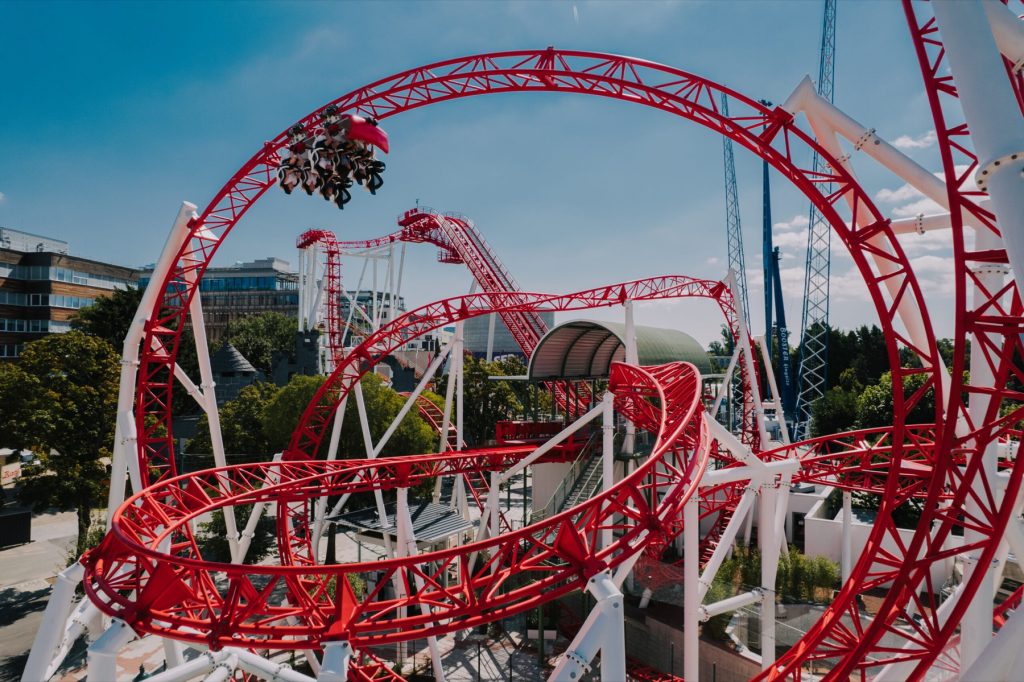
No movement, no screams.
No screams, no queue.
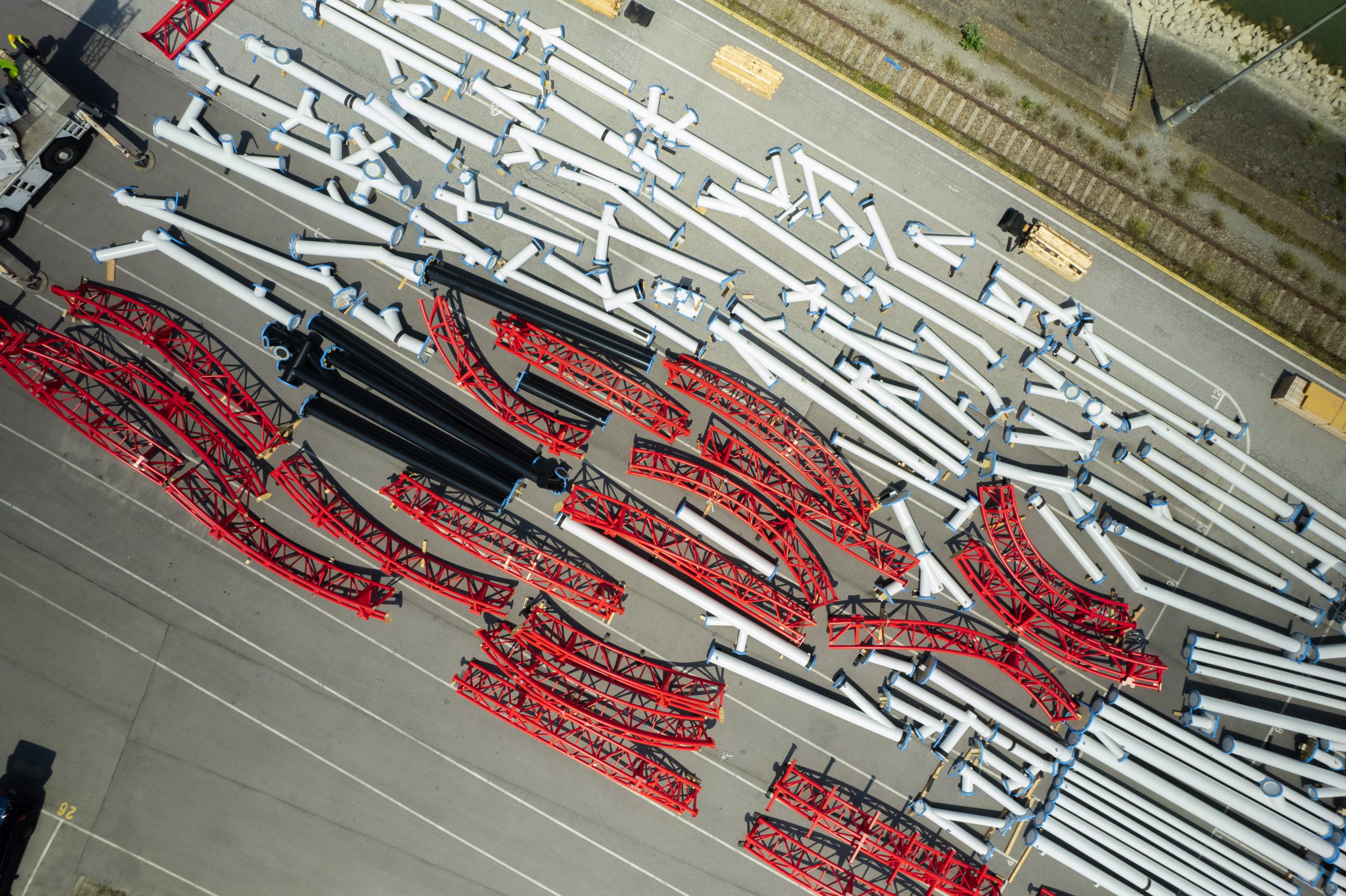
After comparing several manufacturers, we chose Mack Rides of Waldkirch, Germany, and its Big Dipper vehicle concept. Each car seats eight passengers, including outer seats positioned beyond the track, so riders on the edge have nothing but air beside them. This coaster type combines frequent dispatches, a compact footprint and a ride experience that stands out among dozens of competing rides.
02 · The site
A plot with a past
Space is the Prater’s scarcest resource. Since reconstruction after 1945, almost every free square metre has been built on.
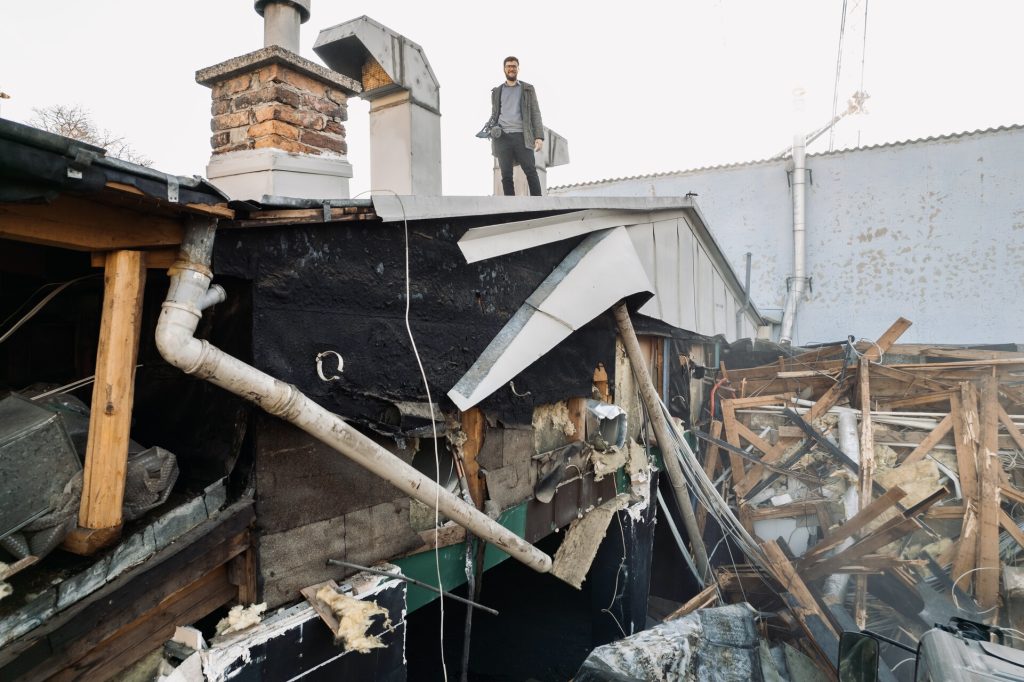
The Prater is divided into mostly rectangular plots, each run by a showman with one or more rides of their own. The Wiener Looping’s site is nothing like that.
Over the decades it has been subdivided, merged and redeveloped again and again. What remained was a plot that was hardly made for a roller coaster.
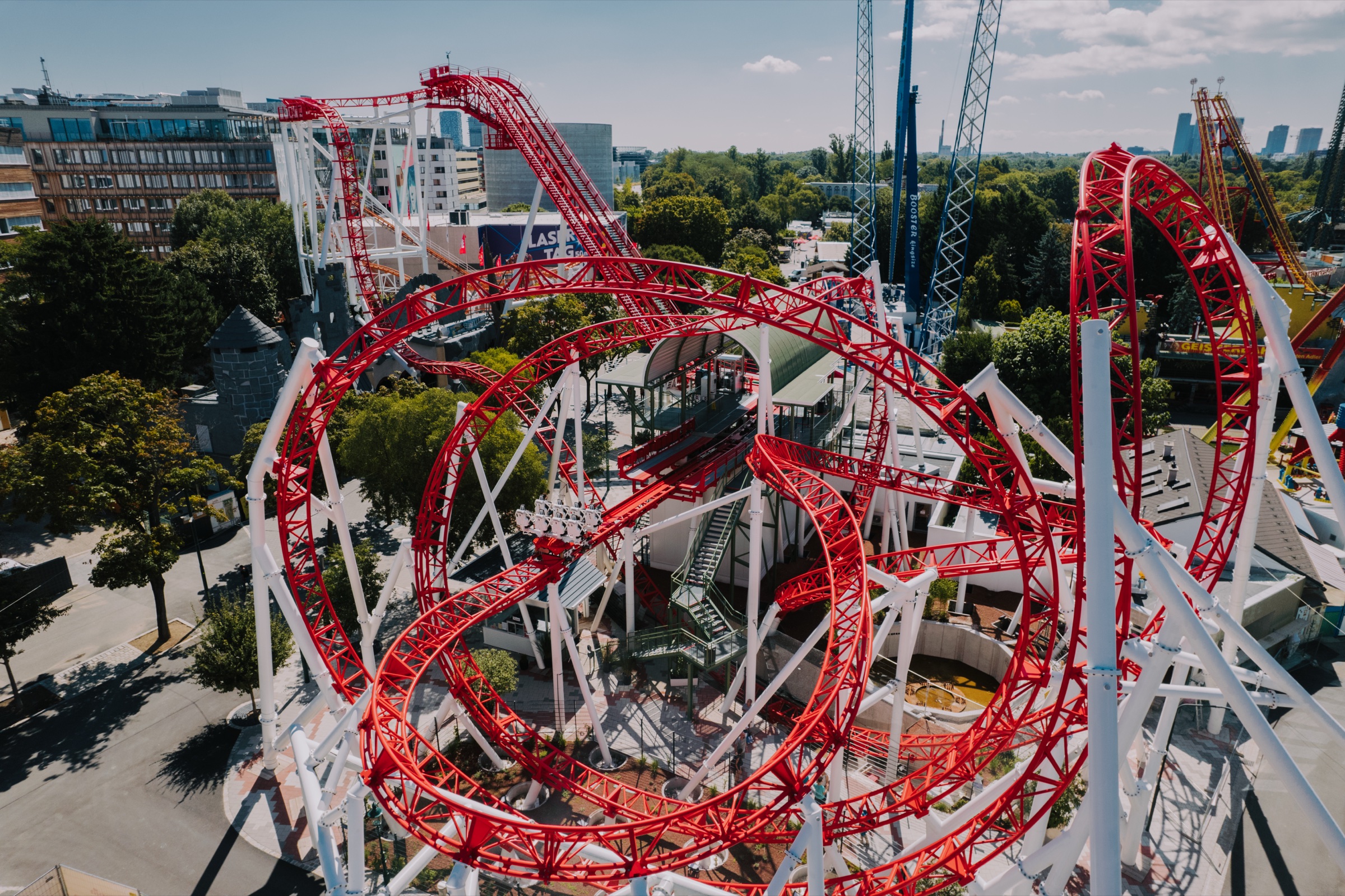
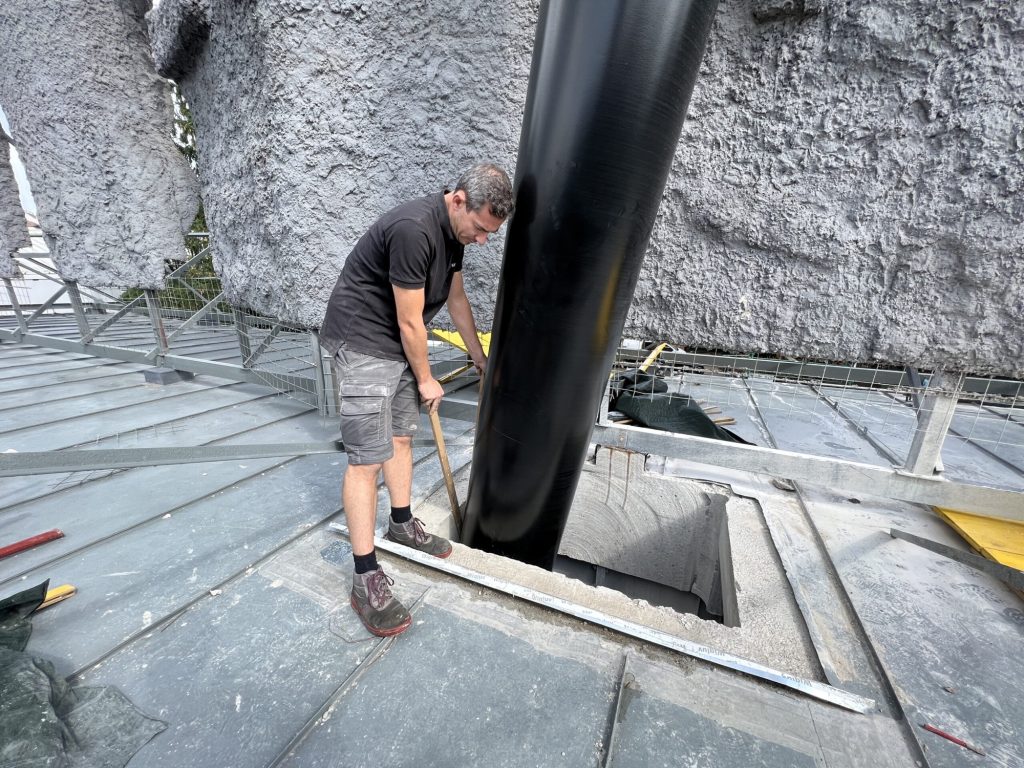
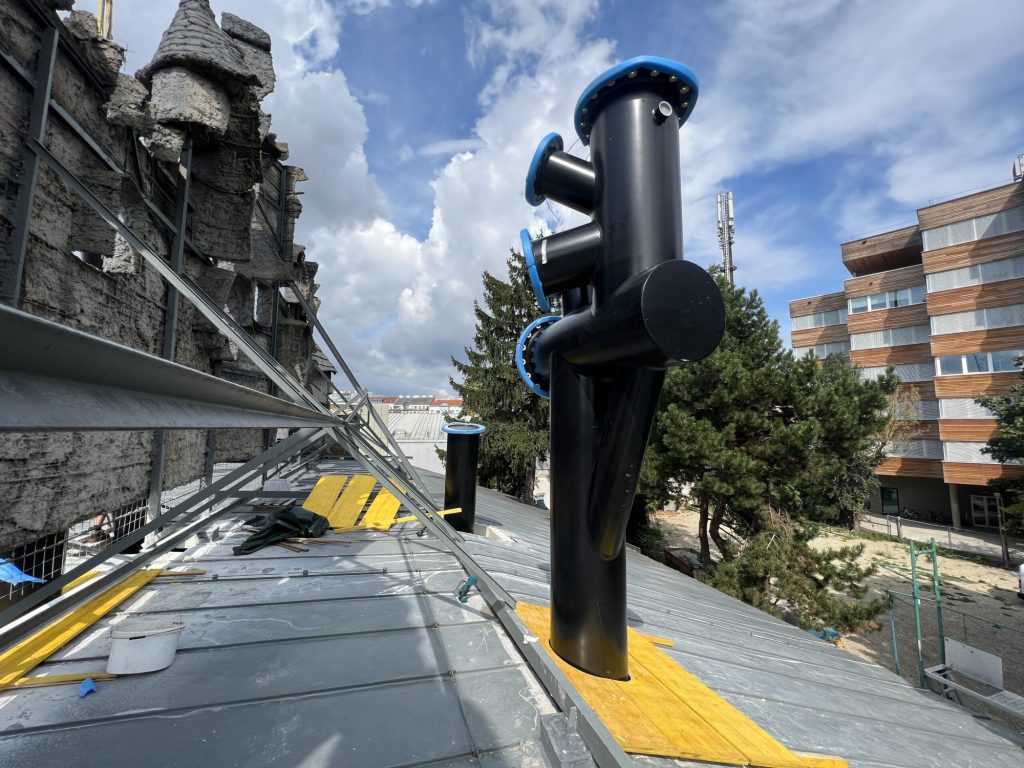
Instead of shrinking the ride to fit, we let the design reach beyond the plot’s boundaries. The track leaves the site in several places, crosses three public streets and ties a second plot into the layout.
Building over public ground on this scale had never been done in the Prater before, and it remains unique there. On paper the layout looks unusual. On site, it sits in its surroundings as if it had always been there.
The difficult site was never the obstacle.
It was the brief.
03 · The footprint
Where coasters waste space
Two elements are notoriously inefficient on a tight site: the lift hill and the final brake run. Both are usually long straight sections. Both take up a large share of the footprint, and neither adds a great deal to the ride experience.
On the Wiener Looping, both became tools. The lift hill leads away from the core of the site, freeing the centre for the elements guests actually see from the walkway.
The final brake run sits deliberately high: the car arrives more slowly after climbing into it, needs a shorter braking distance and therefore less track and less ground.
04 · The ride
The ride, element by element
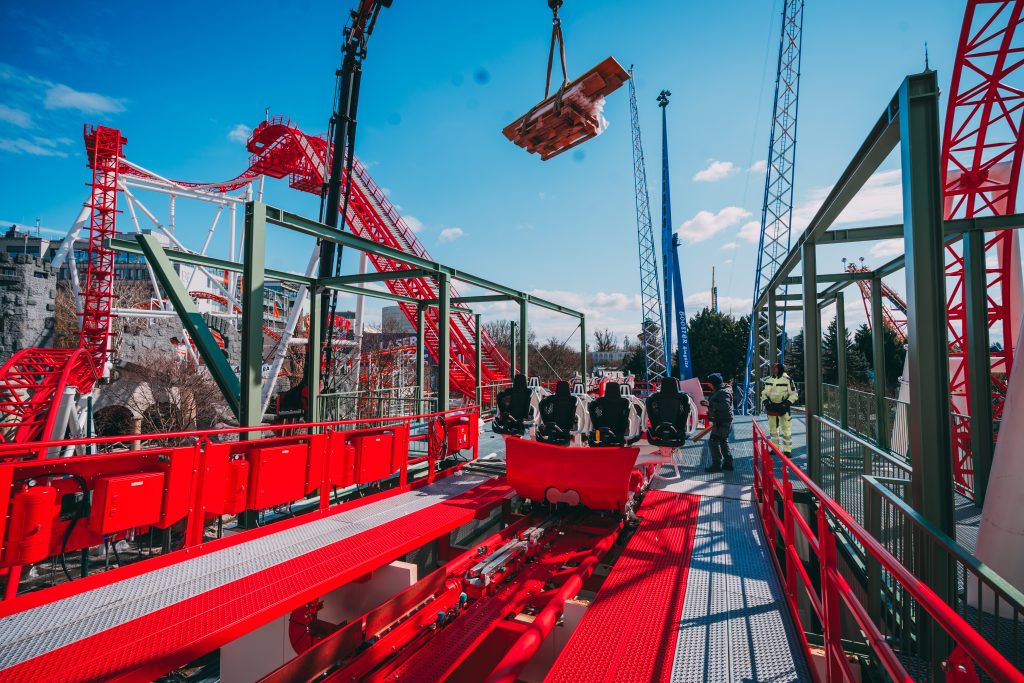
The car leaves the station in a left turn and climbs the lift hill to 31 metres. A panoramic curve at the top ends in a pause just before the first drop. It is a held moment with a view across Vienna and the Prater, and a deliberate build-up of tension.
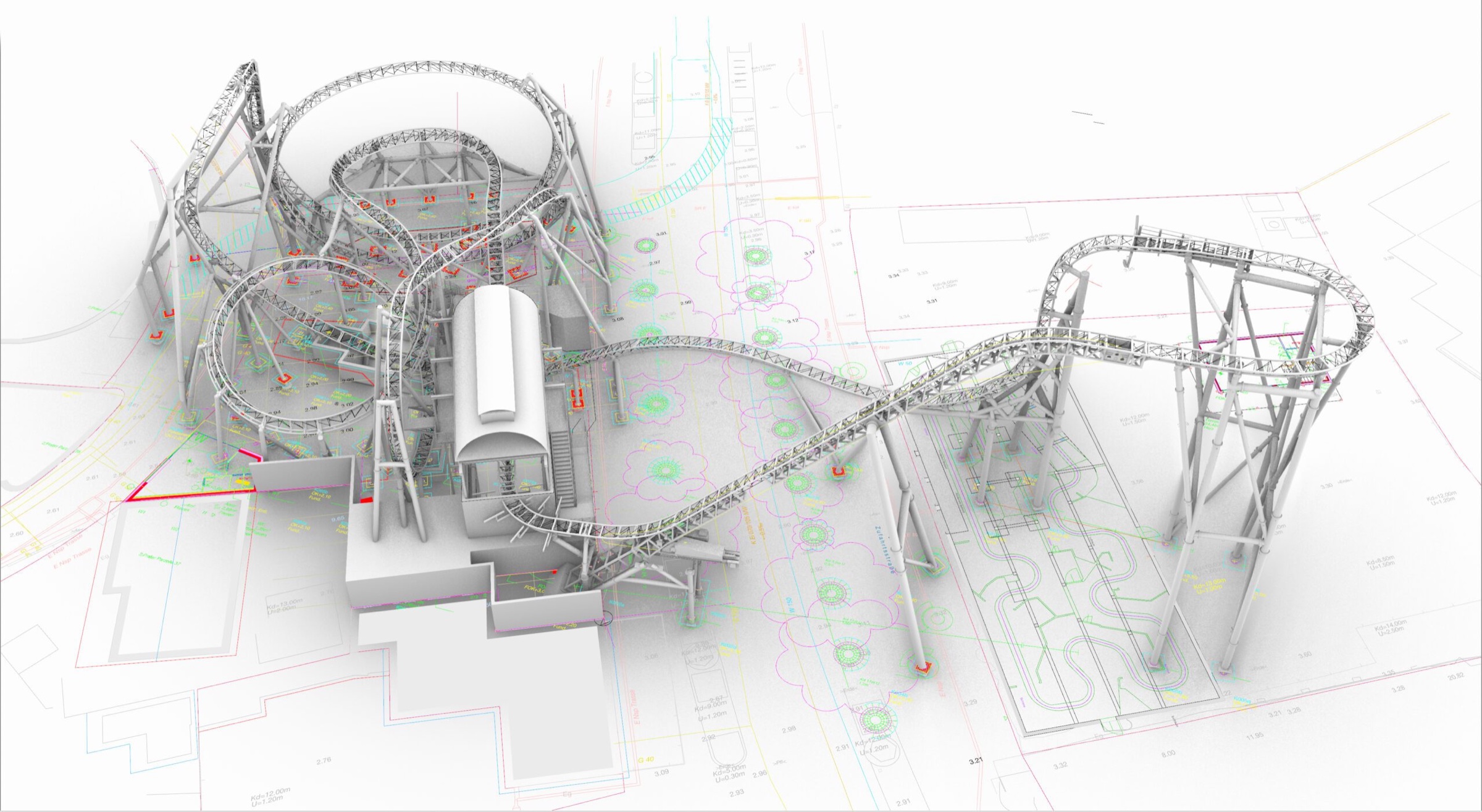
- A 92-degree double down The first drop is beyond vertical, at 92 degrees. Unlike most coasters, it does not run straight to the ground. It breaks into a double down: the steep drop is followed by a camelback that delivers the ejector airtime enthusiasts look for, before the track falls again. This was not a stylistic choice alone. Directly beneath the first drop stands an existing ghost train. The double down clears the building and adds a moment of airtime the ride would otherwise not have had.
- The Banana Roll Coming back towards the main plot, riders face the tangle of track ahead of them. At the lowest point of the circuit the car reaches its top speed of 82 km/h and rises into the Banana Roll. The element is related to an inverted top hat, but its apex is tilted inwards; from the side, the curved silhouette gives it its name. Its function is simple: it turns the car around before the plot runs out.
- A loop that refuses to be quick Then comes the element that gives the ride its name. A conventional loop has its tightest radius at the top, so riders pass the inversion in a fraction of a second. The Wiener Looping stretches the top instead. The overhead section is lengthened until riders hang upside down in near-weightlessness for almost three seconds. The large radius has a second benefit: it leaves room for the final curve to pass straight through the loop later on. Two elements, one footprint.
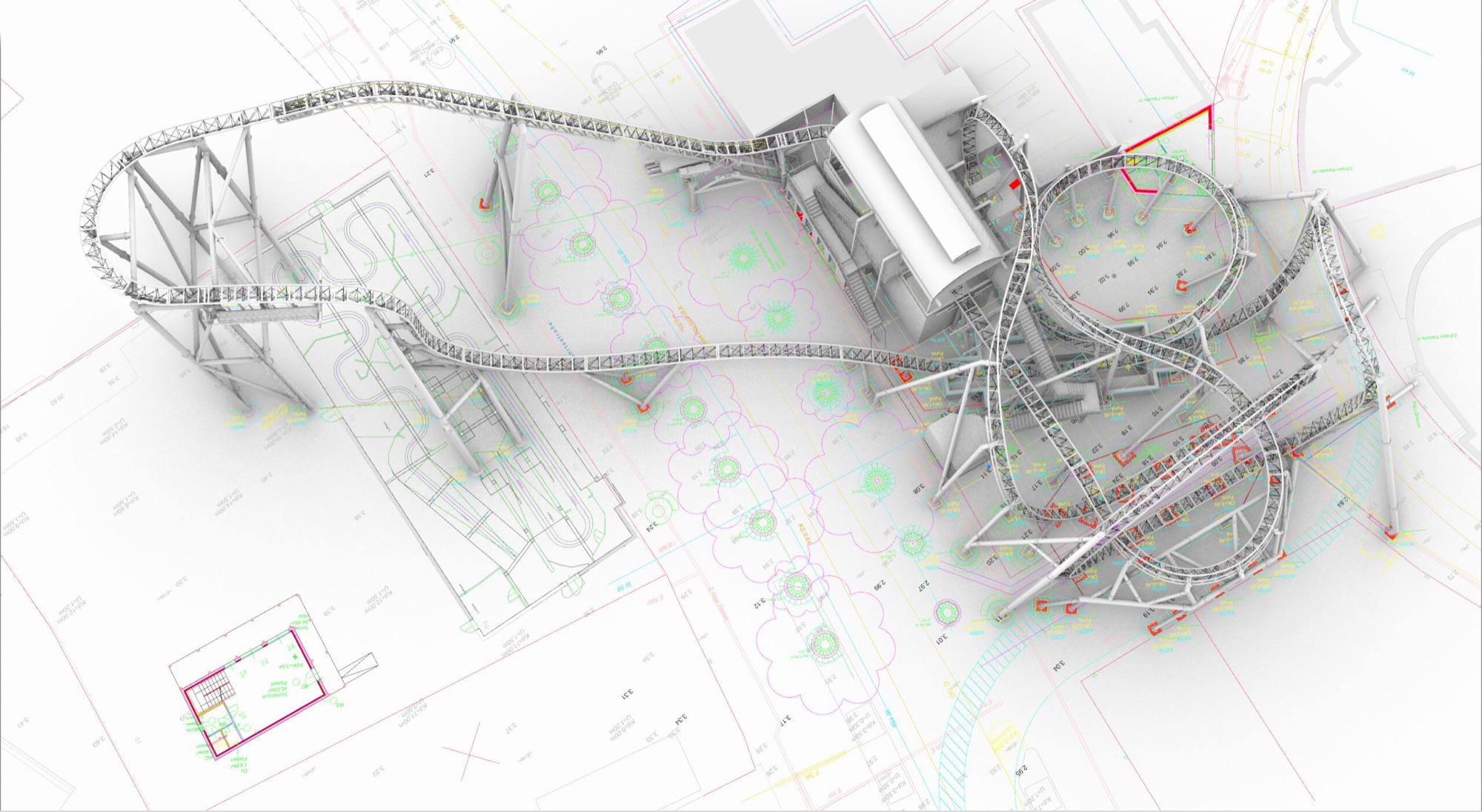
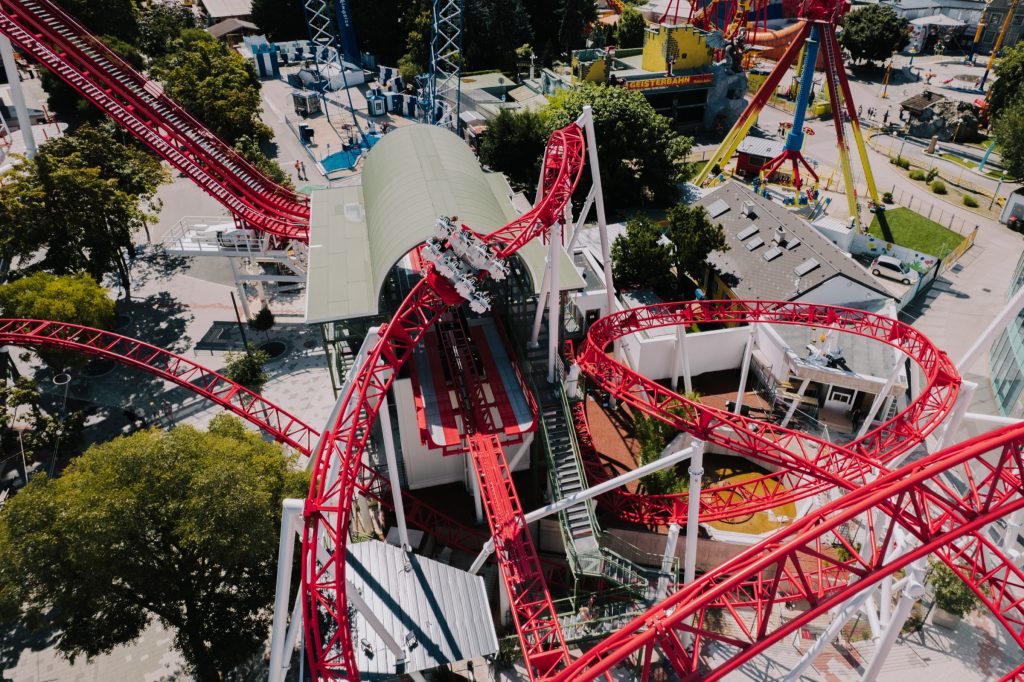
- The Monsieur-Sky-Roll The loop exit leads straight into the next transition. In a right turn the track climbs steeply, banks to 104 degrees, then rolls 284 degrees to the left and drops into a dive loop right next to the station. Where the loop floats, this element ejects: riders are lifted out of their seats mid-twist. What I had in mind was the sensation of a so-called non-inverting loop. The name came from the ride’s owner, Stefan Sittler-Koidl.
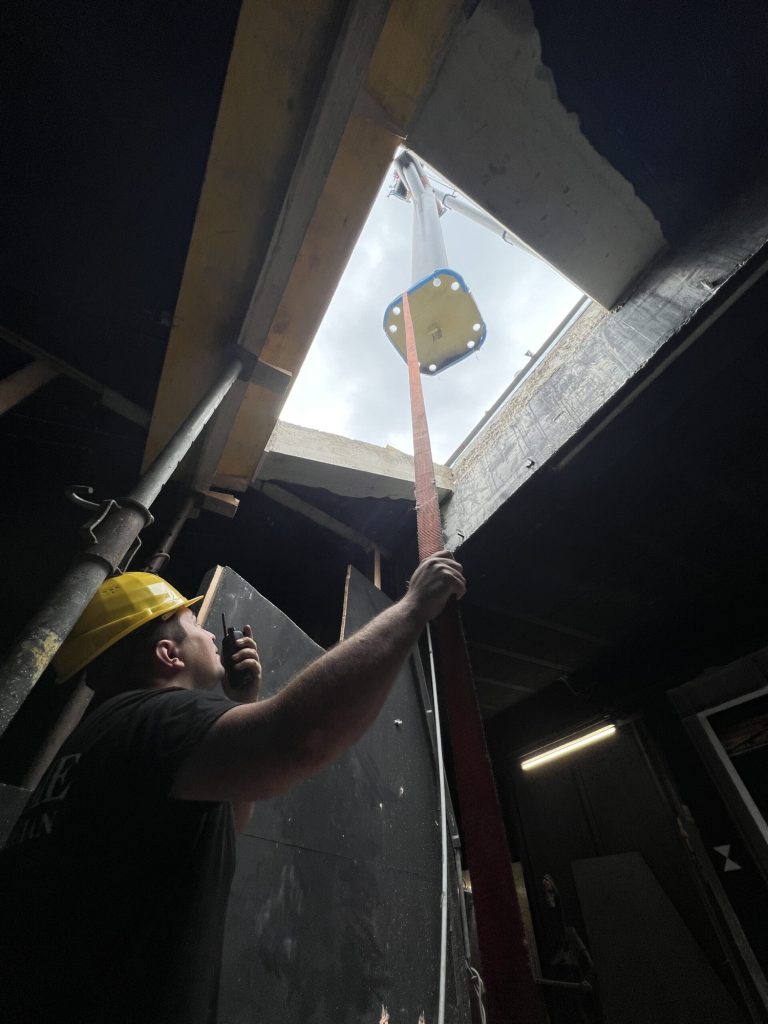
- Helix, twist and a final surprise After the dive loop comes an overbanked turn, a tribute to the original Wiener Looping, which feeds into a forceful helix. A twisted airtime hill at 12 metres leads into the final turn, which threads through the centre of the loop. Its exit holds one last surprise, inspired by Dæmonen at Tivoli Gardens in Copenhagen: instead of a final airtime hill before the brakes, the track snaps out of the banked turn into the straight in one fast twist, and the car shoots into the brake run.
05 · The finale
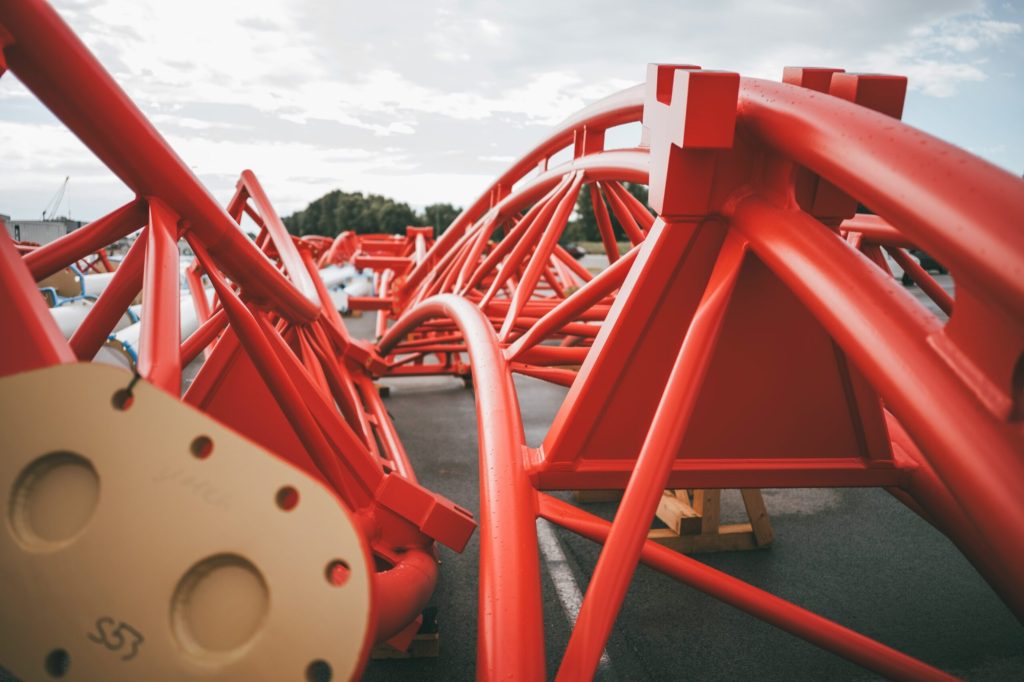
Time for a Brake
The final brake is rarely discussed. On most coasters, it is a functional afterthought at the end of the layout. On the Wiener Looping, it got the same attention as every other element.
The position: the final brake sits at the eye level of the guests waiting to board. They see the faces of riders who have just come back from their adventure – the laughter, the disbelief, the adrenaline. Their ticket is already bought, but nothing builds anticipation like that moment. Emotion becomes marketing, at no cost.
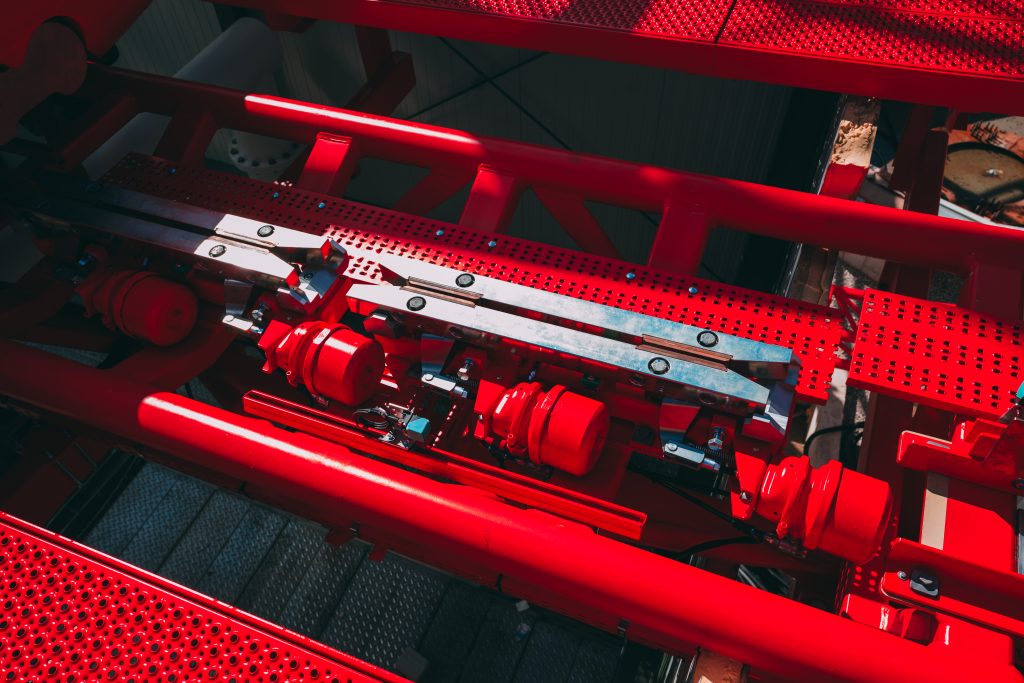
From the brake, the car returns directly to the station, with no detours and no unnecessary track. That keeps the total cycle time as short as possible, and on a ride with frequent single-car dispatches, every second saved per cycle adds up over a full operating day.
Then, the riders themselves. Guests who step out while they are still energised move faster. They unbuckle, stand up and leave the car more quickly than riders whose excitement has already faded on a looong return track. A shorter return keeps that energy alive, speeds up unloading and increases throughput.
One element, three effects: more excitement in the queue, shorter cycles and higher capacity.
06 · Looking back
The bold decisions
Looking back, the ride’s best moments all started as problems. The ghost train gave us the double down. The street gave us the Prater’s first coaster built over public ground. The lack of space gave us a loop that shares its footprint with the final curve. Every metre, every second and every emotion had to earn its place.
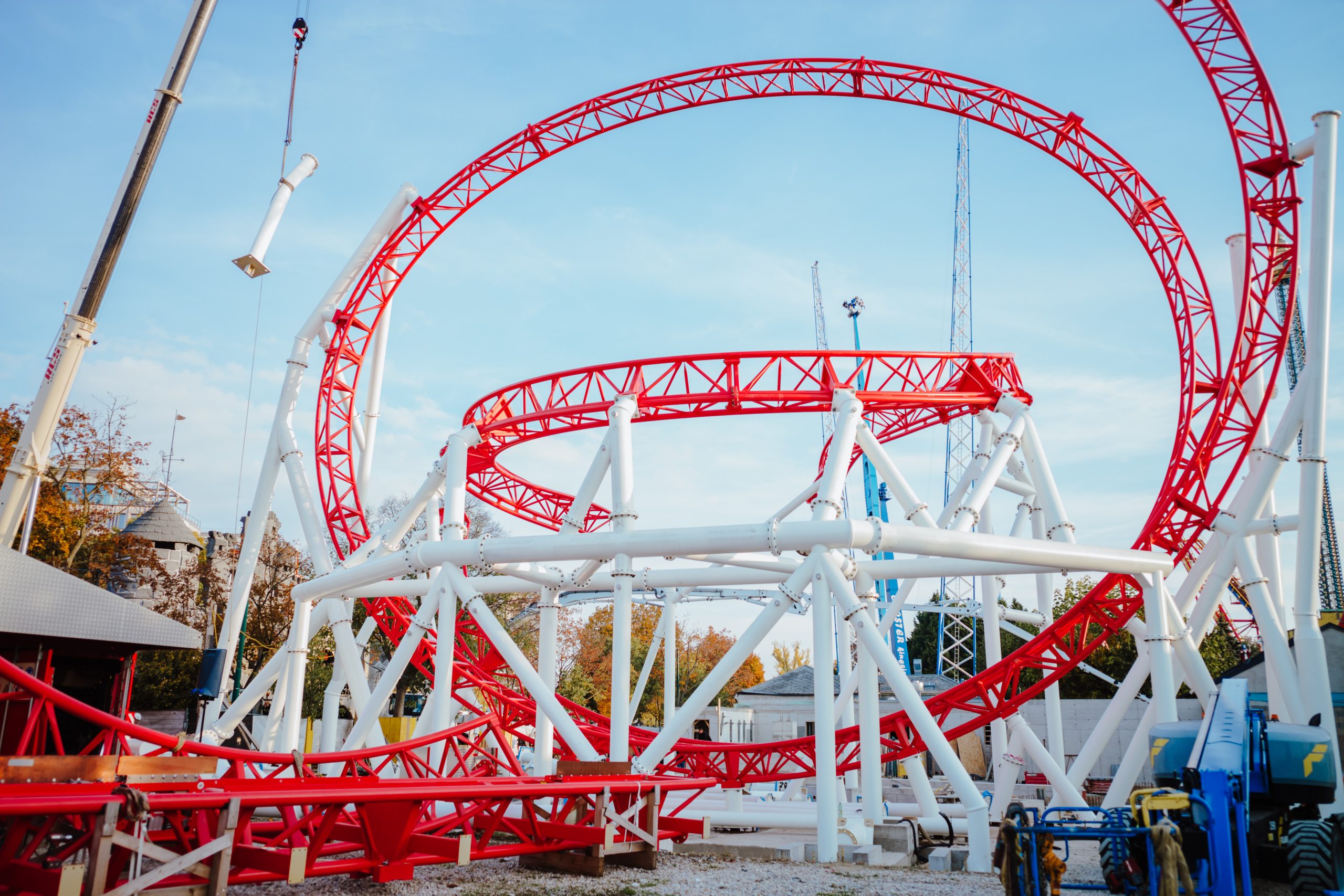
The boldest decision, however, was made before any track was drawn: to invest in a permanent new landmark and bring a quieter part of the Prater back to life. It was a decision driven by belief in the place – and in what a strong ride can do for everything around it..
Planning a new attraction on a site that seems too difficult? That is exactly the kind of project I enjoy. Get in touch
Next in this series All-Out on Red: the business case behind the Prater’s first modern flagship coaster